Asian Stock Markets Plunge Again Amid Sell-Off of AI Chip Makers

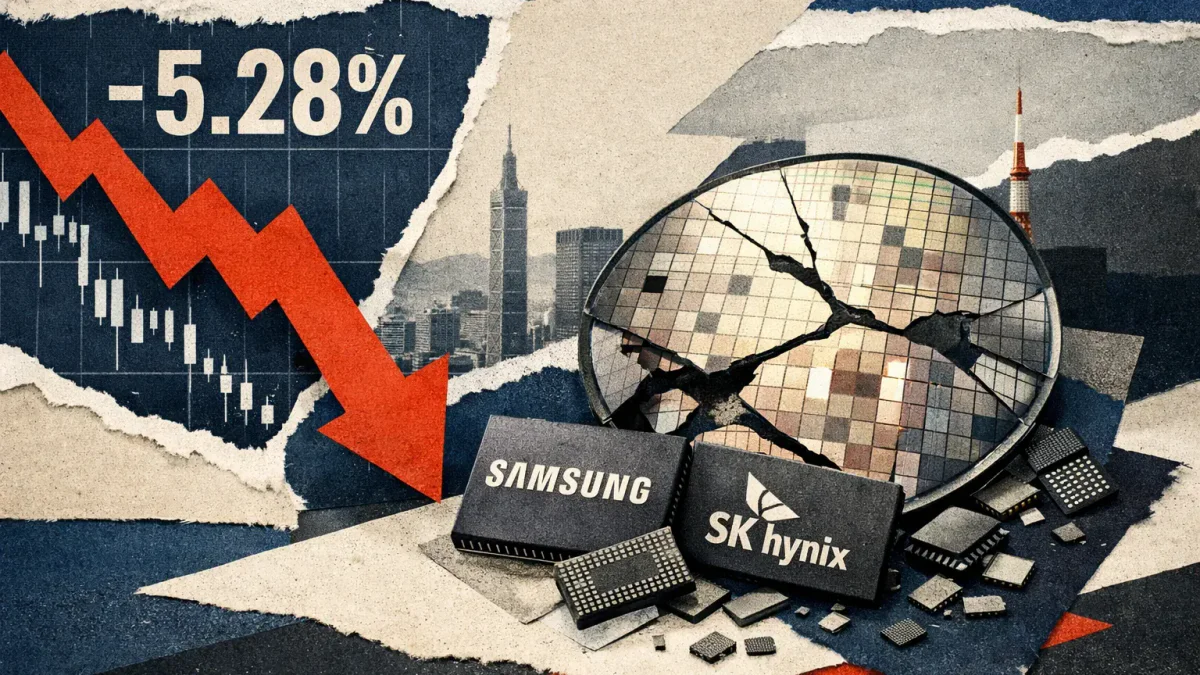
Stock markets in Japan, South Korea, and Taiwan faced another sell-off of technology company shares on November 25. During morning trading, Taiwan's TAIEX index fell by 7.9%, South Korea's KOSPI lost more than 6%, and Japan's Nikkei 225 dropped by 3.6%. In contrast, Hong Kong's Hang Seng gained up to 1.3%. The decline occurred after a brief market recovery following Jensen Huang's return as CEO of Nvidia.
Semiconductor manufacturers suffered the most losses
In Japan, shares of semiconductor equipment supplier Tokyo Electron fell by 13.5%, and chip testing systems manufacturer Advantest dropped by 14.5%. In South Korea, Samsung Electronics and SK Hynix lost 9.1% and 9.9% respectively. In Taiwan, shares of TSMC and Foxconn fell by more than 9%. These figures reflect intraday dynamics and may differ from the closing results.
The sell-off followed a decline in the US stock market on November 24. Nvidia shares lost 5.9% after rising 31.5% in the previous session. The Nasdaq Composite index fell by 1.5%, the S&P 500 by 0.5%, while the Dow Jones Industrial Average rose by about 0.9%. This dynamic shows that pressure on the US market was particularly noticeable in the technology sector.
AI spending grows amid doubts about its profitability
According to an updated Gartner forecast from November 12, global spending on artificial intelligence will reach $2.75 trillion in 2026 and $4.05 trillion in 2027. It is expected that about 59% of next year's spending will go towards computing infrastructure. Spending on AI-optimized servers may increase from $527.6 billion to $957.2 billion.
For semiconductor manufacturers, infrastructure expansion means potential order growth, but the spending forecast does not equate to a profit forecast for individual companies. With high interest rates, financing the construction of data centers is more expensive, and the economic return from new capacities depends on the demand for AI services and their utilization level.
An additional factor for financial markets is the anticipated release of US inflation data. Changes in expectations regarding the Federal Reserve's monetary policy may affect the cost of financing technology projects and stock valuations. The resumption of the sell-off after a brief recovery shows that the return of Nvidia's leader did not eliminate broader market doubts about the profitability of AI spending.
This material is prepared solely for informational purposes and does not constitute financial advice or a recommendation.