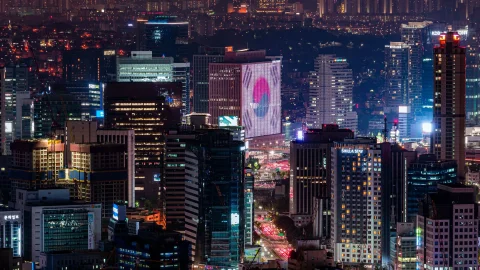

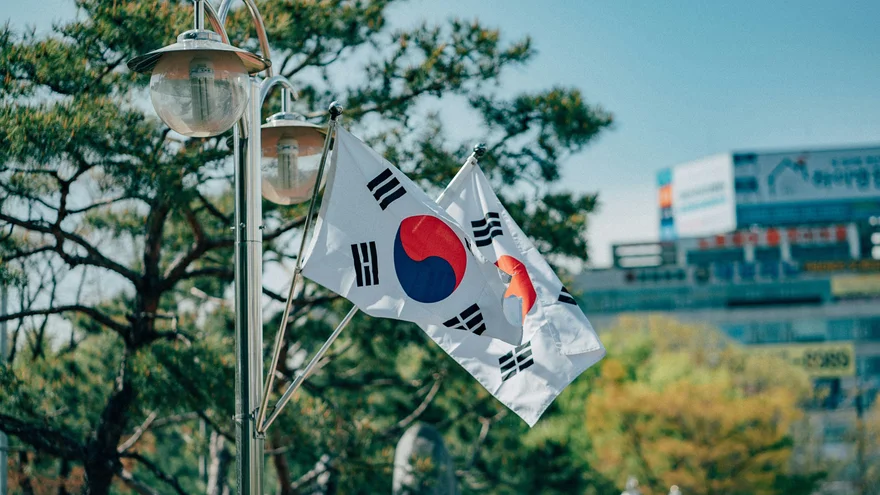
According to a report by the Bank of Korea, the booming demand for artificial intelligence (AI) has become a driver of growth for the South Korean economy: the country's nominal GDP grew by 26.4% year-on-year, and the GDP deflator increased by 21.9% in the first half of 2026. However, the real economic growth, adjusted for price changes, was much more modest – in the second quarter of 2026, real GDP increased by 0.6% compared to the previous quarter. Almost 70% of the growth is driven by semiconductor sales. Leading companies such as Samsung Electronics and SK Hynix currently account for about half of the market capitalization of the KOSPI index, providing a significant portion of revenue growth in the first half of 2026. Semiconductor exports in some months exceed 40% of the country's total shipments, a level not seen since the 1970s.
The Bank of Korea raised its forecast for real GDP growth in 2026 from 2% to 2.6%. The inflation forecast was also raised – from 2.2% to 2.7%, with core inflation expected at 2.4%. After two consecutive rate hikes, the central bank's key rate stands at 3%: the regulator raised it from 2.5% at meetings in July and August. The next monetary policy meeting is scheduled for October 22.
Global demand for high-bandwidth memory (HBM) and advanced DRAM chips is driving recovery in the stock market. Nvidia, AMD, Microsoft, Google, Amazon, Meta, and Oracle depend on Samsung and SK Hynix for memory supplies for AI accelerators. Along with the American company Micron, these companies remain the only large-scale suppliers of such chips. At the same time, the Bank of Korea has noted signs of 'vendor financing' reminiscent of the dot-com era: excess liquidity is being directed into real estate and leveraged products, increasing the risk of a bubble. The value of leveraged products listed in Hong Kong, tied to Samsung and SK Hynix, grew more than 20 times in the first half of 2026.
Related articles