Binance Launches Pay Later with a Credit Limit of Up to 1,000 USDC
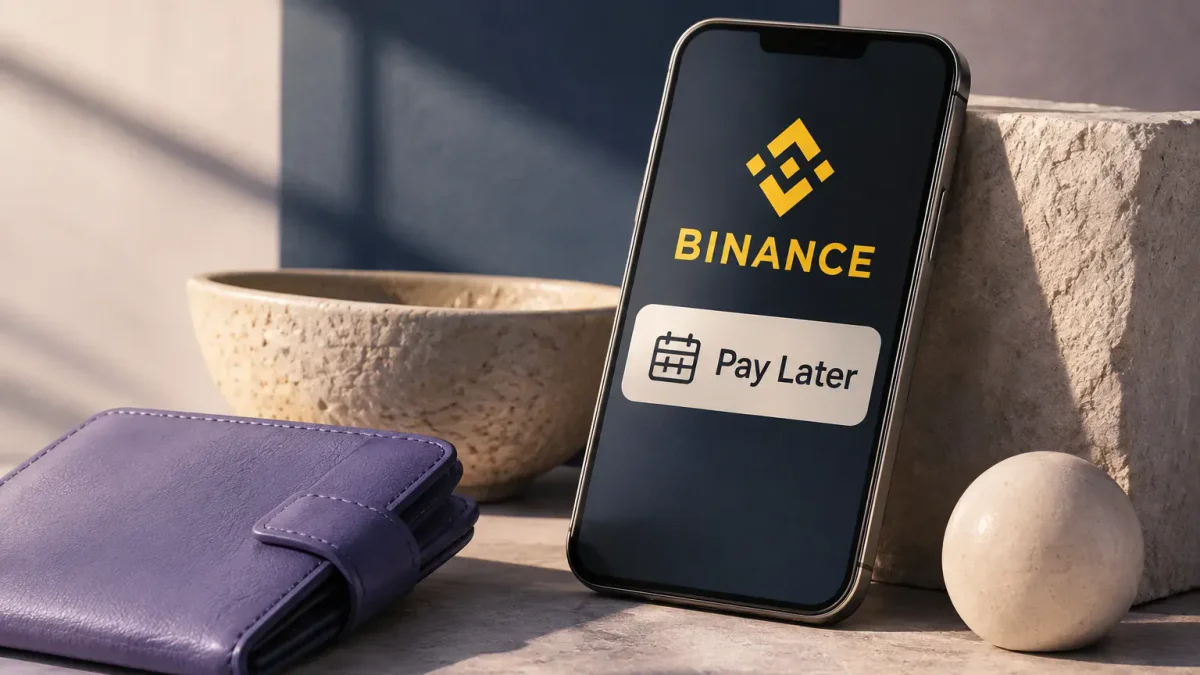
Cryptocurrency exchange Binance announced on November 16 the launch of the Pay Later payment feature, allowing purchases through Binance Card and QR Pay without the need to sell cryptocurrency in advance. Users can use Bitcoin (BTC), Ethereum (ETH), and BNB as collateral.
Initially, the service will be available to users meeting Binance requirements in Argentina and Mexico. The company plans to expand the service's geographical reach in the future.
How Binance Pay Later Works
The maximum credit limit is 1,000 USDC, but the available amount cannot exceed 50% of the value of eligible collateral assets. Thus, to obtain a limit of 1,000 USDC, collateral worth at least $2,000 is required.
However, the loan is not issued to the user in full. Funds in USDC are provided directly at the time of purchase, and the corresponding amount of cryptocurrency is locked as collateral.
The debt can be repaid without interest until the 1st of the next calendar month. According to Binance's terms, there is a one-day grace period after the set date. Subsequently, interest is charged on the outstanding balance at a rate of 0.1% per day with daily compounding.
What Risks Are Provided for Borrowers
One of the main risks of Pay Later is the possible liquidation of the cryptocurrency collateral if its market value decreases.
Binance uses the LTV indicator, reflecting the ratio of debt to the value of collateral. When LTV reaches 75%, the user receives a warning about approaching liquidation. If the indicator reaches 90%, the exchange may automatically sell the collateral assets to repay the debt.
Liquidation can occur regardless of the established loan repayment date, including before the end of the interest-free period.
Binance Vice President for Payments and Fiat Thomas Gregory noted that traditional consumer lending often requires proof of income and credit history. According to him, asset-backed loans can be an alternative for users who do not have access to such credit products.
This material is prepared solely for informational purposes and does not constitute financial advice or a recommendation.
Related articles