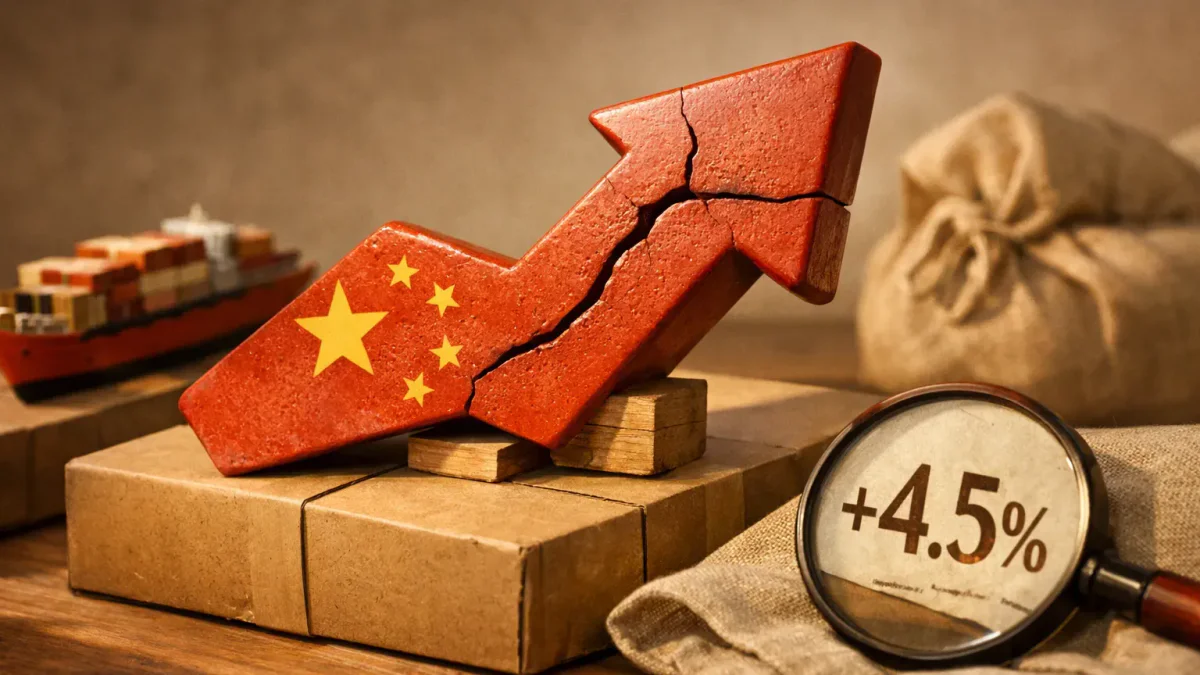
China reported an economic growth of 4.5% in July–September 2026 compared to the same period last year, driven by strong exports. This is closer to the official target of 4.5–5% for the year (against 5% last year). Growth accelerated from 4.3% in the second quarter, which was the slowest in more than three years. Earlier this month, the IMF lowered its forecast for 2026 to 4.5% – at the lower end of Beijing's target.
According to Max Zenglein (The Conference Board), the official figure is becoming "an increasingly poor indicator of the state of the economy": it masks "growing disparities between industries, regions, and households." He believes that internal imbalances will be more difficult for Beijing to resolve than external pressures.
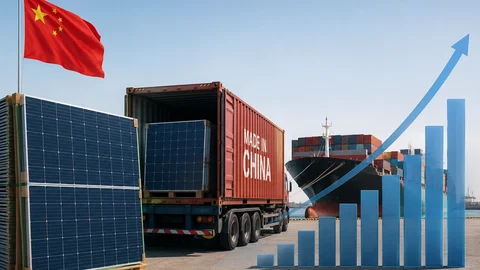
Domestic demand is weak: a multi-year slump in the real estate market has squeezed household wealth and increased savings. Exports are one of the few bright spots: last month they grew by 36%, and the surplus for January–September reached $938 billion, so China may surpass last year's record of $1.2 trillion. High US tariffs are prompting the search for other markets – Southeast Asia, Latin America, Europe. Growth drivers include semiconductors and automobiles, including hybrids and electric vehicles. The drive for self-sufficiency has spawned massive subsidized capacities in solar energy and electric vehicles, while weak consumption pushes goods abroad at competitive prices.
Eswar Prasad (Cornell): "It is unsustainable and unstable for the world's second-largest economy to rely on external demand." According to him, China "has become a drag on global growth rather than a driver." The EU, whose deficit with China exceeds $1.1 billion a day, expects a reduction in the imbalance; China's exports to the EU grew by 16% over nine months. This month's agreement aims to roughly halve imports of Chinese hybrids. Gary Ng (Natixis) believes China can negotiate and maintain market access; Lynn Song (ING) warns: even with agreements, imbalances will not be quickly resolved. Ekaterina Bigos (BNP Paribas AM) adds: the export model focused on technology provides few jobs and incomes, and the risks of labor displacement by AI are growing.
This material is prepared solely for informational purposes and does not constitute financial advice or a recommendation.
Related articles