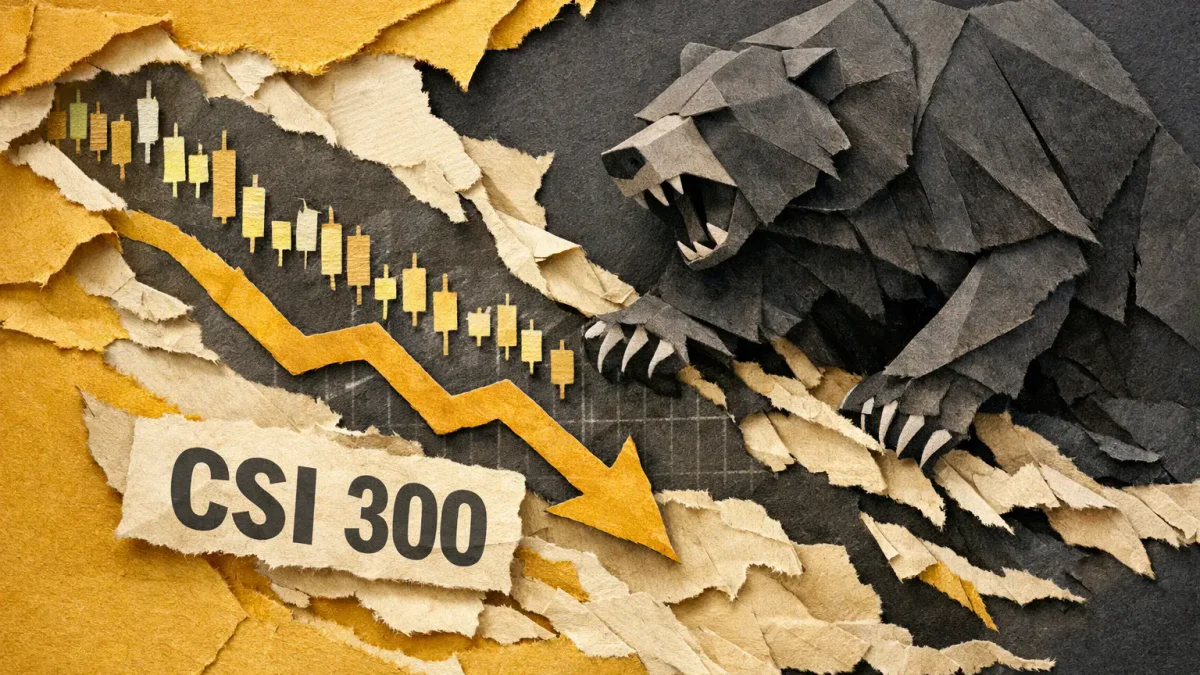
The Chinese CSI 300 index entered a bear market on Thursday after a 10-week decline, according to LSEG data cited by CNBC. At the morning break, the index stood at 4,060.19, approximately 20% below its June peak and 13.94% below the level at the beginning of the year.
The decline is linked to fading hopes for stimulus, weak corporate results, and concerns about the global AI trade, Bloomberg reports. Markets in South Korea, Japan, and Taiwan also declined.
Despite the decline, no new policy support measures have been proposed yet. This week, China kept the one-year LPR rate at 3.0% and the five-year rate at 3.5%; both have remained unchanged for 17 consecutive months. Analysts at Maybank, according to Reuters, note that stable growth makes new fiscal and monetary stimuli less urgent: in the third quarter, growth was 4.5%, exceeding forecasts.
State purchases have been less than previous sales. Central Huijin, leading market stabilization, raised $231 billion through ETF sales in the first half of the year, and since July, has reinvested only about $43 billion of the approximately $188 billion available, according to Bloomberg Intelligence. Analysts warn that state purchases alone may not ensure a sustainable recovery.
On Thursday, the pressure extended beyond mainland China. KOSPI fell by 2.56% to 5,588.94 against the previous close of 5,735.66. The Nikkei 225 was trading 1.65% lower than Wednesday's close at 63,554.76. Taiwan's TAIEX lost 1.15% to 46,346.92. In Hong Kong, the index of major Chinese companies fell by up to 2.9%. The Hang Seng Tech index hit a two-year low on Tuesday amid a decline in AI equipment manufacturers' stocks; on Wednesday, Tencent fell below HK$400, and CATL dropped amid weak profit growth and stiff competition.
Meanwhile, some long-term investors have increased their investments in China. Sovereign funds invested $14.2 billion in mainland China and Hong Kong over nine months—almost three times the $4.9 billion for the entire year of 2025, according to Global SWF. Saudi PIF led the list with $6 billion, and four Gulf funds accounted for nearly 70% of the inflows. Among the deals were a minority stake in Luckin Coffee and a $10.2 billion share placement in Alibaba.
"Valuations are lower than they have been in years. I think this will be a very good vintage for investors in China," said Andrew Wang, responsible for consumer investments at Mubadala's private investment division. However, China remains a small target for sovereign capital: the US attracted $132.4 billion over the same nine months, while Europe and the UK attracted $44.6 billion.
This material is prepared solely for informational purposes and does not constitute financial advice or a recommendation.
Related articles