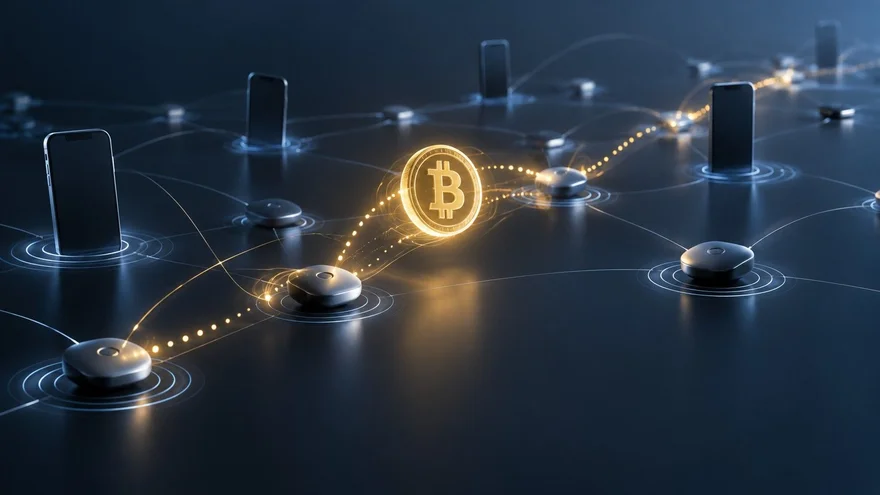
On September 30, 2026, developer Cashu sent Bitcoin via Apple's Find My network using a small device. This device transmits Cashu e-cash tokens through nearby iPhones without requiring an internet connection. The experiment turns the tracking system used in AirTags into an unusual payment channel. However, the developer emphasizes that only small amounts should be sent. According to him, this might be the most absurd way to send Bitcoin to date.
The open-source code was published on GitHub and runs on inexpensive ESP32 boards. The device packages the token into Bluetooth signals, mimicking beacons for lost items. Passing iPhones receive these signals and relay them through Apple's Find My network, as if searching for a lost AirTag. The recipient receives these reports through their Apple account and reconstructs the token in parts. Each transmitted signal carries only two bits of data, so over 1,000 broadcasts are required to send a typical token. The developer warns that each transmitted token is public, and anyone who receives it can use it, as Cashu tokens function like digital cash.
The main vulnerability lies in the transportation itself. According to the protocol, the transmitted information is not encrypted, and the necessary identifiers for locating it are public. Documentation advises sending only small amounts, as delivery is slow and unreliable. If Apple changes the interface, the system may stop working. The Find My experiment remains a novelty rather than a payment product, joining other efforts to create more convenient ways to send Bitcoin, resembling text messages but without using the internet.
Related articles