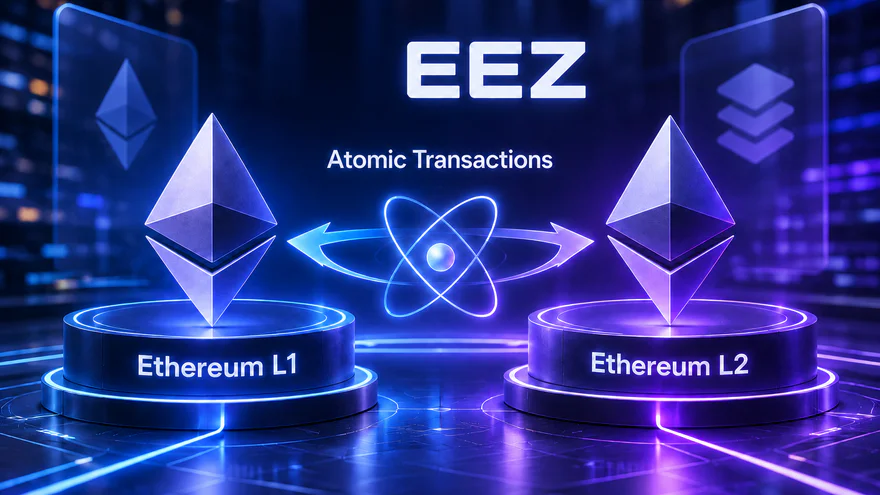
Ethereum Economic Zone (EEZ) successfully tested its first atomic transaction between the Ethereum mainnet and a layer 2 network. During the test, which took place on Tuesday, project participant Eduardo Antuña Diez reported a transaction that transferred 0.001 Ether (ETH) and updated the state for the rollup. He described this transaction as the "first atomic cross-chain" L1-to-L2. In an atomic transaction, all related actions between networks either complete successfully or are canceled if any stage fails. EEZ developers reported in March that the structure being created allows rollups to interact with each other and with the Ethereum mainnet within a single transaction without using bridges. The project's goal is to restore liquidity and applications distributed across various layer 2 networks.
Frederike Ernst, co-founder of Gnosis, previously stated that the lack of synchronous composability forces protocols to maintain separate deployments across different L2s, leading to liquidity fragmentation across multiple markets. The issue is that with insufficient composability, protocols must keep track of and manage various aspects in each network, making it difficult for users to access resources across different networks.
Jakob Gregus, co-founder of the decentralized finance protocol Hydration, noted that this demonstration is "one of the most important milestones in the cryptocurrency space," adding that the new technology could directly benefit the Ethereum network by simplifying interactions and reducing transaction costs. According to him, the success of such an approach will set a precedent for further developments in inter-network operations. This practice may also serve as a foundation for future improvements and the use of similar transactions in other blockchain ecosystems.
This material is prepared solely for informational purposes and does not constitute financial advice or a recommendation.
Related articles