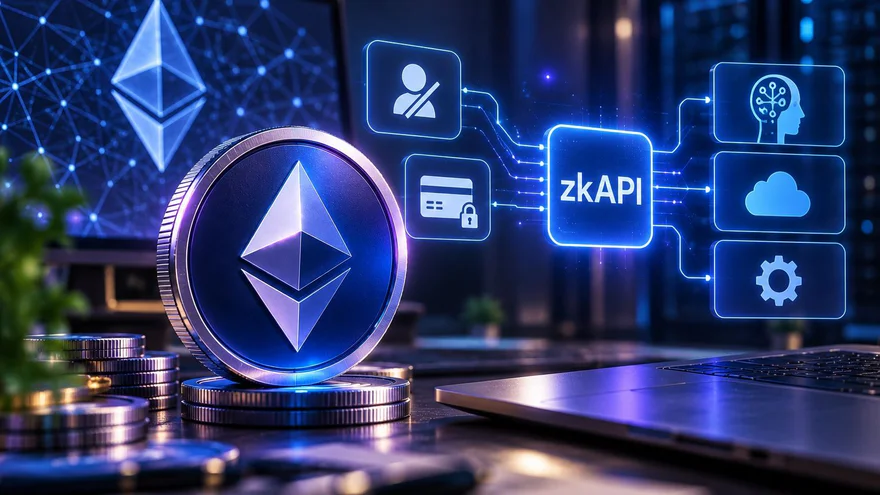
The Ethereum Foundation and the Open Anonymity Project have launched zkAPI, a system that allows for prepaid services for artificial intelligence and other pay-as-you-go services without linking payment identity to each request. The system has been operational on the Ethereum mainnet since October 1.
zkAPI uses zero-knowledge proofs and one-time API keys to separate the payer's identity from what they purchase. The Ethereum Foundation states the problem directly: “Every AI API call today carries identity.” This is the chain zkAPI attempts to break. A user deposits ETH, USDC, or other funds into a contract vault. The balance is represented by a private note, which can be spent without revealing which deposit backs it. A program on the user's device generates a zero-knowledge proof that confirms the note covers the expenses and has not yet been spent. The server verifies the claim without knowing whose note it is.
Deposits are stored as commitments in a 32-level Merkle tree. Spending generates one-way serial numbers—nullifiers; cryptography is ensured by Groth16 proofs on the BN254 curve and Poseidon hashing. An attempt to spend the same balance twice reveals itself through duplication. After payment authorization, the server creates a fresh short-term key with a dollar limit. The key lives only in the device's memory, and the request goes directly to the AI provider. When the key expires, the provider records the actual consumed amount in a signed receipt, and zkAPI deducts it from the private note, not the entire limit.
However, complete invisibility is not achieved. zkAPI separates payment identity from interface usage but does not hide what the user types: the provider still receives requests as they need to run the model. A stable IP address, timing, and repetitive behavior can link supposedly separate sessions. The foundation warns: “Common request fragments can act as fingerprints.” For stronger anonymity, Tor is recommended. The protocol is marked as experimental in the repository. The same scheme can serve blockchain requests, image and video generation, VPN traffic, and machine-to-machine services.
This material is prepared solely for informational purposes and does not constitute financial advice or a recommendation.
Related articles