Fluence Study: Hyperscaler GPU Rates Are Nearly Twice as High as Specialized Clouds
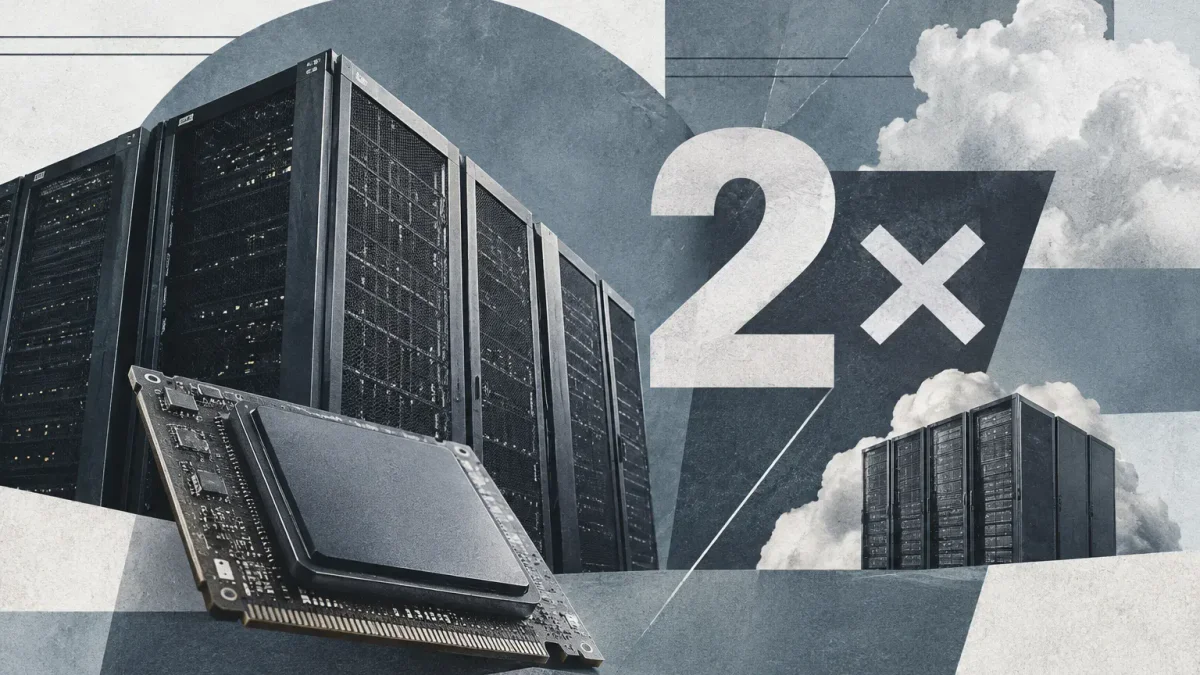
Fluence has presented a study called The AI Compute Race, dedicated to the cost of renting graphics processors for artificial intelligence tasks. According to the report, the published rates of major cloud providers are on average 1.98 times higher than the median rates of specialized GPU clouds. The difference depends on the processor model, provider, and rental conditions.
How GPU Rates Differ
The study covers the cost of cloud computing on NVIDIA H100, H200, and B200 graphics processors.
According to Fluence, the median rates of hyperscalers exceed those of specialized GPU clouds by 2.8 times for H100 and 1.4 times for B200.
For NVIDIA H200, the range of published rates is from $4.08 to $10.60 per GPU-hour.
The duration of the contract significantly affects the cost. Compared to hourly rates from the same provider, annual reservations provide a median discount of 21%, and three-year reservations offer 48%.
Renting interruptible computing power costs on average 53% of the standard on-demand usage cost. However, such resources are mainly suitable for tasks that allow for stopping and resuming computations.
The comparison is based on stated rates, which may differ from the actual terms of individual corporate agreements.
GPU Rental Costs Continue to Rise
According to data from GetDeploying, cited in the study, the rental cost of 17 out of 22 tracked graphics processor models has increased over the past year.
Median rates for NVIDIA H100 have risen by 13–30% depending on the comparison period.
The report's authors attribute the situation to high demand for artificial intelligence computing and limited equipment availability.
An additional factor is the spread of models with open weights, which companies can independently run on rented or owned GPUs.
According to estimates provided in the study, the combined capital expenditures of the four largest hyperscalers in 2026 could reach $720–740 billion.
At the same time, major AI developers are entering into long-term agreements with specialized cloud companies. This limits the volume of new computing power available to other customers.
Financial Instruments for GPU Computing Emerge in the Market
The rise in the cost of computing resources is accompanied by the development of financial instruments related to GPU infrastructure.
CME Group, Intercontinental Exchange (ICE), and Nodal Exchange have announced plans to launch futures contracts, with settlements tied to computing cost indices.
Such instruments are intended for managing the risks of changes in GPU rental prices, although their actual launch depends on the conditions of the respective exchanges and regulatory procedures.
Simultaneously, lending secured by computing infrastructure is developing. For example, in October, Lambda announced raising secured financing of about $1 billion with a fixed interest rate of 6.78%.
Thus, computing power is gradually becoming not only a technological resource but also a subject of long-term contracts, credit agreements, and financial instruments.
This material is prepared solely for informational purposes and does not constitute financial advice or a recommendation.
Related articles