Gold Falls to 14-Month Low Amid Fed Rate Hike Expectations
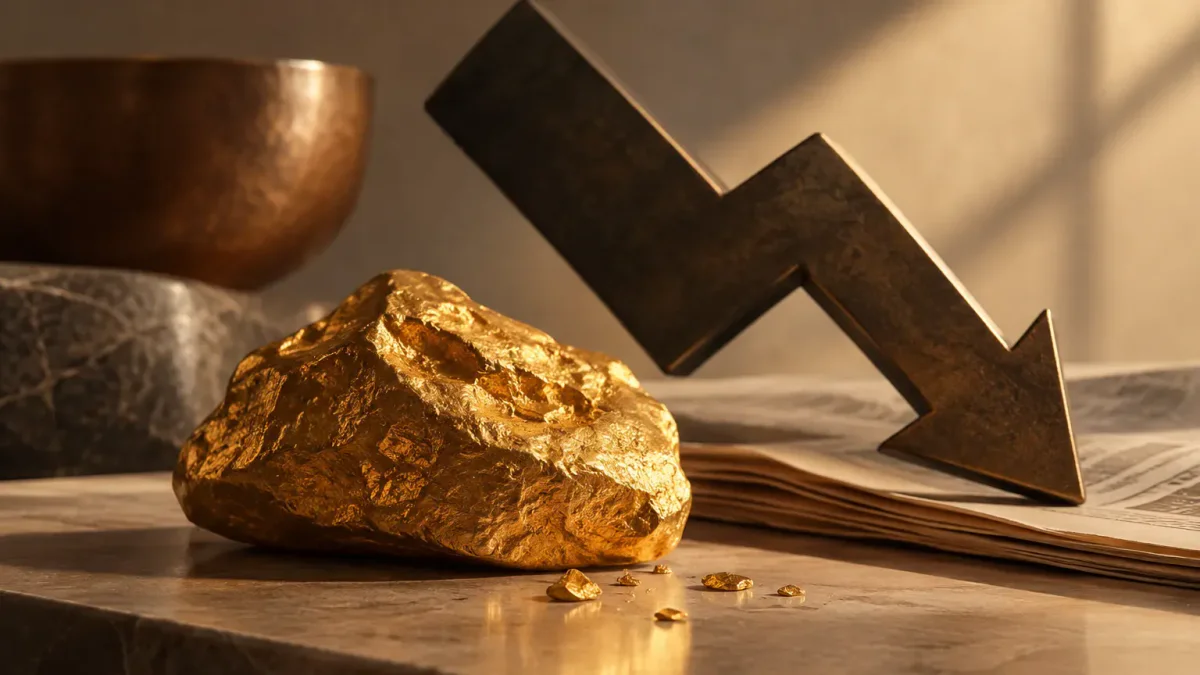
Gold has fallen to a 14-month low amid the strengthening of the US dollar and expectations of further interest rate hikes by the Federal Reserve. On Wednesday, November 18, the price of the precious metal approached $3,700 per troy ounce, and on November 19, spot quotes fell to $3,693.13.
Additional pressure on the market was exerted by statements from Federal Reserve representatives, who allowed for further tightening of monetary policy to combat inflation. Against this backdrop, investors are reassessing the prospects for gold, which does not yield interest income and becomes less attractive as the yields of other financial instruments rise.
Why Gold Has Fallen to a 14-Month Low
One of the main reasons for the price decline was the strengthening of the US dollar. Since gold is predominantly traded in US dollars, the rise in the US currency makes the metal more expensive for buyers using other currencies.
Additional influence was exerted by expectations of a Federal Reserve key rate hike. Board of Governors member Christopher Waller previously stated that persistent inflation might require a rate increase of 0.5 percentage points at the December meeting.
President of the Federal Reserve Bank of St. Louis, Alberto Musalem, also allowed for the necessity of several additional rate hikes, while New York Fed President John Williams emphasized that the fight against inflation is not yet over.
According to CME FedWatch data on November 19, the probability of a 0.25 percentage point Fed rate hike was estimated at approximately 92%. The probability of a more significant 0.5-point increase was about 8%.
Peter Schiff Warned of Risks to Financial Markets
Economist Peter Schiff expressed doubts that the Fed could carry out such a large-scale tightening of monetary policy as market participants suggest.
In his opinion, if the regulator indeed begins the most aggressive fight against inflation since the leadership of Paul Volcker, the consequences could be significantly more severe than the current decline in gold prices.
"In that case, stock, bond, and real estate markets will collapse, and the subsequent financial crisis will overshadow the events of 2008," Schiff wrote on the social network X.
The economist considers such a scenario destructive for the financial system, so he doubts that the Fed can implement such a strict policy in full.
Meanwhile, Fed representatives point to the opposite risk: insufficient tightening could lead to sustained high inflation. Waller previously noted that with steady price growth in various sectors of the economy, a rate increase of only 0.25 percentage points could cast doubt on the Fed's determination to return inflation to the target level.
The next meeting of the Federal Open Market Committee is scheduled for December 8–9. Its results will show how seriously the Fed intends to tighten monetary policy and how the expectations of financial market participants will change.
This material is prepared solely for informational purposes and does not constitute financial advice or a recommendation.