Goldman Sachs Reports Long-Term Consequences of AI-Related Layoffs
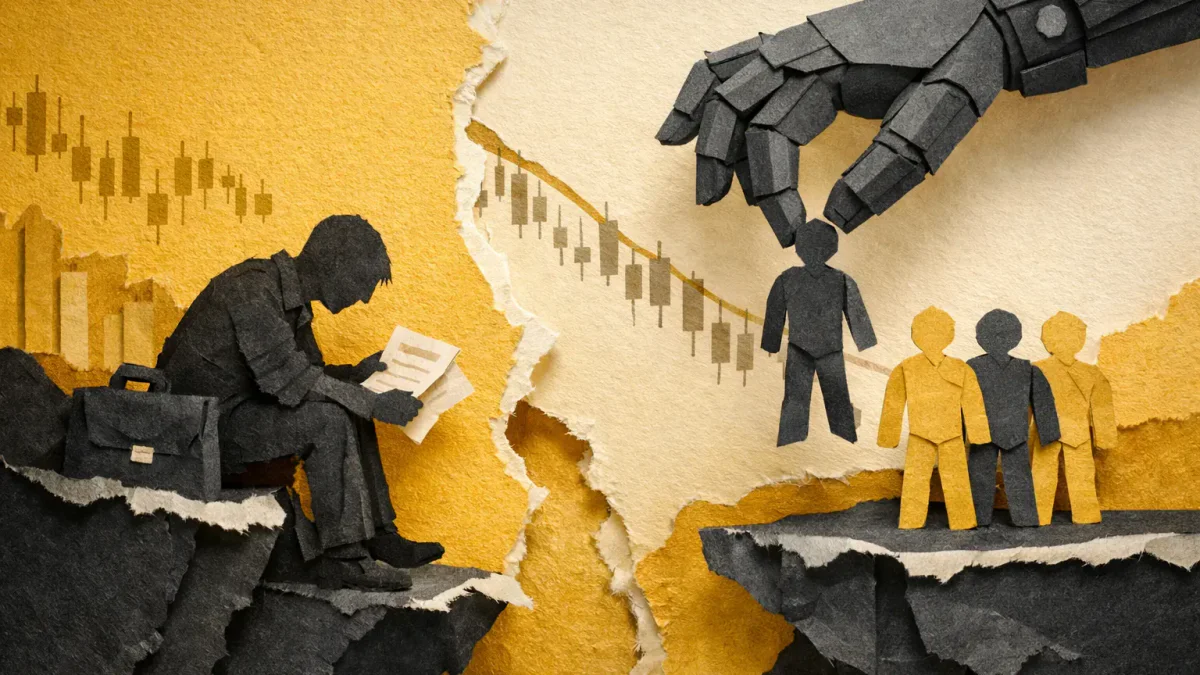
Goldman Sachs published a report on how layoffs due to AI are affecting American workers. Economist Pierfrancesco Mei compared them to four decades of job losses due to technology: those who lost positions in AI-prone professions have been searching for new jobs for about a month longer than other laid-off workers since 2025. A year after losing their jobs, they were about 10 percentage points more likely to remain unemployed. According to Goldman, the effect is comparable to previous waves, and Mei described the damage as long-term.
Workers aged 35 and older are suffering more: they need about five weeks longer than other laid-off workers to return to full employment. For those under 35, the gap is about three weeks. The same pattern is visible across all laid-off workers: according to the Labor Department, among those who had worked at their previous place for at least three years, 72.9% of people aged 25-54, 57.3% aged 55-64, and 38.6% aged 65 and older were employed by January 2026. From 2023 to 2025, 7.4 million people lost their jobs compared to 6.3 million in the previous survey.
According to Challenger, Gray & Christmas, over nine months, companies announced 120,136 layoffs citing AI – about 21% of all layoffs and the main reason. Earnings of those returning to full employment also decreased: among those who lost their jobs from 2023 to 2025 and found full employment again, about 49% earn the same or more than before, compared to 62% in the previous survey.
Earlier work by Goldman on data since 1979 showed that after losing jobs due to technology, real earnings grow more slowly than for other laid-off workers, and the risk of becoming unemployed again is consistently higher. Young people not only return to full employment sooner but also manage to change fewer temporary jobs. Mei believes they can adapt more flexibly to AI and calls this an encouraging signal.
At the same time, the Stanford Digital Economy Lab, using ADP data, found a problem from another angle: employment of 22-25-year-olds in the most AI-prone professions is about 19% lower than it would be if it grew at the same rate as their peers in less AI-prone professions. Experienced workers do not have such a gap, and the adjustment is more through hiring fewer young people than through layoffs.
This material is prepared solely for informational purposes and does not constitute financial advice or a recommendation.
Related articles