Google Opens Access to Gemini 4 Carbon and Introduces Swarm Feature
On November 10, 2026, Google opened access to the Gemini 4 Carbon artificial intelligence model for developers, corporate clients, and Google AI Ultra subscription users. The neural network is designed to perform complex multi-step tasks, including software development, scientific research, and vulnerability analysis.
Previously, on October 28, the company introduced the model and began providing limited access to cybersecurity specialists through the Fairwind program. Now, Gemini 4 Carbon is available via API in Google AI Studio and the Gemini for business platform, and phased implementation for AI Ultra subscribers has begun in the Gemini app and AI Mode in Google search.
Unlike the previously released Gemini 4 Argon, which is aimed at a wide range of work tasks, Carbon is designed for more complex scenarios requiring extensive analysis and multiple result verifications.
According to Google, the model ranked first in the CursorBench 4.0, WANDR, and AutomationBench tests. The company also claims that the cost of performing tasks in these tests was more than twice as low as that of the nearest competing models.
However, the results reflect certain testing conditions and do not imply similar advantages in all usage scenarios.
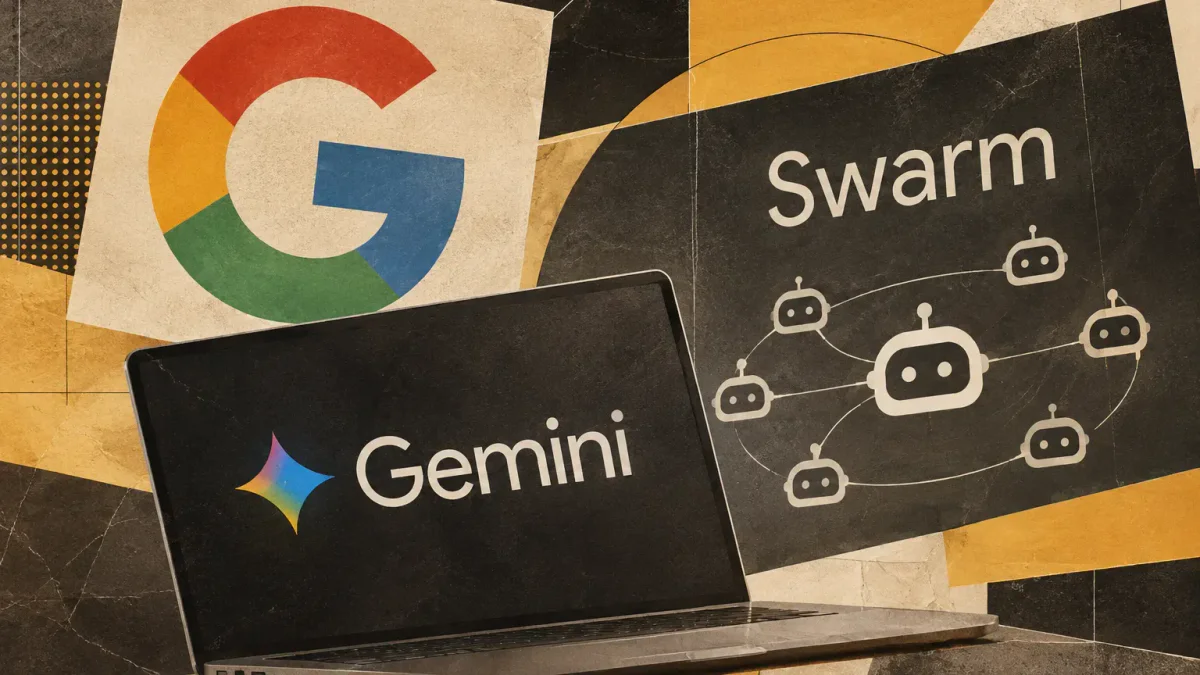
Swarm combines multiple AI agents for project work
Simultaneously with expanding access, Google introduced a preliminary version of the Swarm feature in the Google Antigravity development environment.
The tool allows distributing a complex task among several AI agents. Gemini 4 Carbon can handle architecture design, work coordination, and result verification, while lighter models perform auxiliary operations.
Agents operate in separate environments, and additional verification mechanisms allow for analyzing changes and identifying errors. This approach is intended for software product development, troubleshooting, and working with large projects.
Google presented cybersecurity testing results
A separate direction for Gemini 4 Carbon is related to detecting software vulnerabilities and preparing fixes.
In internal tests of the Project Fortify system, Google reported a 100% threat detection rate and 95% classification accuracy. These figures relate to a specific set of test tasks and do not characterize the model's effectiveness in all real-world conditions.
As part of the Wiz Scan for Good program, developers also used Carbon to check two large cloud services. According to Google, the model discovered previously unknown vulnerabilities in less than two hours.
Additional tests focused on protection against malicious instructions. In the Gray Swan IPI test, the model did not allow any successful indirect instruction injections. In another series of tests with an adaptive attacking agent, the protection system blocked 99% of simulated attack scenarios.
Google emphasizes that these results do not preclude the emergence of more complex ways to bypass protection.
The cost of using Gemini 4 Carbon via API until November 30 is $2 per 1 million input tokens and $10 per 1 million outputs. From December 1, an increase to $4 and $20, respectively, is planned.
Thus, Google is expanding access to a model focused on complex computational tasks while developing tools for collaborative work of AI agents. However, the effectiveness of Gemini 4 Carbon in specific projects will depend on the nature of the tasks, chosen settings, and application conditions.
This material is prepared solely for informational purposes and does not constitute financial advice or a recommendation.
Related articles