GPT-6.2 Astra Helps Identify the Author of an Anonymous Drawing Album After Two Centuries
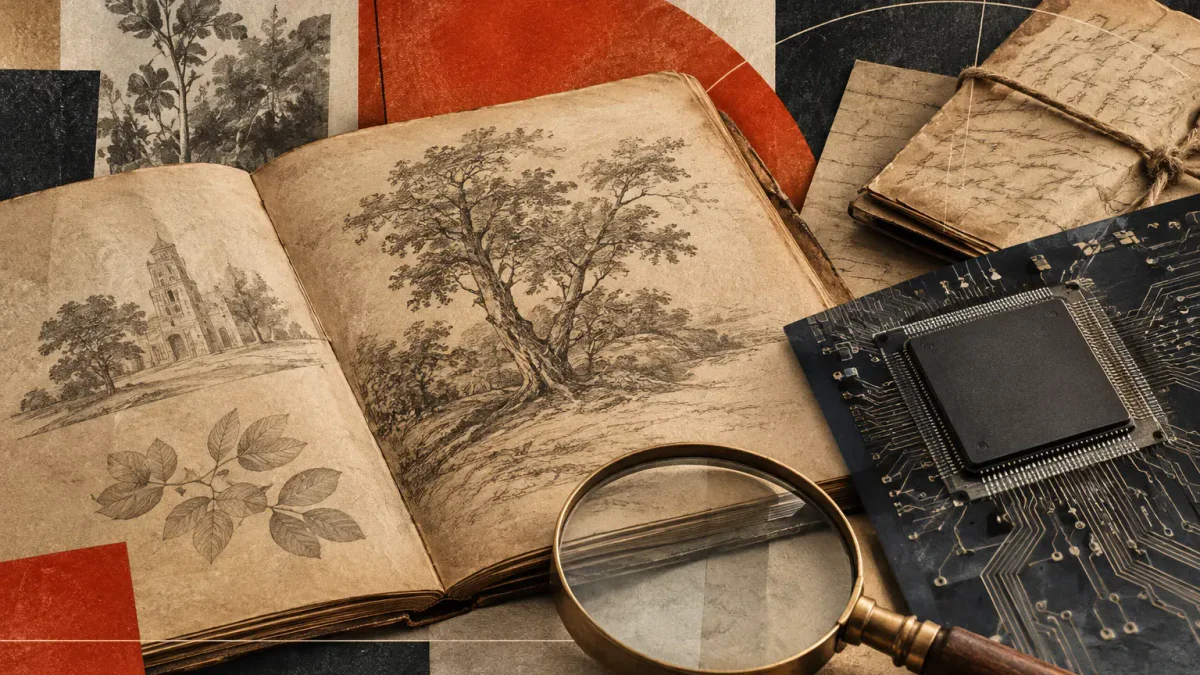
Historian Mark Humphries reported on November 24 about the results of testing OpenAI's GPT-6.2 Astra. In 22 minutes, the model suggested the author of an anonymous album of drawings from 1808, stored in the Beinecke Library at Yale University. The AI also pointed to an archival document that allowed the researcher to verify this version.
How AI Identified the Likely Author of the Drawings
The album is dedicated to a journey from Montreal to Fort William and back. Of the 84 pages of the manuscript, 34 contain drawings. Humphries had been investigating the authorship since 2022, but was unable to establish the identity of the artist.
For the experiment, the historian provided the model with images of the album and his scholarly article. GPT-6.2 Astra matched the dated sketches with archival sources and identified the likely author as French aristocrat Louis de Rohan-Chabot, who served as an officer in the British army. One of the clues was information about his journey in the diary of Canadian trader Joseph Frobisher.
How the Historian Verified the Model's Hypothesis
The AI suggested requesting a copy of Chabot's travel diary, preserved on microfilm at Cleveland State University. Humphries obtained the archival materials and found a similarity in handwriting with the signatures in the album. The dates and route also matched. In an entry dated June 18, 1808, the diary's author described creating a sketch of Fort St. Joseph, corresponding to an image in the Yale album.
According to the historian, the discovered diary contains about 162 pages and includes information on the fur trade in North America. Thus, the search helped not only clarify the authorship of the drawings but also revealed a source of independent interest to researchers.
What Tasks AI Can Perform in Historical Research
When repeating the experiment with Claude Fable 5.2, the model suggested the same author in about 35 minutes but did not find the travel diary. Both systems were able to connect disparate historical information, but the search results differed.
The experiment demonstrates the potential of AI in searching archival materials and forming hypotheses. However, the 22 minutes refer only to the model's work, not the entire research: obtaining documents and verifying evidence was done by a human. One such case also does not establish how reliably AI handles other historical tasks or how much it reduces overall research costs.
This material is prepared solely for informational purposes and does not constitute financial advice or a recommendation.