How to Protect Your Crypto Wallet from Malicious Smart Contract Permissions

To steal digital assets, attackers do not necessarily need access to a user's private key or seed phrase. In some cases, a previously granted token spending approval is sufficient. The specifics of such threats were examined by the cryptocurrency exchange Gate and wallet developer OneKey in the third installment of the educational series Gate Security Academy.
What are Smart Contract Approvals
Token Approval is a mechanism that allows a specific address or smart contract to manage a specified amount of tokens on behalf of their owner. Such approvals are used when interacting with decentralized exchanges, lending protocols, and other blockchain applications.
The approval allows for the execution of intended operations without the user having to confirm each one again. However, its effect may persist even after the initial transaction is completed.
Unlimited approvals, which grant access to the entire available balance of a specific token under the relevant contract, pose a particular danger. If the recipient of the approval is a fraudster or a vulnerability is found in the used smart contract, the user's assets may be at risk.
When interacting with NFTs, there are also approvals that cover multiple assets within a single collection, not just an individual token.
Why a Signed Message Can Be Dangerous
Not every action in a crypto wallet involves directly sending a transaction to the blockchain. Some mechanisms, including Permit and Permit2, involve signing messages off-chain.
The absence of a network fee when signing such a message does not mean there is no financial risk. Depending on the content, the signature may grant authority for subsequent asset spending.
Previously, UNUM reported on fraudulent schemes using phishing pages and token spending approvals.
Before signing a request, it is necessary to understand what action will be performed, which assets it affects, and to whom the corresponding authority is granted. If the wallet does not allow for an unambiguous determination of the request's content, the operation should be declined.
How to Check and Revoke Approvals
Closing a website, disconnecting a wallet from an application, or deleting a program does not cancel approvals already active on the blockchain. Therefore, they need to be periodically checked, especially if the user regularly interacts with DeFi protocols.
Particular attention should be paid to unlimited approvals, unknown smart contracts, and applications that are no longer in use.
To revoke approvals, one can use the appropriate wallet function or a trusted approval management tool. Before confirming, it is necessary to ensure the correctness of the selected network, wallet address, token, and recipient of the approval.
Revocation usually requires a separate blockchain transaction and the payment of a network fee. After its execution, it is necessary to verify that the approval has indeed been canceled.
However, revoking an approval does not return already stolen funds. Some previously signed but not yet used messages may also be absent from the list of active approvals. To annul them, it is necessary to consider the specifics of the corresponding protocol.
How Malicious Approvals Differ from Address Spoofing
Another common method of fraud is address spoofing, known as Address Poisoning. In this case, attackers rely on the user copying an erroneous address from the transaction history that resembles one previously used.
Previously, UNUM reported on an attempt to spoof an Ethereum wallet address after a test transfer.
The recipient's address should be obtained from a verified source, and it should be fully checked before sending funds. For large transfers, it is recommended to first send a small test amount. However, even a successful test transaction does not negate the need to recheck the address before the main transfer.
What to Do If You Find a Suspicious Approval
If a user finds a dangerous approval or signs of unauthorized cryptocurrency withdrawal, the main task is to prevent further losses.
The course of action depends on the nature of the threat:
stop interacting with the suspicious application and do not sign additional requests;
revoke identified malicious permissions through verified tools, if it can be done safely;
if withdrawals continue or the threat scale is unknown, prioritize protecting the remaining assets;
if there is a risk of private key or seed phrase compromise, use a new wallet with an independent recovery phrase;
save transaction hashes, addresses, operation times, and other details for contacting support or law enforcement.
If funds sent to pay network fees immediately disappear from the wallet, do not replenish it again. In such a situation, seek help from verified security specialists through official channels.
Avoid offers of guaranteed return of stolen assets. Scammers may attack victims again, demanding payment for services or providing wallet recovery data.
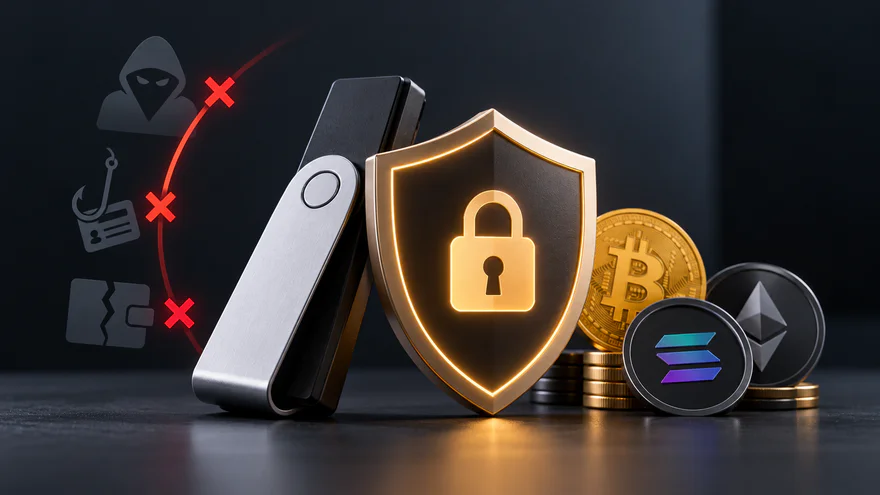
Does a hardware wallet protect against malicious permissions
Hardware wallets help reduce the risk of private key compromise since operations are signed in a secure environment. Some devices and applications also support displaying transaction contents and warnings about potential threats.
This material is prepared solely for informational purposes and does not constitute financial advice or a recommendation.