IQM Unveils Halocene Quantum Computer Upgrade Program Without Downtime
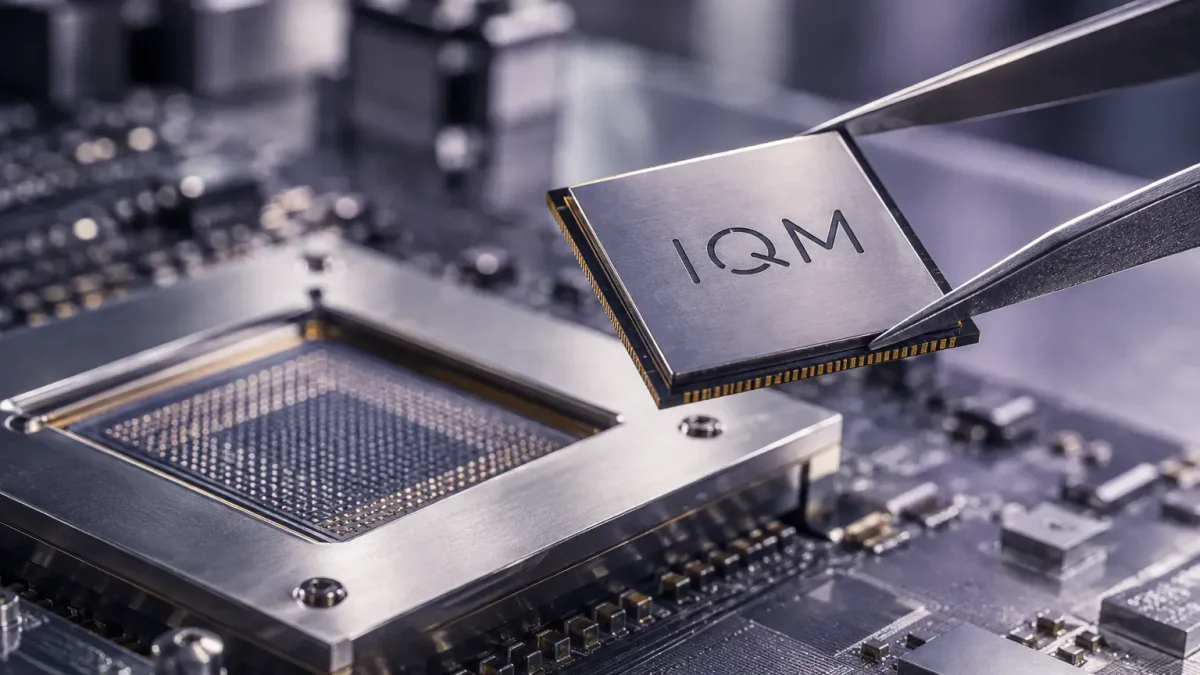
IQM Quantum Computers announced an upgrade program for Halocene systems, allowing a phased transition from the current 150-qubit installations to future versions with more than 1000 qubits. The new equipment will be connected in parallel with the existing one, so research centers can continue computations during the upgrade.
How the Halocene Upgrade Will Proceed
The program was presented on November 17, 2026, at the SC26 conference in Chicago. The Halocene line is intended for research in quantum error correction—one of the key areas in developing more reliable quantum computing systems. IQM announced the first 150-qubit configuration in November 2025.
The proposed upgrade procedure involves installing the next-generation Halocene alongside the operating computer. The existing system will continue to perform tasks while the new one is connected and commissioned. Only after this will the old equipment be phased out. According to IQM, this approach will avoid downtime associated with replacing the installation.
The 1000-qubit milestone currently pertains to future versions of the platform. The company describes the program as a path of gradual equipment development rather than the launch of a ready-made computer of such power. The timing for the appearance of larger configurations is not specified in the new announcement.
How Quantum Computers Will Connect to Supercomputers
Each upgrade will include an integration service with high-performance computing (HPC) infrastructure. The new system is planned to be connected to the center's existing job schedulers and GPU computing platforms.
This is important for hybrid tasks where the quantum processor works in conjunction with conventional CPU and GPU processors. The classical part of the infrastructure can manage tasks, process intermediate results, and ensure algorithm operation, while the quantum system performs operations intended for it.
IQM also states that software tools and workflows will remain compatible between Halocene generations. Thanks to a common architecture, organizations will not have to rebuild the entire software environment after each equipment change.
Where the Platform Will Be Used
As an example, IQM cites the LUMI-IQ project for the LUMI AI Factory, coordinated by the Finnish CSC center. The chosen Halocene system for it is expected to work in conjunction with the LUMI-AI supercomputing infrastructure.
The company also refers to the experience of research centers that have already consistently upgraded its quantum computers. In particular, the Finnish VTT transitioned from a 5-qubit system to a 53-qubit one, and the German Leibniz Supercomputing Centre integrated several IQM installations into its computing environment.
For clients, the program primarily addresses an organizational challenge: it allows planning the development of quantum equipment without completely halting current research. However, merely increasing the number of qubits does not guarantee proportional acceleration of computations. Practical results will also depend on the quality of quantum operations, error correction, and the efficiency of working in tandem with classical infrastructure.
This material is prepared solely for informational purposes and does not constitute financial advice or a recommendation.