Ledger CEO Claims No Absolute Protection Against Hacks Sparks Criticism
Pascal Gauthier, CEO of the French company Ledger, a manufacturer of hardware crypto wallets, faced criticism after stating that it is impossible to ensure absolute protection of digital assets. In an interview with Bloomberg Crypto on November 10, 2026, he acknowledged that Ledger products also do not eliminate the risk of compromise.
"Sooner or later, everyone will be hacked. Perfect security does not exist. And this rule applies to Ledger just like everyone else," Gauthier stated.
After a fragment of the interview spread on the social network X, some users questioned such a position from the head of a company specializing in cryptocurrency protection. In particular, they pointed out the contradiction between the warning about the inevitability of hacks and the purpose of hardware wallets, which allow storing access keys to digital assets outside of constantly connected internet devices.
Gauthier compared Ledger's losses to the consequences of the Binance hack
The statement was made during a discussion of the cyberattack on the cryptocurrency exchange Binance, which occurred on October 29. According to the company's preliminary report, the incident affected digital assets worth approximately $6.34 billion. As of November 3, about $2.85 billion had been frozen or intercepted.
Gauthier noted that centralized platforms concentrate significant volumes of cryptocurrency under the management of one organization, which creates additional risks when security is breached. He also mentioned previous incidents involving FTX and Bybit, emphasizing the differences between centralized and self-custody of assets.
During the interview, losses of approximately $90 million related to the use of modified Ledger hardware wallets were also discussed. Gauthier stated that this amount represents about 0.01% of the value of the assets protected by the company's products. In his estimation, self-custody of cryptocurrencies using hardware devices allows limiting the scale of individual attacks compared to centralized platforms. Independent confirmation of the calculation basis he used was not provided.
The executive also provided approximate estimates of total cryptocurrency thefts: about $9 billion in 2025 and $12 billion since the beginning of 2026. The sources of these calculations were not specified in the interview.
Modified Ledger wallets transmitted recovery phrases
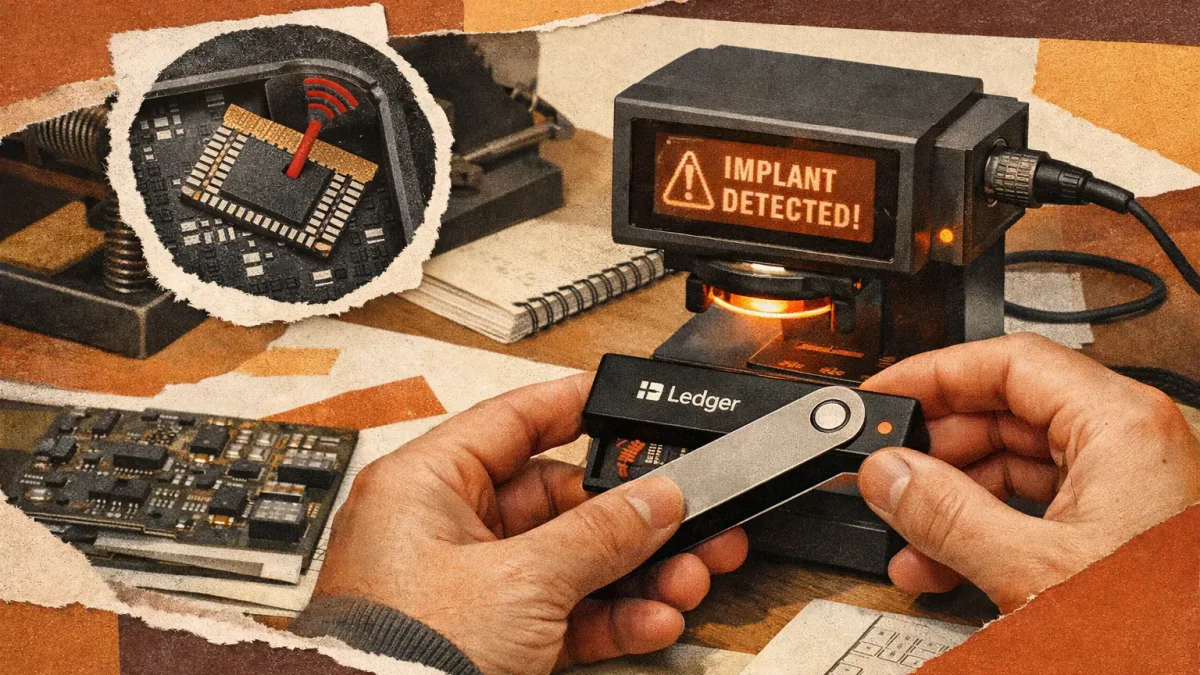
In October, Ledger investigated reports of thefts through devices distributed by a third-party seller, CryptoBilis, in Southeast Asia. The inspection revealed unauthorized electronic components embedded in certain hardware wallets.
According to the company, the additional components could read the 24-word recovery phrase during the initial setup of the device and transmit it to attackers via a mobile network. Meanwhile, Ledger's secure chip and operating system were not directly compromised, according to the company's investigation results.
After identifying the incident, Ledger began checking product distribution channels and device protection against physical interference. Sales through certain channels were suspended, and the European retail network MediaMarktSaturn temporarily halted the sale of Ledger wallets following a separate report of a modified device in Germany.
Amid concerns about the security of hardware wallets, Suiball, a project for storing crypto assets of the Sui ecosystem, announced its closure on November 10. According to the team, the Sui Foundation deemed the risks of further project support excessive. The foundation had not publicly confirmed this information at the time of publication.
The development of Suiball had already reached the production stage, but instead of delivering the devices, the team plans to refund buyers. According to the project, about 80% of pre-orders were placed through the blockchain. Refunds in the stablecoin USDC are planned to be sent to the respective buyers within a week.
This material is prepared solely for informational purposes and does not constitute financial advice or a recommendation.
Related articles