OKXICE to Launch Trading on November 23 After Rejections from 56 Companies
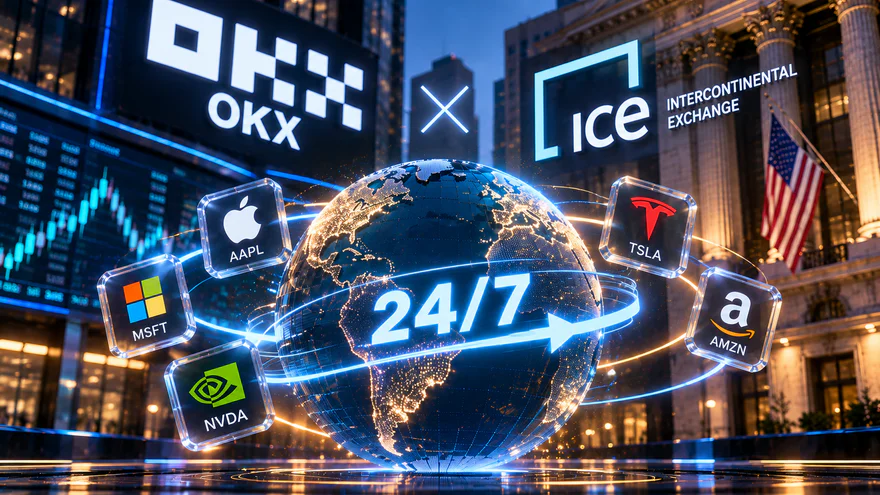
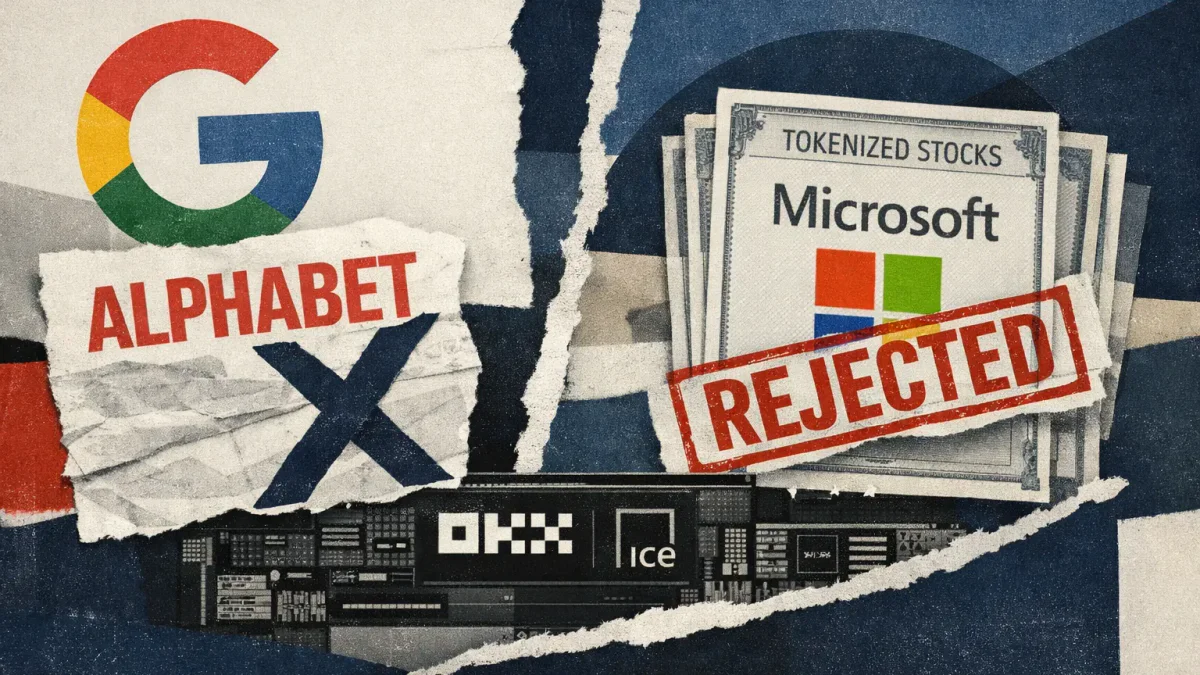
The joint platform of the cryptocurrency exchange OKX and Intercontinental Exchange (ICE), owner of the New York Stock Exchange, is preparing to launch trading of tokenized securities on November 23. However, most companies from the initial list opposed participation in the project. Out of 62 issuers, 56 filed objections, limiting the selection of individual stocks on the new platform.
Most companies opposed the tokenization of stocks
Among the initially announced issuers who did not file objections, six companies related to the cryptocurrency industry remain: Coinbase, Robinhood, Circle, Strategy, Securitize, and BitGo.
The list of assets that OKXICE plans to make available also includes Better.com and 59 Direxion exchange-traded funds. In total, the platform announced more than 70 tokenized assets.
Trading will be available to eligible OKX clients in the US around the clock. Tokens must be backed by corresponding securities on a one-to-one basis.
The number of objections among the initial 62 companies gradually increased. At the end of October, there were 30, by November 5 – 54, and according to updated data on November 17 – 56.
Among the companies that opposed were Apple, Nvidia, and Applied Optoelectronics. The latter pointed to uncertainty in pricing, liquidity, and volatility, as well as the risk that investors might mistakenly perceive tokenized stocks as a product supported by the issuer itself.
Why lack of objections does not mean agreement
Temporary rules of the American regulator provide a mechanism for opting out of participation. A company receives notification of the planned tokenization of its stocks and can file an objection within a specified period.
If the issuer does not object within 30 days of receiving the notification, the platform, while meeting other requirements, may allow the tokenized securities to be traded. However, a company's silence does not necessarily mean it supports the project.
The objection applies to a specific trading platform. Therefore, companies that do not want to see tokenized versions of their stocks on other similar platforms may need to respond separately to notifications from their operators.
To limit the impact of new trading on the main market, volume limits for transactions are set. Depending on the category of securities, they amount to 0.25% or 2.5% of the average daily trading volume for the previous month.
DTCC develops a separate tokenization model
In parallel with trading platforms, the infrastructure for tokenized securities is being developed by the Depository Trust & Clearing Corporation (DTCC), one of the key participants in the American depository accounting and settlement system.
In October, the DTC division launched a service for the tokenization of securities already in its depository system. Twenty participants joined the project, and at the time of launch, 34 securities issues were available for tokenization.
Unlike OKXICE, the DTCC service is primarily focused on the infrastructure for accounting, storing, and transferring rights to securities. It allows the use of digital representations of assets while preserving the rights of their owners.
What the launch of OKXICE will show
After the planned start on November 23, it will become clearer how much demand there is for round-the-clock trading of tokenized stocks among American investors.
So far, the composition of participants indicates limited interest from major issuers outside the cryptocurrency sector. The further development of the platform will depend on liquidity, the quality of pricing, and the willingness of new companies to allow trading of tokenized versions of their securities.
This material is prepared solely for informational purposes and does not constitute financial advice or a recommendation.