Opera has opened early access to WebAI for local neural network deployment
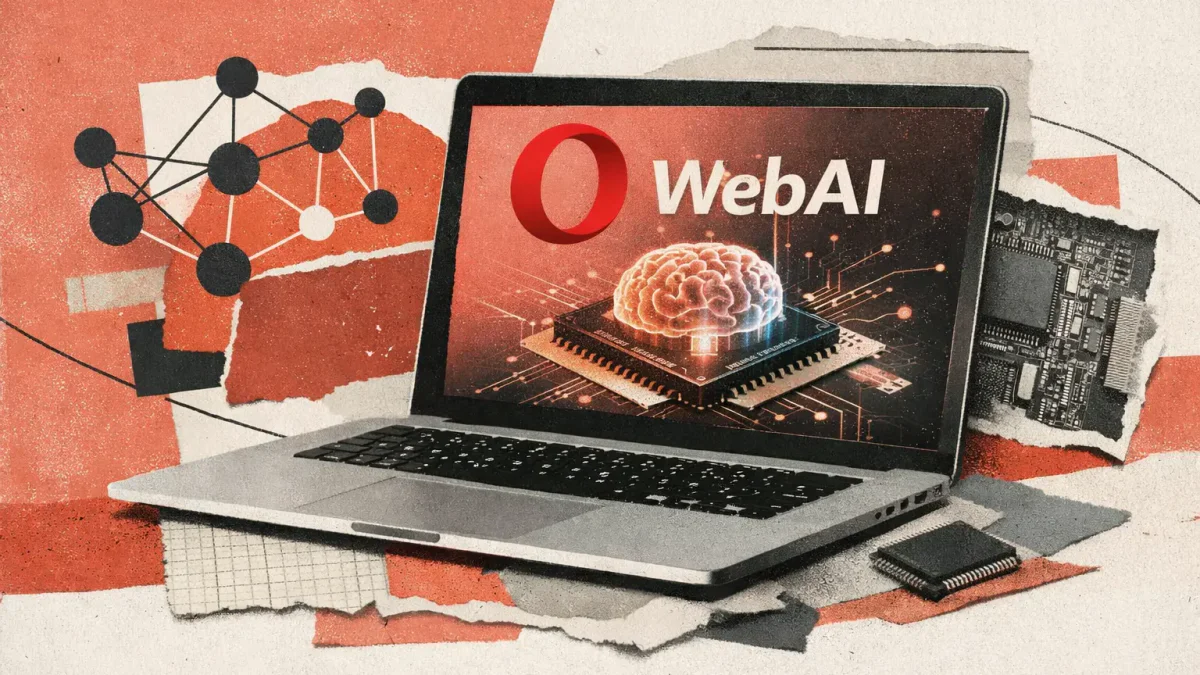
On October 27, Opera opened early access to WebAI. The technology allows websites and extensions to use artificial intelligence directly on the user's computer without sending requests to the cloud. The flagship Opera One was the first to receive the innovation. Next in line are the gaming Opera GX and Neon – a browser with AI agents that the company launched in September 2025. According to Opera, WebAI is a web standard supported by Google and Microsoft, although it has not yet been approved. Part of the interfaces, including the Prompt API, was developed by the Chrome team. In May 2025, Microsoft added them to test versions of Edge with its Phi-4-mini model.
Opera's implementation is not tied to a single provider. Initially, it works with Google's Gemma family, released in February 2024. On Mac, a built-in LLM is also available: Apple provided it to third-party applications in June 2025. Open-weight neural networks run on Opera's own inference engine. Additionally, WebAI utilizes compatible algorithms already installed in the system. There is no need to install additional software, deploy a local server, or obtain an API key.
There are three main interfaces. Prompt is responsible for text generation, Decisions for information classification, and Semantic Embedder identifies semantic connections between content fragments. To demonstrate them, the team prepared experimental extensions. Project Lens highlights paragraphs of an article important for the selected project, while Semantic Art turns a publication into an animation where similar sentences appear together. There are also entertaining ones: in C.I.A.O, two ASCII-symbol cats perform a scene on a given topic, and RecordIn Alchemy turns any note into a deliberately inspiring social media post.
By default, WebAI is turned off. To enable it, you need to open Opera AI settings and activate the Enable Web AI API option. After that, Opera One will download the appropriate model, which will take a few minutes. Permissions are granted to each site individually. The preliminary version only works on computers with 64-bit Windows and Intel or AMD processors, as well as on Macs with Apple silicon chips.
Christian Kolondra, Executive Vice President of Opera for Browsers and AI, stated that much of what people want from AI does not require a data center. According to the press release, web application authors will be able to embed neural network functions without server infrastructure and request payments, and their audiences will not need subscriptions. An addition based on WebAI can, for example, sort tabs, mark clickbait, and find job vacancies by profile without an account, expenses, or transferring information to an external cloud service. TechCrunch reminded that users often trust chatbots with a lot of personal information, sometimes not realizing how it is stored and used. On-device processing, according to the publication, does not eliminate all privacy risks but provides more control. The downside is the load on the computer: the speed of responses depends on its characteristics, Opera acknowledges.
This material is prepared solely for informational purposes and does not constitute financial advice or a recommendation.
Related articles