Players Criticize Web3 Games After Series of Studio Closures in 2026
Members of the Web3 gaming community have criticized projects that attracted users with the promise of owning digital items, earning tokens, and participating in the gaming economy, but failed to ensure the longevity of their products. A new discussion began on November 8, 2026, following a post by gaming commentator Yellow Panther on the social network X.
He stated that blockchain games initially attracted him with the possibility of owning in-game assets, exchanging items between projects, and transparent economic mechanisms. However, in his opinion, many developers paid insufficient attention to creating games capable of retaining an audience without constant token rewards.
Other participants in the discussion pointed to the issue of digital ownership. Owning NFTs may confirm rights to a specific token but does not guarantee access to the associated game item if developers shut down servers or cease supporting the application.
Which Web3 Projects Closed in 2026
Throughout the year, several companies announced the closure of gaming projects or entire business lines.
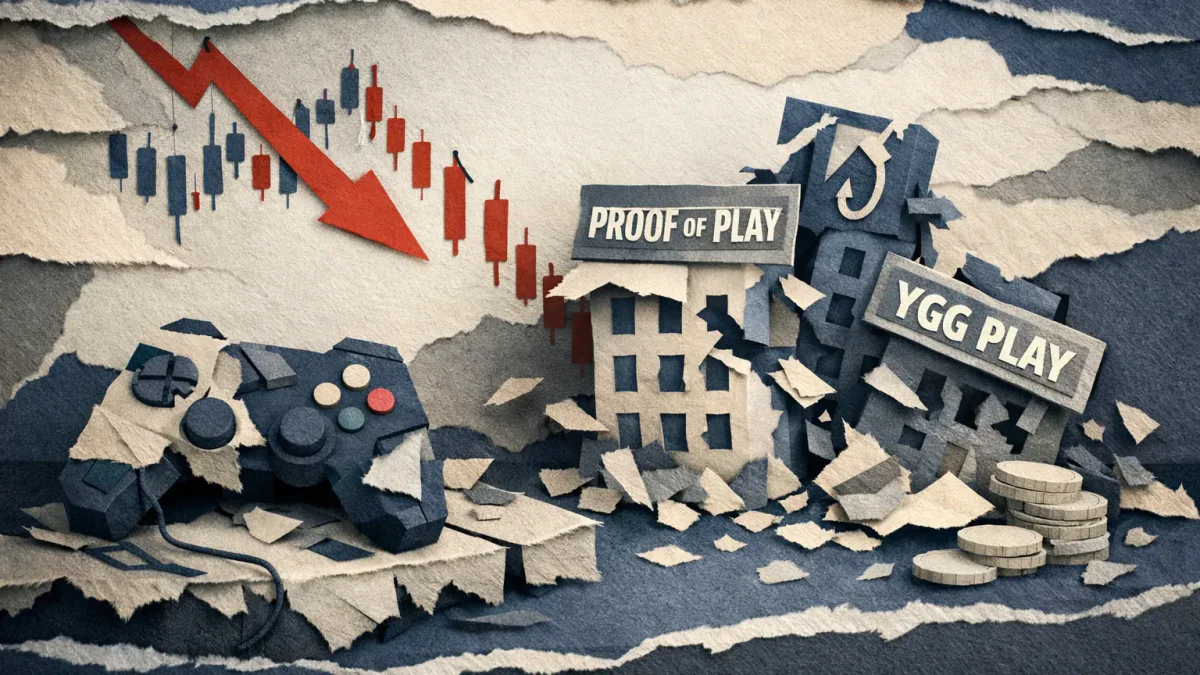
In August, the studio Proof of Play, which developed Pirate Nation and previously attracted $33 million in investments, announced its closure. The company acknowledged that it failed to create a sustainable business model for blockchain games. Some of the software code and graphic materials were released for free use, while the independent Pirate Nation Foundation continued to support the PIRATE token.
In June, the company Uncharted ceased operations of the game Fishing Frenzy. Before closing, it distributed $62,845 in USDC stablecoins among community members and separately refunded $7,021 USDC to players for purchases that met refund conditions.
In July, Yield Guild Games announced the closure of its publishing division YGG Play. The restructuring affected 35 jobs, and the projects LOL Land and Waifu Sweeper were discontinued. However, some games continued to operate under independent developers.
In September, Pixelmon also halted game development after trials with publishers did not result in a long-term commercial agreement.
Funding for Blockchain Games Declined
According to DappRadar, investments in blockchain games amounted to $73 million in Q2 2025. This is 93% less than the same period in 2024. In the same quarter, more than 300 gaming decentralized applications became inactive.
The Blockchain Game Alliance estimated the industry's annual funding in 2025 at $293 million, compared to over $10 billion at its peak in 2022.
Meanwhile, part of the investments was directed not to game developers but to companies creating infrastructure. Of the $129 million raised by the sector in Q3 2025, gaming projects received 53%, according to DappRadar.
Investment activity did not completely cease. Galaxy Research recorded 37 deals in Q2 2026 in the combined category of Web3, NFT, DAO, metaverses, and games. However, the figure does not allow for a separate assessment of funding for gaming studios.
Ongoing Projects Continue to Release Updates
Despite closures, some blockchain games continue to develop. For example, the card strategy game Gods Unchained, using Immutable's infrastructure, introduced the Reckoning expansion with 87 new cards on October 13.
Developers also announced improvements to the card creation system Instant Forge, scheduled for launch on November 4. The game continues to support competitive modes and trading of collectible digital cards.
However, the continuation of individual projects does not indicate a recovery of the entire industry. The discussion on November 8 shows that for some players, the main criterion for the success of a Web3 game remains the quality of gameplay and the ability to use acquired items independently of short-term token incentives.
This material is prepared solely for informational purposes and does not constitute financial advice or a recommendation.
Related articles