South Korea Calls on Exchanges to Increase Asset Share in Cold Wallets After Binance Hack
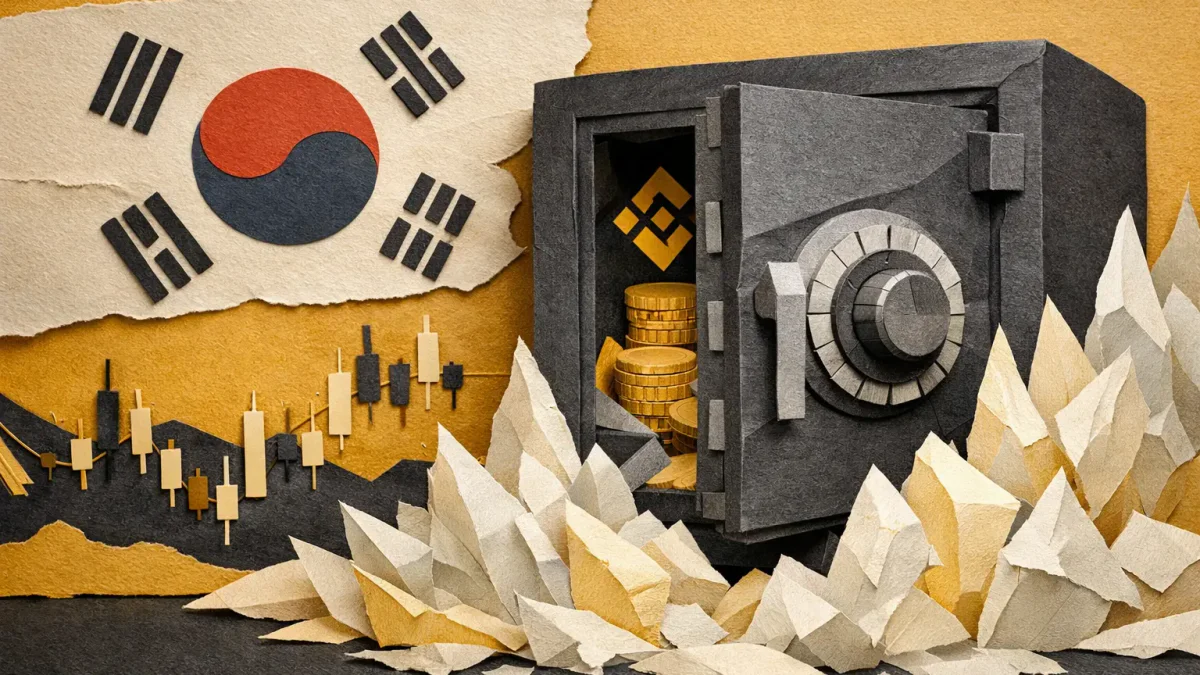
The Financial Services Commission of South Korea (FSC) has urged local cryptocurrency exchanges to increase the proportion of assets stored in cold wallets following the $6.3 billion hack of Binance that occurred last week.
On Monday, the FSC held an emergency meeting with the Financial Supervisory Service, the Financial Security Institute, the Digital Asset Exchange Alliance (DAXA), and major crypto service providers to assess the impact of the hack on the South Korean market and review the exchanges' security measures. The regulator examined IT access control measures, approval and withdrawal signing procedures, and administrator privileges, and also urged providers to increase the proportion of assets in cold wallets that are not connected to the internet.
What was the proportion of cold storage
According to TRM Labs, hackers stole approximately $6.3 billion from Binance's hot wallets connected to the internet and transferred most of the funds in about 20 minutes. Binance stated that the overwhelming majority of user assets are stored in cold storage.
Under South Korean law, exchanges are required to keep at least 80% of users' crypto assets in cold wallets, but the actual proportions at major exchanges vary. As of the end of September, Upbit's proportion of assets in cold storage was 99.17%, Bithumb's was 94.76%, Coinone's was 85%, according to the Financial Supervisory Service, as cited by local media. Digital X, formerly Korbit, had 82.79%, and GOPAX had 80.54%.
What else does the regulator recommend
The FSC urged providers to continuously monitor deposits and withdrawals, increase staff for incident response, and promptly report unusual access attempts by sharing this information. Operators were advised to form additional reserves and implement other security measures that can be applied immediately to prevent similar incidents. The regulator will continue to work with relevant agencies and the industry to prevent new attacks and limit damage.
This material is prepared solely for informational purposes and does not constitute financial advice or a recommendation.
Related articles