SpaceX Receives Approval to Launch 1 Million Satellites for Orbital Data Centers
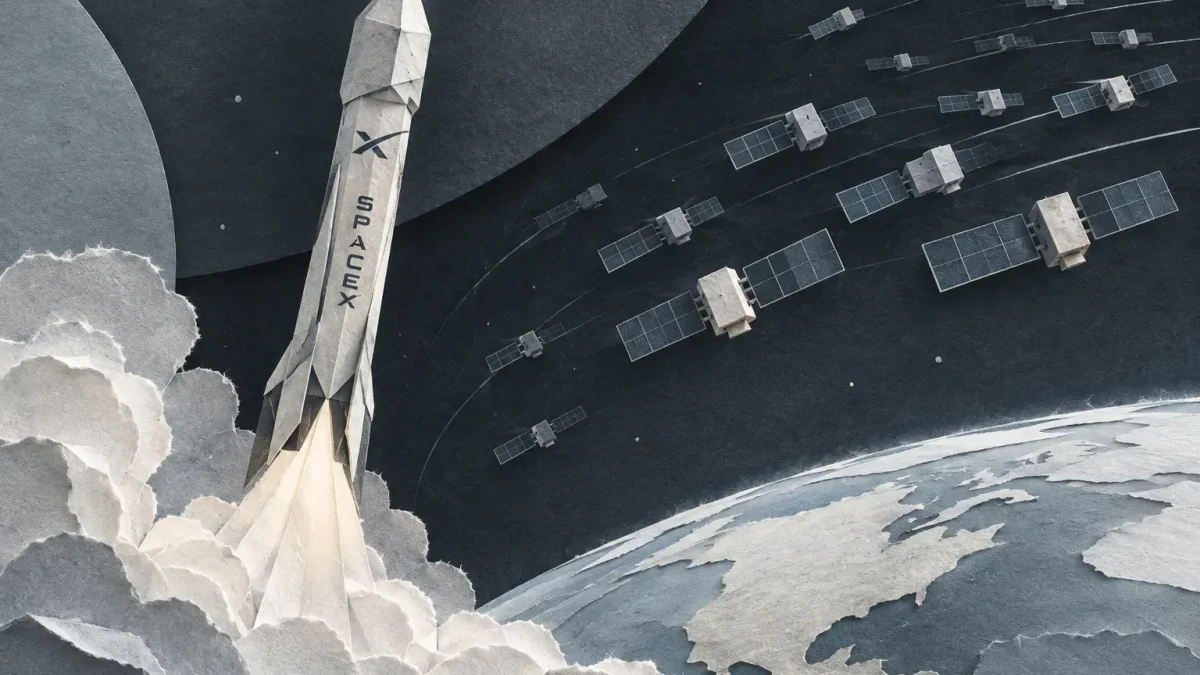
The U.S. Federal Communications Commission (FCC) has approved the creation of a SpaceX satellite constellation of up to 1 million units for performing artificial intelligence computations. The decision on November 25, 2026, removes one of the main regulatory barriers to the implementation of the Starmind project.
According to FCC Chairman Brendan Carr, this is the first-ever U.S. authorization for the creation of an orbital data center constellation. The project involves moving part of the computing power off Earth amid growing demand for artificial intelligence infrastructure.
When SpaceX Plans to Deploy Starmind Satellites
SpaceX submitted the initial application in January 2026. According to the FCC's final decision, satellites can be placed in orbits ranging from 500 to 1,002 km in altitude.
The authorization provides for the phased formation of the constellation:
November 2033 – start of operation of the first satellite.
November 2035 – deployment of 100,000 satellites.
November 2038 – deployment of 500,000 satellites.
November 2040 – completion of the constellation formation.
The license is valid for 15 years from the moment the first satellite is put into operation. The specified dates are conditions of the FCC authorization, not a guaranteed schedule for the commercial launch of the project.
How SpaceX's Orbital Data Centers Will Work
The computing modules are planned to be powered by solar panels. SpaceX intends to use radiative cooling to dissipate excess heat and laser communication for data transmission between satellites.
The company expects that placing computing infrastructure in space will reduce dependence on terrestrial power grids and decrease water consumption needed for cooling traditional data centers.
Orbital computing is also part of SpaceX's long-term development strategy, presented to investors before the IPO in June 2026.
However, the commercial viability of such systems has not yet been confirmed. The cost of launching units, the complexity of their maintenance, cooling of computing equipment, and the need for periodic satellite replacement remain significant technological and financial risk factors.
Scientists Warn of Starmind Project Risks
The scale of the future satellite constellation raises concerns in the scientific community. Key risks identified by experts include an increased likelihood of spacecraft collisions, the formation of orbital debris, and the deterioration of conditions for astronomical observations.
The FCC has required SpaceX to regularly provide reports on the constellation's status, potentially hazardous satellite proximities, and the decommissioning of units.
Simultaneously, Jeff Bezos's Blue Origin is developing its own network of orbital data centers. As part of the Sunrise project, the company has requested permission to deploy up to 51,600 satellites.
Competition among space companies is gradually spreading to the market for artificial intelligence computing infrastructure. However, the prospects of this direction will depend not only on regulatory decisions but also on the operators' ability to provide competitive computing costs compared to terrestrial data centers.
This material is prepared solely for informational purposes and does not constitute financial advice or a recommendation.