Startup Uranium Digital Raises $16.5 Million for Uranium Trading on the Blockchain
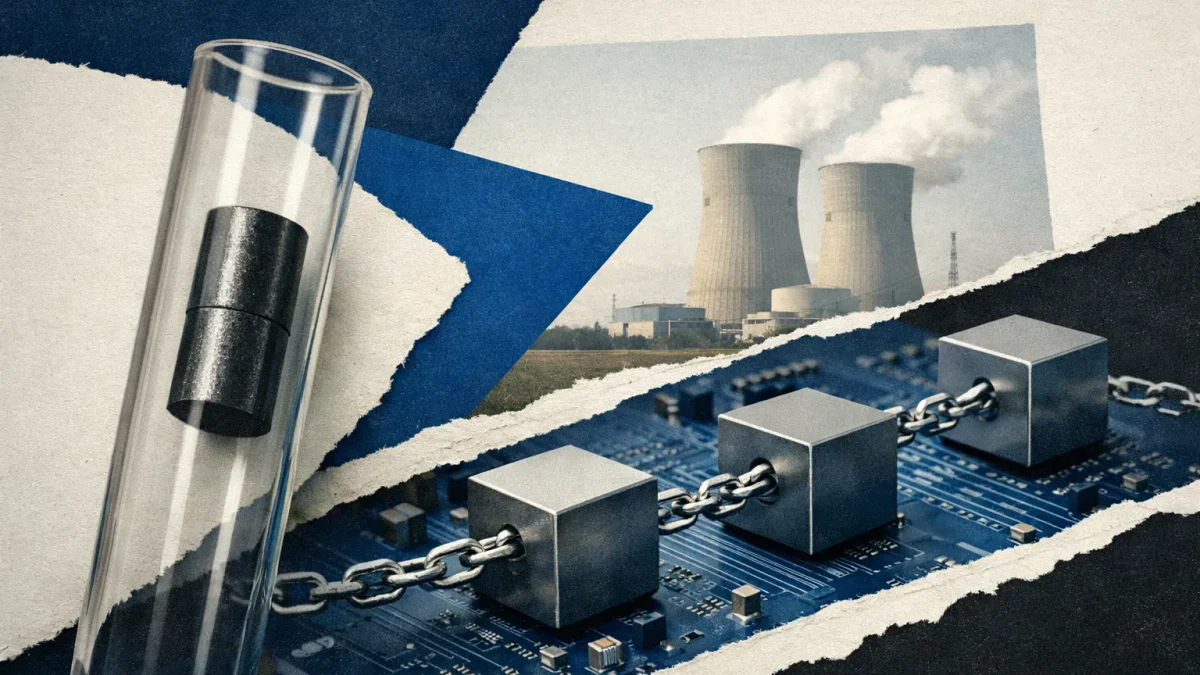
The American startup Uranium Digital announced on November 5, 2026, that it raised $16.5 million in a Series A funding round completed in October. The funds will be directed towards developing an electronic platform for institutional trading of physical uranium, where blockchain is used to account for rights to the material stored in specialized facilities.
The round was led by venture company Blockchain Capital. Existing investors Portal Ventures and entrepreneur Christian Angermayer's Apeiron Investment Group also participated in the funding.
Previously, in 2025, Uranium Digital raised $6.1 million in a seed round supported by Framework Ventures. The company did not disclose its valuation following the new funding.
Uranium Digital was founded in 2024 by Alex Dymala-Doleski and Jack Rindner. The project idea came to Dymala-Doleski while working in the commodity market, where he traded metals and explored similar operations with uranium.
Unlike gold, copper, and other common exchange-traded commodities, a significant portion of uranium trading is conducted through direct agreements between counterparties. Participants request quotes from brokers, negotiate contracts, and separately arrange the transfer of rights to the material stored in warehouses.
Uranium Digital intends to automate these procedures with an electronic platform designed for uranium producers, energy companies, financial organizations, and other institutional participants.
How Uranium Tokenization Works
The platform uses digital warehouse receipts, each corresponding to one pound of physical uranium concentrate U₃O₈. The material is stored at accredited facilities in North America, and digital records allow for the accounting of rights without the need to move the material with each transaction.
According to the company, the backing of the receipts is verified by independent auditors, and the storage of digital assets is organized through Anchorage Digital Bank.
Participants are provided with an electronic order book, trade position management, and connectivity to infrastructure via FIX API. Access is restricted to organizations that have passed the necessary checks.
The company expects that this model will simplify deal-making and settlements among market participants. However, data on trading volumes and actual reductions in transaction costs are not disclosed.
Interest in developing uranium market infrastructure arises amid increased investments in nuclear energy by technology companies that require electricity for data centers.
In October, Amazon, together with X-energy and American Electric Power, announced the exploration of building 12 small modular reactors with a total capacity of 960 MW in Indiana. A final decision on construction has not yet been made.
In January, Meta entered into an agreement to support Oklo's project to create a nuclear power complex with a capacity of up to 1.2 GW in Ohio. The first electricity is expected no earlier than 2030.
Google is also supporting the development of the Hermes 2 reactor by Kairos Power, with a capacity of up to 50 MW. Its launch is planned for 2030, and the electricity should be supplied to the Tennessee Valley Authority network, which powers the company's data centers.
The implementation of such projects could increase long-term demand for nuclear fuel, but the scale of this demand will depend on the actual commissioning of new capacities. Uranium Digital intends to develop the infrastructure for raw material trading but has not yet disclosed the volumes of operations and financial metrics of its platform.
This material is prepared solely for informational purposes and does not constitute financial advice or a recommendation.
Related articles