US CPI Rose 0.4% in October, Strengthening Fed Rate Hike Expectations

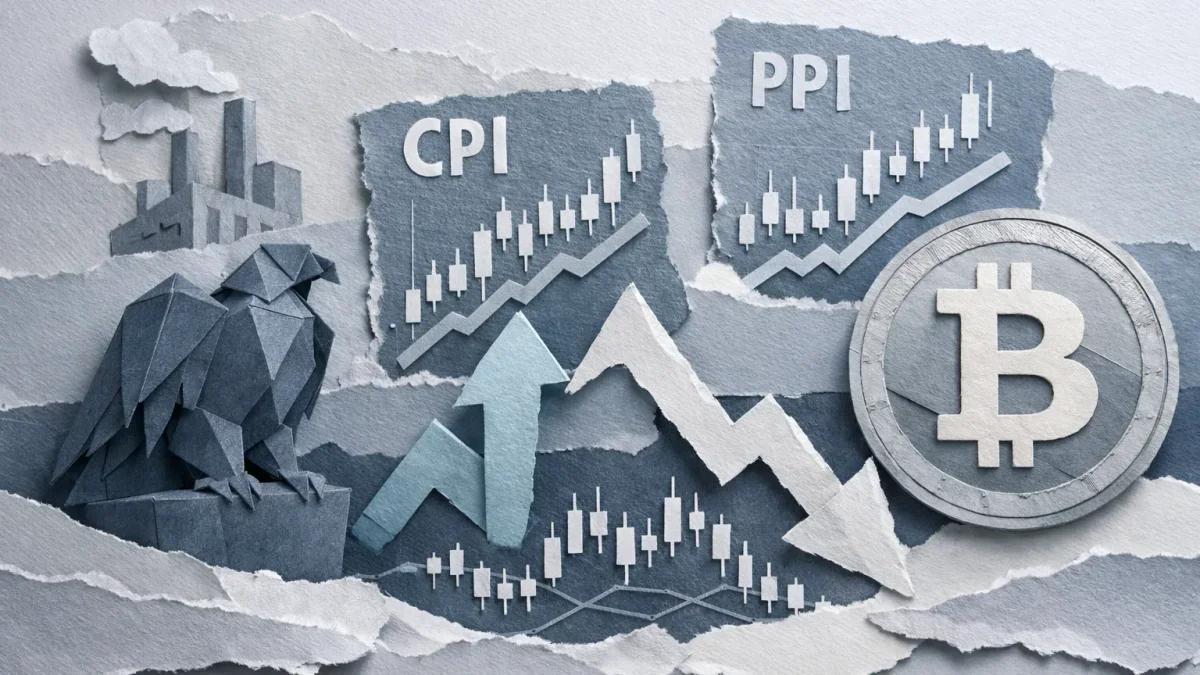
Inflation in the US for October 2026 exceeded economists' forecasts. According to the report by the US Bureau of Labor Statistics (BLS) published on November 10, the Consumer Price Index (CPI) rose by 0.4% for the month, compared to the expected increase of 0.3%. The core index, excluding food and energy, increased by 0.3% against the forecast of 0.2%.
Despite exceeding expectations, the overall monthly price growth slowed compared to September, when it was 0.6%. In October, housing costs increased by 0.3%, accounting for more than 30% of the total CPI growth. Food prices rose by 0.5%, and energy prices by 0.7%.
The October report lacks the usual annual indicators of overall and core inflation. The BLS explained this by a lack of data for October 2025, when a federal government shutdown hindered necessary observations. As a result, the agency could not prepare a reliable 12-month price comparison.
Bitcoin fell below $74,000 amid weak demand
The cryptocurrency market reacted to the CPI release with a decline in quotes. On the morning of November 10, Bitcoin (BTC) was trading around $74,750, but after the statistics were released, it fell below $74,000. In the following hours, the price of the leading cryptocurrency hovered around $73,700.
The weakening of BTC occurred amid continued capital outflows from US spot Bitcoin-ETFs. According to Farside Investors, on November 9, the total net outflow from these funds amounted to $201 million. Meanwhile, $213.2 million was withdrawn from BlackRock's IBIT, while inflows into some other funds partially offset this amount.
Over the two preceding trading sessions, November 5 and 6, the net outflow from US Bitcoin-ETFs reached $842.1 million. This trend indicates weakening demand through exchange-traded funds, although it does not allow for determining the exact contribution of these operations to the change in BTC price.
Analysts at BRN previously warned that even more favorable inflation data would not guarantee a sustainable recovery of the cryptocurrency market. In their view, a prolonged growth requires renewed inflows into ETFs and increased demand in the spot market.
As an important technical benchmark, BRN highlighted the $73,000 level. Closing the daily candle below this mark, according to the company, could increase selling pressure and raise the likelihood of a decline to $70,000. However, this is an analytical scenario, not a guaranteed price movement.
Stock futures declined, bond yields rose
After the release of the inflation statistics, pressure also increased on the US stock market. According to Reuters, two minutes after the CPI release, Nasdaq 100 futures were down 0.92%, and S&P 500 futures were down 0.35%. Dow Jones contracts at the same time were up 0.09%.
Simultaneously, the yield on short-term US government bonds rose. The yield on two-year Treasury notes, sensitive to expectations regarding the Fed's rate, rose to approximately 4.7%. This reaction reflected investors' reassessment of monetary policy prospects after the inflation data exceeded forecasts.
Higher borrowing costs can reduce the attractiveness of risky assets and limit companies' ability to raise capital. However, the dynamics of the stock market and cryptocurrencies depend not only on interest rates but also on corporate results, liquidity, and investor behavior.
The Fed may raise the rate in December
Following the CPI release, market participants increased their expectations of a Fed rate hike at the final meeting of 2026. According to data provided by The Wall Street Journal on November 10, rate futures indicated about a 90% probability of a 25 basis point hike and 10% for a 50 basis point hike. These estimates reflect market expectations at a specific moment and may change.
Currently, the target range for the federal funds rate is 3.75–4%. At the meeting on October 27–28, the Fed left it unchanged.
Federal Reserve Board member Christopher Waller, in a speech on November 10, stated that he leans towards a 25 basis point rate hike in December even with some improvement in inflation statistics. However, he allowed for the possibility of a larger 50 basis point step if the October core CPI is around 0.3% for the month or higher. The speech took place before the inflation data was released and reflected Waller's personal position.
Before the next Fed meeting, market participants will receive additional macroeconomic indicators. The Producer Price Index (PPI) is scheduled for release on November 13, the minutes of the October Fed meeting on November 18, and the Personal Consumption Expenditures (PCE) index data on November 25.
The next meeting of the Federal Open Market Committee will be held on December 8–9. The final decision on the rate will depend on the combination of economic indicators and the regulator's assessment of inflation risks.
This material is prepared solely for informational purposes and does not constitute financial advice or a recommendation.
Related articles