Vizio TVs Continue to Transmit Data After Tracking Opt-Out
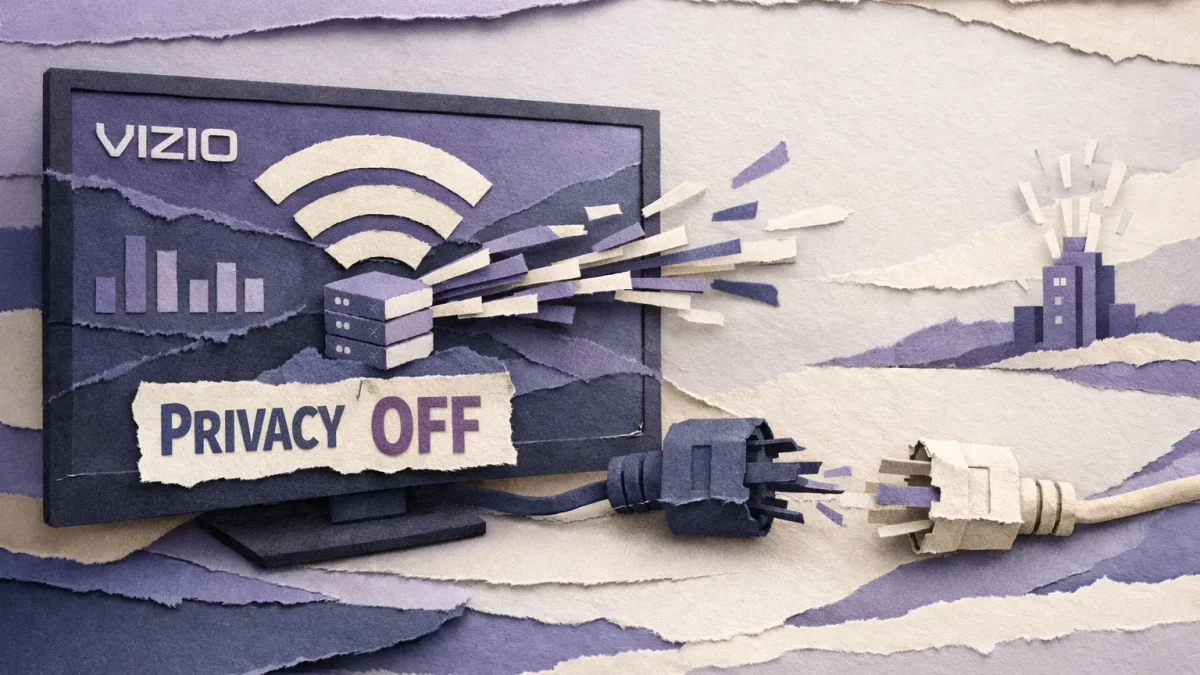
The smart TV from American manufacturer Vizio continued to transmit data to a server associated with view tracking even after the corresponding feature was disabled in the settings. This conclusion was reached by researchers from Northeastern University in the USA, who studied the operation of 12 TVs from 10 manufacturers.
The experiment tested 8 operating systems, which account for about 95% of the US smart TV market. Scientists studied the automatic content recognition (ACR) technology, which allows determining what the user is watching and using this information for audience analysis and ad personalization.
Each viewing scenario, including broadcast TV, HDMI connection, and streaming apps, was tested 30 times with ACR enabled and another 30 times after opting out of tracking in the device settings.
Which TVs continued to transmit data
The most noticeable deviations were found with Vizio using the SmartCast operating system. In all tests, after disabling ACR, the TV continued to send the same amount of network traffic to the Amazon Kinesis server, which researchers linked to content recognition. The transmission persisted even when the device was on the home screen without user actions.
Similar issues were identified with Samsung and Roku. The Samsung TV continued to transmit traffic with signs of ACR in all 30 checks of its own streaming service after disabling tracking. For Roku, the corresponding setting did not apply to the proprietary service The Roku Channel.
Complete cessation of the observed ACR traffic transmission after opting out of tracking was achieved on 4 platforms: LG webOS, Fire TV, VIDAA, and Google TV on Sony TVs.
Researchers emphasize that the traffic from Vizio and Samsung was encrypted. It was not possible to determine the exact content of the transmitted information, so the results do not prove a violation of the law. Moreover, only one Vizio TV was tested, and the behavior of other models may differ.
WatchFree+ service reveals the names of watched shows
A separate issue was found in the free streaming service Vizio WatchFree+. When using it, the names of shows and channels appeared in unencrypted network requests to the infrastructure of Amagi, which provides video stream delivery.
Such requests allow an internet provider or another participant in the data transmission to reconstruct the sequence of watched programs. This transmission cannot be disabled through the TV settings.
In 2017, Vizio already agreed to pay $2.2 million to settle claims by the US Federal Trade Commission and New Jersey authorities. At that time, the company was accused of collecting viewing data from 11 million TVs without proper user consent.
To limit tracking, the authors of the new study suggested disconnecting the TV from the internet and using an external device without ACR. They also published a list of servers, blocking which in laboratory tests did not disrupt the operation of the TVs. However, this method does not eliminate the disclosure of show names through WatchFree+.
This material is prepared solely for informational purposes and does not constitute financial advice or a recommendation.
Related articles