Wrapped Monero plummeted by 99.8% after $13.5 million XMR1 token sale
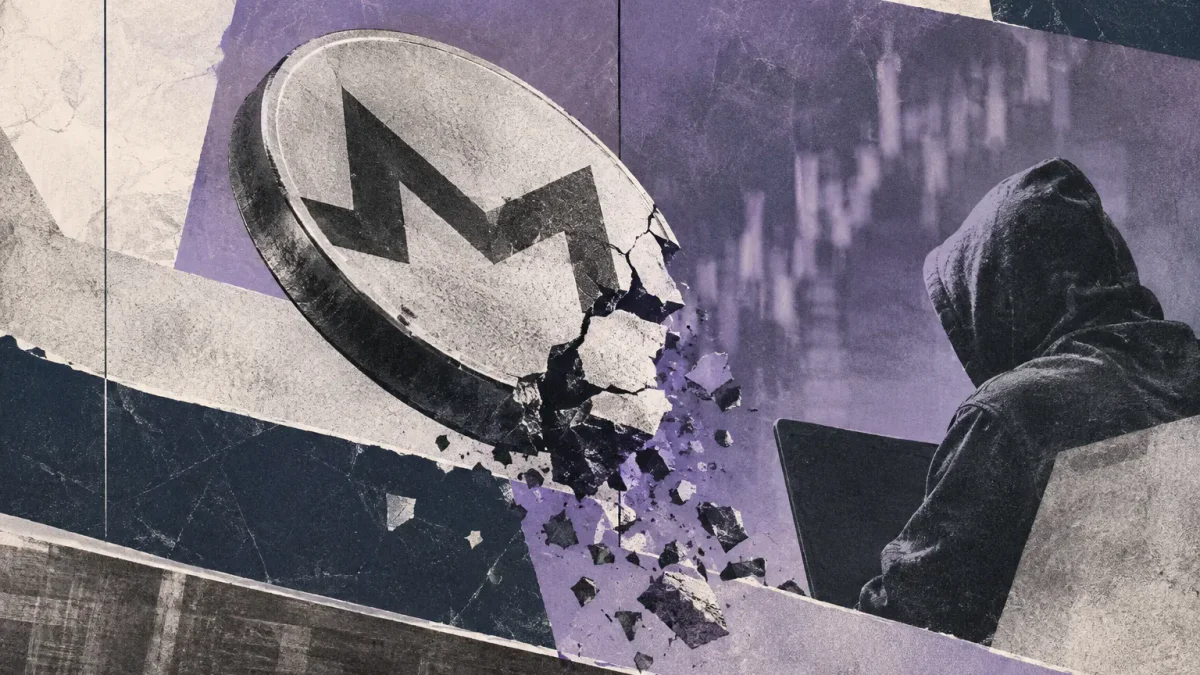
The collateralized Monero token XMR1 plummeted by 99.8% on the Hyperliquid platform after assets worth approximately $13.5 million were sold from a wallet that received tokens from the contract deployment address. According to the analytics company Bitquery, the asset's price dropped from about $500 to $1 in just 30 minutes.
The incident affected Wrapped Monero (XMR1), not the original cryptocurrency Monero (XMR). Wrapped tokens are versions of digital assets issued on other blockchain networks. They allow cryptocurrencies to be used outside their original networks.
Bitquery tracked the $13.5 million transfer
According to Bitquery's analysis, before the sell-off, the wallet received 5.2 million XMR1 tokens from an address associated with the token deployment. It then sold assets worth approximately $13.5 million.
Analysts tracked the further movement of funds. About $13.28 million in USDC was transferred to the Arbitrum network, where $13.22 million was exchanged for 7,467 ETH through the CoW Protocol. Most of the acquired ether was subsequently moved to the Ethereum network.
Bitquery also discovered that funds linked to four hacks that occurred earlier in November were used to purchase XMR1 worth about $6.6 million. These incidents involved Across Protocol, Kava, Lighter, and Safe. It is assumed that the acquisition of the wrapped token could have been used as an intermediate step to obtain native Monero.
However, the analytics company emphasized that it found no on-chain evidence linking these four incidents to the suspicious XMR1 sell-off on Friday.
The investigation also failed to determine how the attackers could have accessed the private key of the token deployment address and who controlled it during the transfers. Therefore, the circumstances of the alleged hack remain unclear.
Wagyu operator reported hosting provider breach
The pseudonymous operator of the Wagyu service, associated with the issuance of XMR1, known as PerpetualCow, explained the incident as a presumed compromise of the hosting provider 1984's infrastructure.
According to him, the incident may have exposed user data and internal server files. The private key associated with the XMR1 deployment was stored on a server that was subsequently deleted. However, PerpetualCow claims that the hosting provider retained logs and files related to the server.
The operator promised to personally compensate the affected traders for their losses. Additionally, he stated that Wagyu plans to resume operations later. Specific timelines for the service's relaunch have not yet been announced.
Cointelegraph reached out to PerpetualCow for additional comments regarding the alleged breach and compensation mechanism, but had not received a response at the time of publication.
This material is prepared solely for informational purposes and does not constitute financial advice or a recommendation.