Zcash Co-Founder Warns of AI Threats to Crypto Wallets
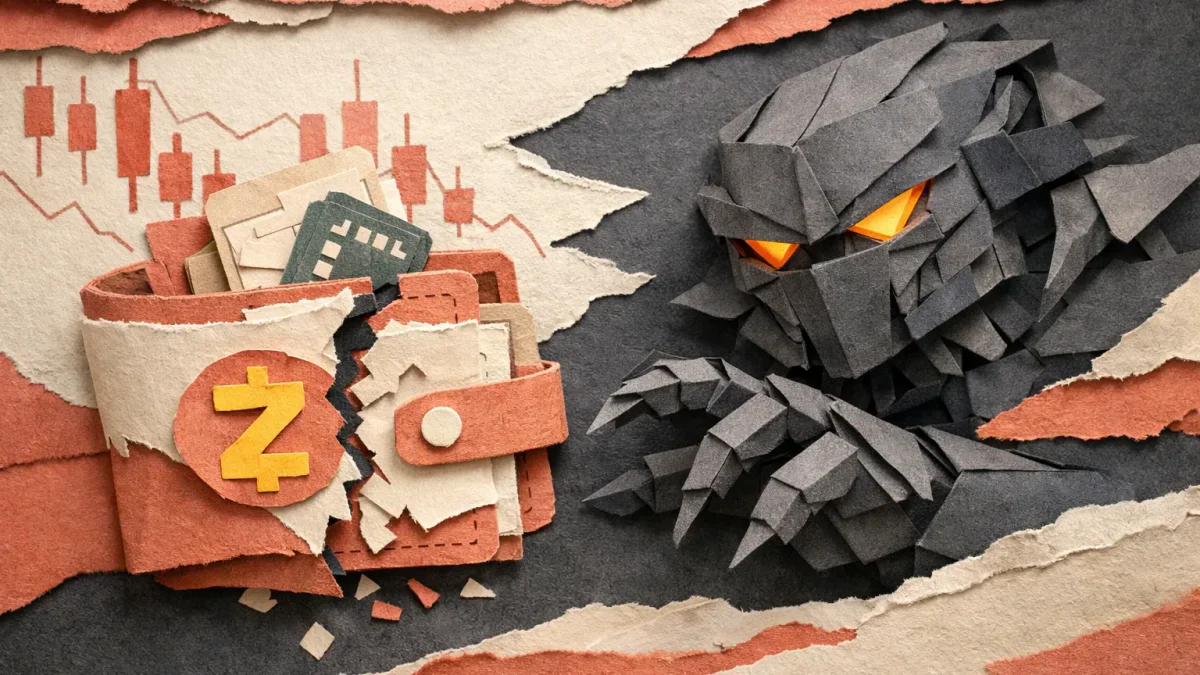
Co-founder of StarkWare and one of the developers of Zcash, Eli Ben-Sasson, warned about the growing risks of using artificial intelligence in cyberattacks. In a post on the X platform on November 5, he noted that the acceleration of AI development could create new threats to systems protecting digital assets, accounts, and confidential data.
According to Ben-Sasson, the industry needs to prepare not only for the potential capabilities of quantum computers but also for the use of modern AI tools to find vulnerabilities in software.
“Your cryptocurrency keys, your life on the internet, any application where something important to you is stored – all of this is protected by cryptography,” the developer wrote.
He believes that with the growth of AI capabilities, the intensity of cyberattacks is unlikely to decrease. However, Ben-Sasson did not report any successful overcoming of modern cryptographic algorithms using artificial intelligence.
What Cyber Threat Statistics Show
According to a study by Google Threat Intelligence Group on September 30, the monthly number of disclosed software vulnerabilities increased from 5,045 in January to 10,740 in August 2026.
At the same time, the average number of vulnerabilities exploited in real attacks grew from 10.5 per month in 2025 to 18 in the first eight months of 2026.
Researchers note that AI helps accelerate the detection of software errors, including vulnerabilities that allow malicious code execution. However, the overall increase in disclosures cannot be entirely attributed to artificial intelligence. Changes in vulnerability registration procedures also affect the statistics.
For cryptocurrency wallets, application errors, hardware device firmware, and secret key management mechanisms pose a particular danger. AI can facilitate the discovery of such shortcomings, but their exploitation does not necessarily imply breaking the cryptography itself.
Ben-Sasson urged the industry to pay more attention to cryptographic solutions based on hash functions, particularly highlighting ZK-STARKs. This technology allows verifying the correctness of computations without revealing all the original data and relies on cryptographic assumptions different from those used in traditional digital signature schemes.
However, ZK-STARKs themselves do not replace mechanisms for protecting private keys. Wallet security also depends on the signature algorithm, software implementation, and conditions for storing secret data.
The warning came after a major attack on Binance on October 29, which affected digital assets worth approximately $6.34 billion. However, there is no confirmation that the attackers used AI to break the exchange's cryptographic algorithms.
Thus, the development of artificial intelligence increases the need for regular software checks and the improvement of protection measures, but it does not mean that modern cryptocurrency wallets have already lost cryptographic security.
This material is prepared solely for informational purposes and does not constitute financial advice or a recommendation.
Related articles