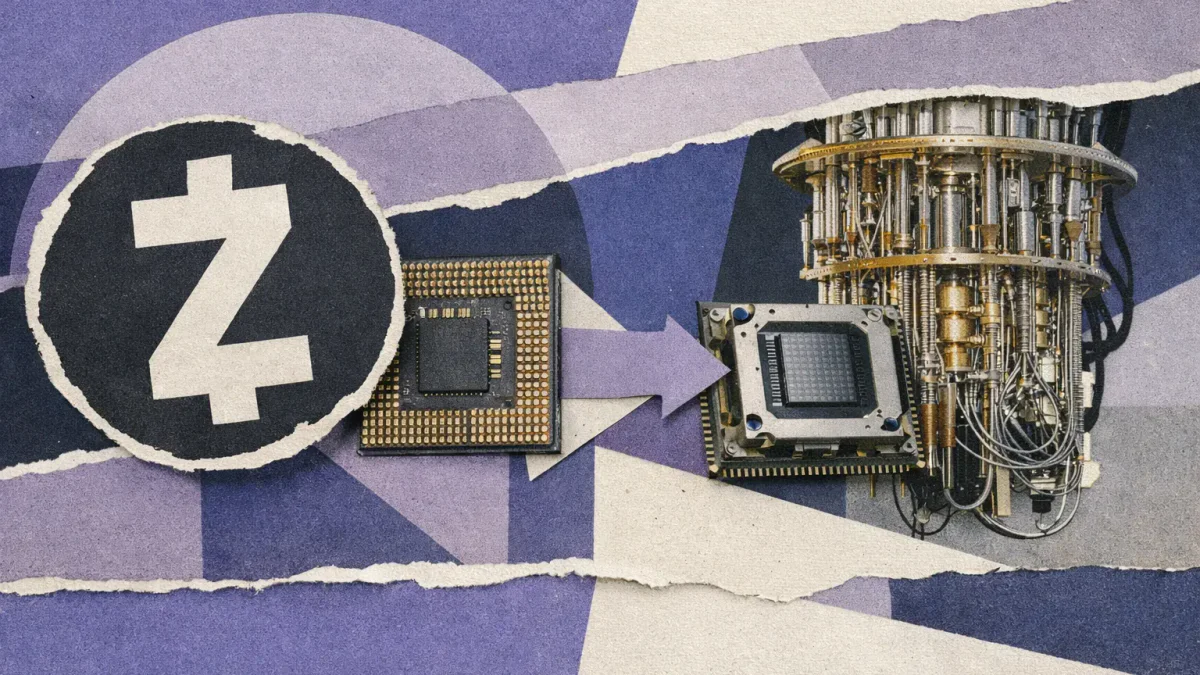
The Zakura team, the new version of software for the Zcash network, proposed giving each ZEC exchange through NEAR Intents a separate viewing key. This would close a loophole through which a future quantum computer could reconstruct a user's payment history.
NEAR Intents allows for token exchanges between blockchains. When exchanging private ZEC for USDC, the service publishes one of the user's Zcash addresses on the public NEAR chain to know where to return the change. The address appears immediately upon deposit and remains even after a successful exchange. Today, such addresses reveal nothing: the public key is constructed from the viewing key—a secret for detecting payments—using one-way elliptic curve mathematics, like bitcoin and ether wallets. A regular computer cannot reverse it, but a sufficiently powerful quantum computer with Shor's algorithm, published in 1994, theoretically could. Last week, Google reported that its Willow chip produced nearly perfect versions of one of the components needed for such an attack. Machines capable of this are likely still years away, and there are no firm timelines.
Zcash has its own problem: the wallet generates many "unrelated" addresses, but they share one viewing key. Hacking this key from one published address would link all account payments and reveal amounts and notes. The spending key is separate, so the funds would remain intact.
Zakura provides each exchange with its own viewing key, leaving the spending key in the main account. Hacking the return address on NEAR would only show the payments of one exchange. There is also a practical challenge: hundreds of exchanges mean hundreds of keys, and recovery from a backup would require scanning the entire chain for each. The solution is a database with private information retrieval: the wallet asks where returns landed, and the database does not learn which addresses it checks. A working quantum computer capable of recovering such keys has not yet been demonstrated.
Zakura says that wallets on its open libraries, including Vizor, can add the feature in the coming weeks; hardware wallets will follow after firmware support. This is ahead of the Zcash developers' January target for post-quantum payments.
This material is prepared solely for informational purposes and does not constitute financial advice or a recommendation.
Related articles