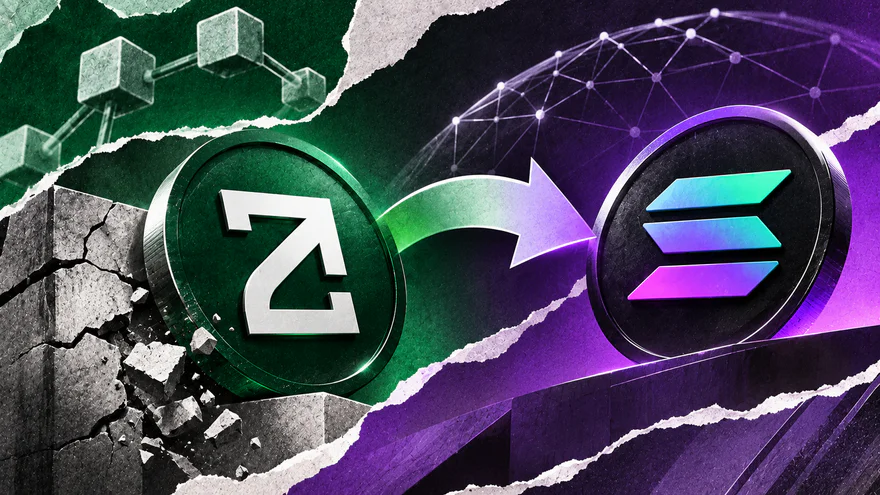
Zilliqa to Abandon Its Own Blockchain for Ethereum Layer 2

Blockchain project Zilliqa has announced plans to abandon its own Layer 1 network and create a Layer 2 infrastructure on Ethereum. The new platform, Zilliqa Institutional Layer, will be aimed at banks, investment funds, and other regulated financial organizations. Only participants who have undergone identity verification will have access to conduct transactions.
The developers explained the change in strategy by citing economic and technological difficulties of standalone blockchains. According to Zilliqa, the network's usage has not reached the scale necessary for sustainable development, and the reduction in available funding and security issues have increased the costs of its maintenance.
Zilliqa launched its mainnet in January 2019. One of its initial features was sharding—a technology that divides transaction processing among multiple parts of the network to increase throughput. Later, the project moved towards developing Zilliqa 2.0 with a Proof-of-Stake consensus mechanism and compatibility with the Ethereum Virtual Machine.
Now the company intends to focus on settlement infrastructure for institutional participants. Instead of independently ensuring transaction finality, the network will use Ethereum, transferring batches of operations to it.
How Zilliqa Institutional Layer Will Work
The main distinction of the new platform will be mandatory participant verification. For this, Zilliqa plans to use verifiable Legal Entity Identifiers (vLEI), which allow for the confirmation of the organization and the authority of its representatives acting on its behalf.
After verification, the organization's cryptocurrency address will be added to the whitelist. Only such wallets will be able to conduct operations on the network. Meanwhile, the transaction history will remain public and available for verification.
The Liechtenstein Trust Integrity Network (LTIN) will be responsible for the operation of the sequencer, which orders and bundles transactions before sending them to Ethereum. The organization from Liechtenstein is also involved in the development of the identification system and is undergoing the process of obtaining the status of a qualified vLEI issuer.
Zilliqa has been collaborating with LTIN since 2025, and in July 2026, it became one of its major shareholders. The project positions the new architecture as infrastructure for operations with tokenized assets and other financial settlements requiring participant verification.
Initially, access will be granted to institutional users. The possibility of connecting private individuals and automated AI agents is being considered for subsequent stages.
However, the new approach limits the free participation in transactions characteristic of open blockchains. How much this model will be in demand by financial organizations will depend on the actual launch of the network and its usage.
What Will Change for ZIL Holders
The developers have stated that ZIL will remain the native token of the project. Holders do not need to exchange assets or take any actions at this time.
The technical transition plan, including the procedure for working with wallets, exchanges, and staking, will be presented later. The launch date for Zilliqa Institutional Layer has also not been announced.
The team warned that any instructions for token exchange or migration will first appear on the project's official website. For such operations, users will not be required to disclose wallet recovery phrases.
This material is prepared solely for informational purposes and does not constitute financial advice or a recommendation.
Related articles