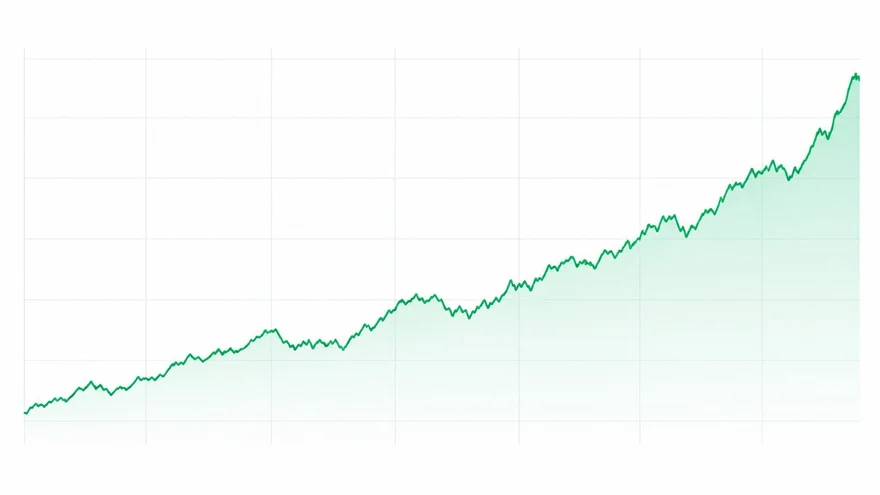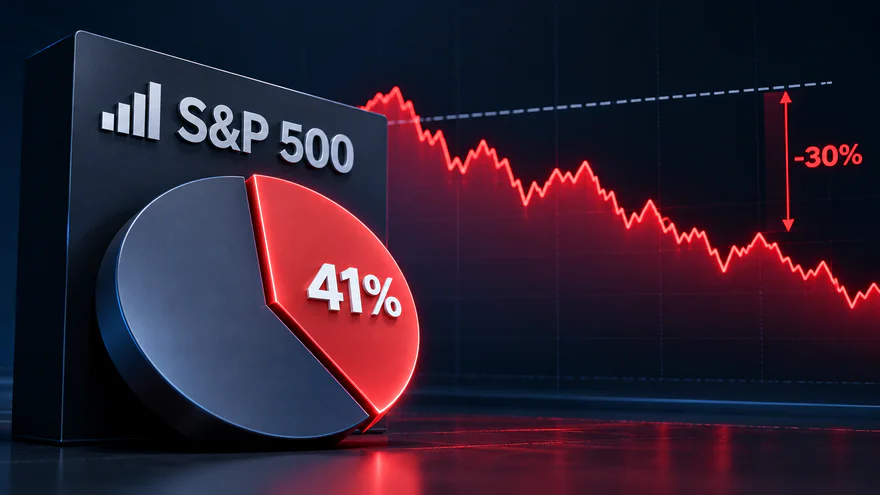
The S&P 500 index is just 0.2% away from its record highs, yet 41% of S&P 500 stocks are trading more than 30% below their historical peaks. It is evident that only a few companies are supporting the entire market. According to data, 84% of the index's members are trading at least 10% below their historical highs, and 17% of stocks have fallen more than 50%. Nevertheless, the index accounts for companies by market capitalization, allowing the largest stocks to have a significant impact on its dynamics.
The real estate sector leads the decline: 97% of its stocks are at least 10% below historical highs. It is followed by materials (96%), utilities (94%), and consumer discretionary (92%). In contrast, the energy sector has shown more resilient results: 62% of stocks are at least 10% below historical highs, followed by healthcare (70%) and information technology (72%). Last week, real estate stocks hit a record low relative to the S&P 500. Long-term Treasury yields reached a 24-year high on October 7. Rising yields may pressure rate-sensitive sectors such as real estate and utilities.
The S&P 500 index closed above 7,800 for the first time on October 6. Additionally, companies like Nvidia, Apple, and Microsoft make up about one-fifth of the S&P 500 index. Kevin Gordon, head of macro research and strategy at Schwab, stated that stocks in the artificial intelligence (AI) sector are currently supporting the index. However, he also noted that the average stock in the index has fallen 14% from peak to trough since early August. The index, excluding stocks related to the AI sector, according to Goldman Sachs, rose 6.7% over the six months to October 6, while the S&P 500 increased by 18.3% over the same period. Gordon pointed out that a single miss on capital expenditures among the largest companies, along with budget cuts on AI, could disrupt profits. Given that 17% of the index's members have already fallen more than 50%, the index may lack a broad base if AI spending is reduced. Third-quarter reports from the largest AI consumers may show whether this base will hold.
This material is prepared solely for informational purposes and does not constitute financial advice or a recommendation.
Related articles