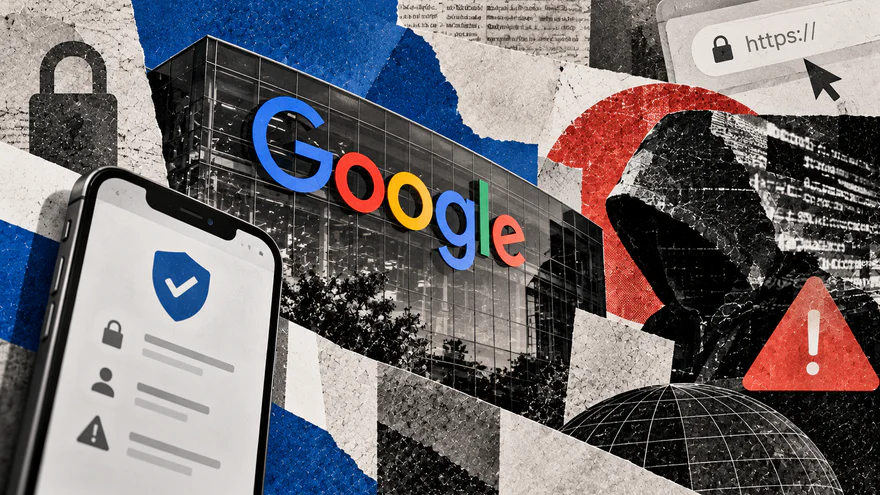
Google is expanding Android's protection against fraud amidst increasingly sophisticated schemes, including fake banking calls and phishing in Google Messages. According to the company, its AI fraud detection system currently identifies over 5 million suspected fraudulent calls and messages per month. New measures include an enhanced protection mode in Google Messages, expanded fraud alerts in chats on more devices, as well as protection during call forwarding and screen sharing.
According to a survey by Google and Yougov, most respondents in the US, Canada, and Australia have never fallen victim to mobile fraud, but 40% are very concerned about it. The expanded protection mode in Google Messages is designed for them: during complex conversations with unknown senders, the system refers to large Gemini models in the cloud. According to Google, processing is encrypted through Private AI Compute, and no one has access to the content. The Gemini Nano model checks new web links directly on the device in real time—even if they are not yet in classic phishing databases. Alerts have also been improved when opening links from senders not in contacts. Detection of suspicious messages in notifications first appeared on Pixel smartphones and will be available on devices from other manufacturers by the end of the year.
Separately, Google is introducing protection against social engineering. To safeguard sensitive data and accounts during screen sharing, Android now automatically hides confidential information in native applications—and from this point in Chrome and Android Webview. Fraudsters also attempt to secretly redirect incoming calls to another number to steal data. Android prevents apps from enabling call forwarding in the background, and if a user is persuaded to manually enter a call forwarding MMI code on the keypad, the system warns before the code takes effect.
Additionally, Android is strengthening protection against Caller-ID spoofing, where fraudsters call from a fake number, posing as a bank. The system works with official banking apps and analyzes incoming spam calls in real time to verify if the bank actually initiated the call. If the "bank" fails the check, the call is automatically terminated, and the user receives a notification.
Since June, Android has blocked over 3 million fake calls from banks Banco do Brasil and Itaú Unibanco alone. Other partners include Revolut and several major banks.
This material is prepared solely for informational purposes and does not constitute financial advice or a recommendation.
Related articles