KOSPI Falls Below 5000 Points After AI Stock Sell-Off in the US
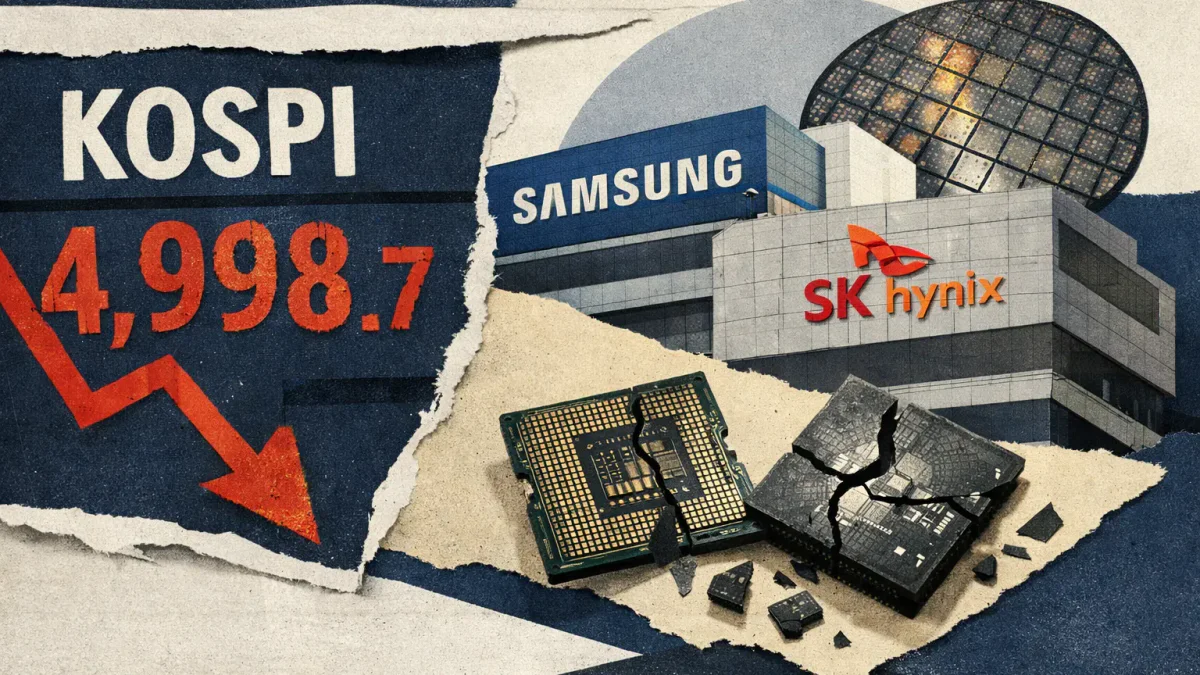
On November 6, 2026, the South Korean stock index KOSPI fell below 5000 points amid a sell-off of technology stocks in the US. Just three minutes after the market opened, the index dropped by 8.52% to 4924.61 points, triggering an automatic 20-minute trading halt. By the end of the session, KOSPI recovered to 5059.69 points, reducing the daily decline to 6.02%.
The market was under the most pressure from semiconductor manufacturers SK Hynix and Samsung Electronics. During the morning sell-off, SK Hynix shares fell by 11.71% to 1,116,000 won, while Samsung Electronics dropped by 9.98% to 181,400 won. By the close, the companies' shares had decreased by 10.44% and 6.35%, respectively.
US Stock Sell-Off Affects Asian Markets
The fall in KOSPI was preceded by a sharp correction in the US stock market on November 5. The S&P 500 index lost 4.36%, the Nasdaq Composite fell by 5.52%, and the Philadelphia Semiconductor Index plummeted by 12.25%, marking the largest one-day drop since March 2020.
One of the pressure factors was investors' concerns about potential restrictions on data center construction in the US following the midterm elections. Market participants speculated that regulatory changes could impact technology companies' spending on artificial intelligence (AI) infrastructure.
Additional pressure on the sector came from the earnings report of American chipmaker Qualcomm. The company's revenue from smartphone processor sales fell by 26% to $5.14 billion, falling short of analysts' expectations.
South Korean semiconductor manufacturers are sensitive to such changes. SK Hynix is one of the largest suppliers of high-bandwidth memory (HBM) used in AI accelerators. Together with Samsung Electronics, the company accounts for a significant portion of KOSPI's market capitalization.
Exchange Halts Trading Due to KOSPI Drop
The Korea Exchange activated the first stage of its protective mechanism at 09:03 local time. The rules call for a 20-minute trading halt if KOSPI remains at least 8% below the previous close for one minute.
At 09:06, the KOSDAQ technology platform also triggered a mechanism to limit program trading. Automatic execution of sell orders was paused for 5 minutes.
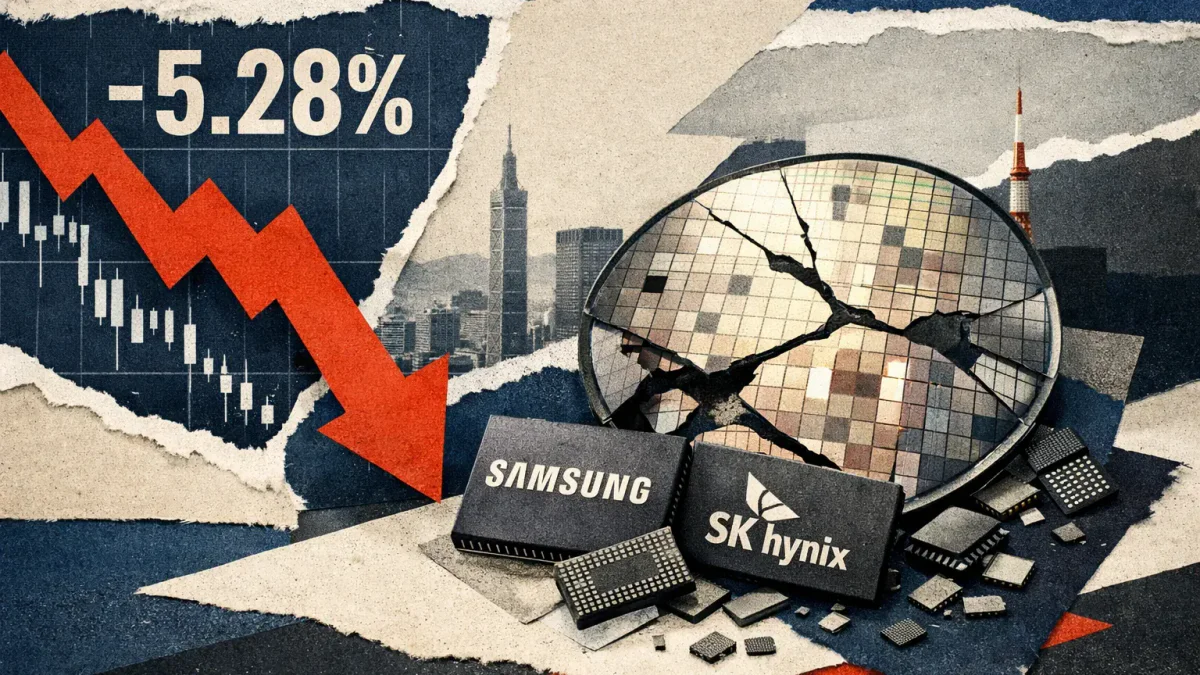
Pressure on the Korean market intensified on November 5, when KOSPI fell by 5.28% to 5383.80 points. According to the Korea Exchange, foreign investors sold shares worth more than 3.4 trillion won during this session.
The decline also affected Japan. The Nikkei 225 index ended trading on November 6 with a 5.96% drop to 57,434.77 points.
Despite the partial recovery of KOSPI by the close, November 6 marked the second consecutive session of sharp decline for the South Korean market. Semiconductor manufacturers remained among the hardest-hit companies amid concerns about future spending on AI infrastructure.
This material is prepared solely for informational purposes and does not constitute financial advice or a recommendation.
Related articles