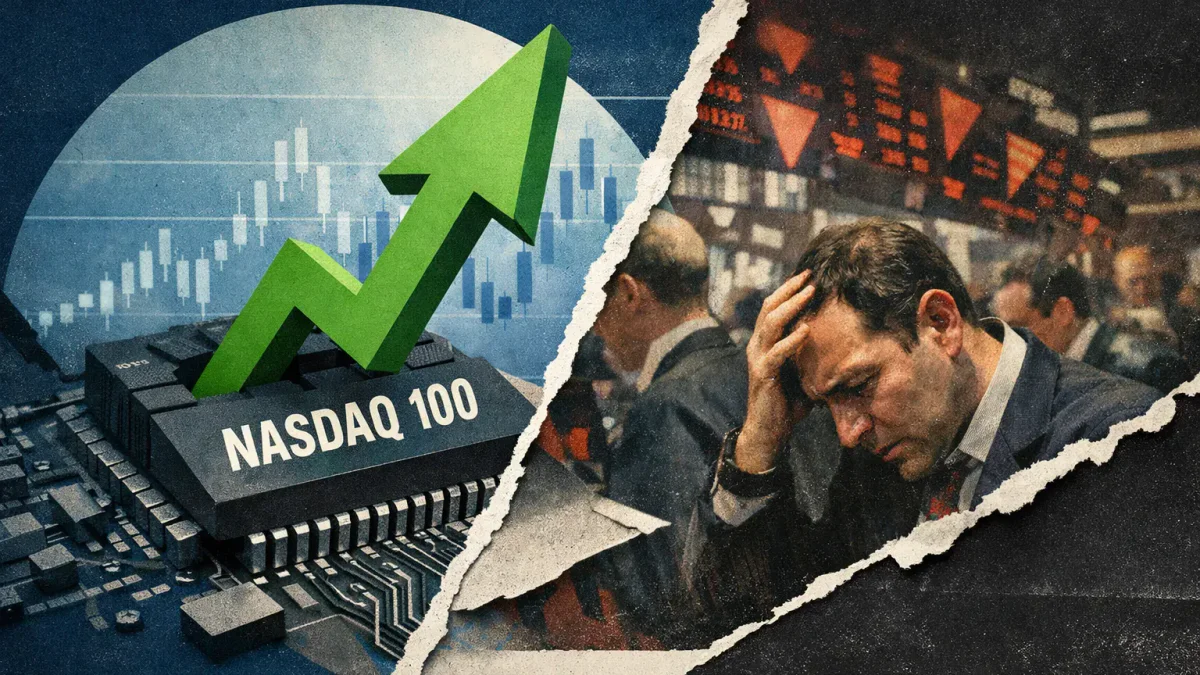
Nasdaq 100 futures rose nearly 1% in early trading hours, defying alarming forecasts of a 'Black Monday' that filled social media after Friday's sell-off in chipmaker stocks.
Friday was worse: the Nasdaq Composite lost 2.1%, the S&P 500 fell 1.1%, marking the worst week since June for both indices. Recall: the first 'Black Monday' occurred on October 19, 1987, when the Dow Jones Industrial Average plummeted 22.6% in one session.
The December futures track the Nasdaq 100 – an index of the hundred largest non-financial corporations. In morning trading, its value reached 29,643 points, a rise of 0.86%; the session started with a drop to 29,227 points. Kobeissi experts expect the S&P 500's capitalization to increase by $350 billion immediately after the main trading opens.
After Friday's close, the S&P 500 remained about 2% below the record high of October 6 – 7,818.93 points. According to Kobeissi, history suggests a possible quick rise to 8,000 – approximately 4.4% above Friday's close (7,659.44).
However, the growth is supported by a limited number of companies: about 84% of S&P 500 issuers are trading at least 10% below their highs, and about 70% of the index's growth since March 30 has been driven by just 10 stocks. Micron fell 5.6% on Friday due to doubts about the longevity of the AI boom, Intel dropped 5.8%.
The current rebound is vulnerable to new sell-offs in the IT sector, and the future of the futures will show whether investors are ready to invest in other industries. Despite Friday's sell-off, the S&P 500 has gained 11.9% since the beginning of 2026.
This material is prepared solely for informational purposes and does not constitute financial advice or a recommendation.
Related articles