S&P 500 Declines 7.1% from October Peak

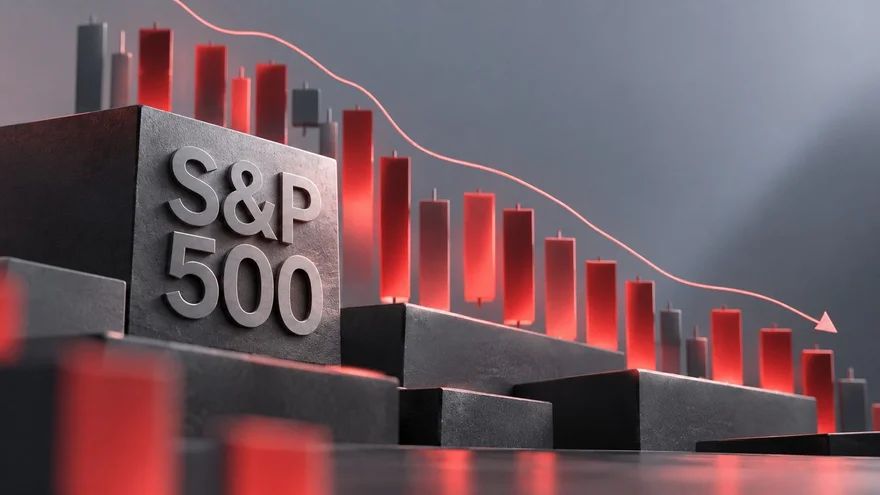
The S&P 500 index fell 7.1% below its October 6 peak during trading on November 17. This is the third decline of more than 5% since the beginning of 2026, according to calculations by Creative Planning's Chief Market Strategist Charlie Bilello. His statistics show that similar drops have occurred in the U.S. stock market 34 times since March 2009, with a median depth of 7.6%.
S&P 500 Decline Continues for Over 40 Days
On Tuesday, November 17, the S&P 500 fell to 7,288.34 points, approximately 7.1% below the peak set on October 6. By the end of trading, it closed at 7,340.53 points, or about 6.4% below the October peak.
According to Creative Planning, this is the third drop of the U.S. index by more than 5% in 2026. The first decline lasted from January 28 to March 30 and reached 9.8%. The second occurred in early June, when the index lost about 5% in seven days.
Thus, none of the three episodes have yet reached the 10% mark, which is typically used to define a market correction.
How the Current Decline Differs from Previous Ones
Charlie Bilello analyzed 34 episodes of the S&P 500 declining by more than 5% since March 2009. According to his calculations, the median depth of the drop was 7.6%, and the duration of the decline was 26 days.
The current episode is characterized by a longer period of decline. As of November 17, 42 days have passed since the October peak, although the drop itself has remained below the historical median value.
Only 10 out of the 34 episodes reviewed were accompanied by a drop of more than 10%. The deepest decline occurred in 2020, when the S&P 500 lost 35.4% in 33 days. The longest drop occurred in 2022, lasting 282 days, with the index falling by 27.5%.
These data show that 5–10% drops have repeatedly occurred in the history of the U.S. market. However, historical statistics do not allow us to determine the duration and depth of the current decline.
Investors Assess Inflation and Rate Prospects
Among the factors influencing market participants' sentiment, Bilello highlights inflation, concerns about further Federal Reserve interest rate hikes, and questions regarding tech companies' spending on artificial intelligence.
On November 17, St. Louis Federal Reserve Bank President Alberto Musalem also stated that additional interest rate hikes may be needed to return inflation to the target level.
Such expectations can affect companies' financing costs and stock valuations, especially in sectors sensitive to interest rates.
The further dynamics of the S&P 500 will depend on new macroeconomic data, Federal Reserve decisions, and corporate earnings reports. At the same time, comparisons with past market cycles do not provide grounds to assert that the current decline has already ended or will necessarily turn into a deeper correction.
This material is prepared solely for informational purposes and does not constitute financial advice or a recommendation.