XRP Ledger Proposes Quantum Protection for Wallets with Transition to ML-DSA-44
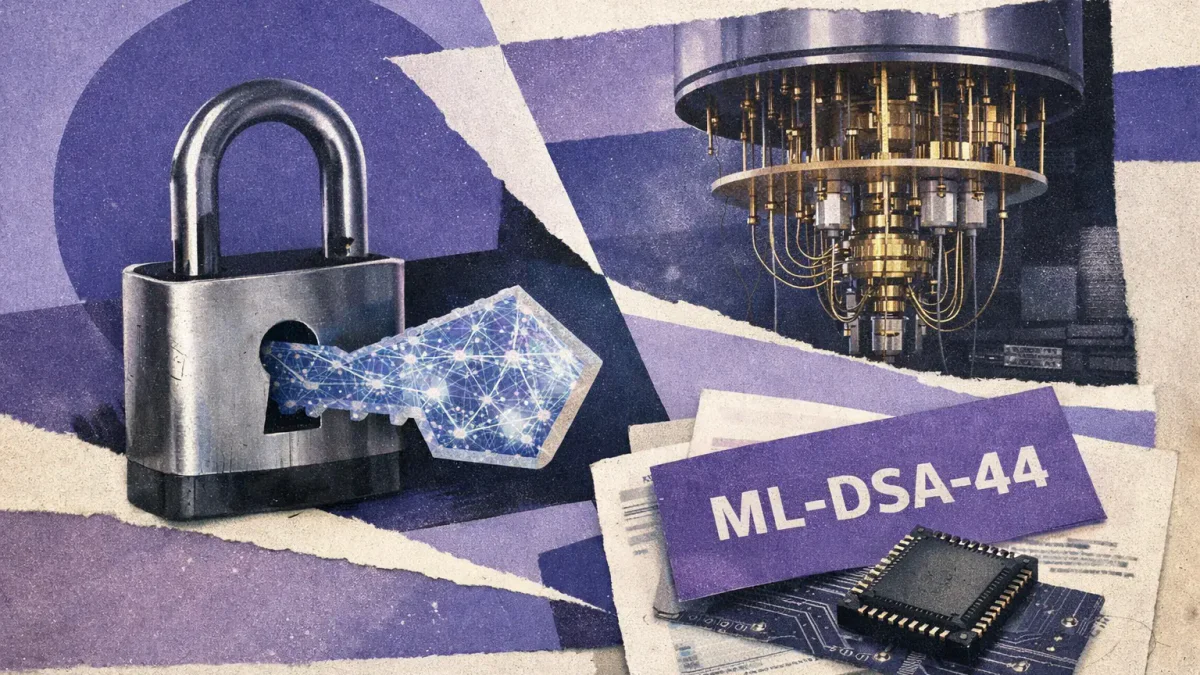
The XRP Ledger Foundation has introduced a proposal to implement quantum-resistant digital signatures ML-DSA-44 in the XRP Ledger (XRPL) blockchain. The change is included in the protocol development roadmap for 2027, updated on November 4, 2026. Its goal is to prepare user accounts and network infrastructure for potential attacks by future quantum computers capable of compromising the security of today's cryptographic algorithms.
The new system will allow XRP holders to assign quantum-resistant keys for signing transactions without the need to change their wallet address. However, users will need to disable previous master keys, as retaining them would leave operations vulnerable to authorization using compromised cryptography. The proposal also applies to validators and operators publishing lists of trusted network validators.
How XRP Ledger Plans to Protect Wallets
Currently, XRP Ledger uses secp256k1 and Ed25519 algorithms for digital signatures. They ensure transaction security with existing computational capabilities, but sufficiently powerful quantum computers in the future could potentially recover a private key from a public key. The latter becomes available on the blockchain when signing operations, creating a potential long-term risk for user accounts.
To address this issue, the XRP Ledger Foundation is considering the implementation of the ML-DSA-44 algorithm, standardized by the U.S. National Institute of Standards and Technology (NIST) in August 2024. It employs mathematical methods designed to withstand attacks from both conventional and future quantum computers. The algorithm is intended to become an additional method for signing transactions alongside existing XRPL mechanisms.
One of the advantages of XRP Ledger is the ability to change keys while retaining the account address. However, replacing one conventional cryptographic key with another does not provide post-quantum protection. The new amendment will allow assigning an ML-DSA-44 key and then disabling the previous master key to prevent operations from being confirmed with it.
However, the transition will not occur automatically. Account holders, crypto exchanges, and custodial services will need to update their software and organize a secure key replacement after the relevant functions are implemented in the main network.
New Signatures Will Increase Transaction Data Volume
One of the main technical limitations of ML-DSA-44 is the increased size of cryptographic data. The public key in the new format occupies 1,312 bytes, and the digital signature 2,420 bytes. In total, this is 3,732 bytes compared to approximately 105 bytes in the existing scheme, meaning the size of these two components will increase more than 35 times.
Considering the storage of history and service data, the volume of a single transaction with the new signature, according to XRP Ledger Foundation calculations, could reach 5,331 bytes compared to 1,704 bytes for a regular payment. Thus, the overall data storage requirement for a single transaction will increase by approximately 3.13 times. Mass adoption of this format could increase the load on network infrastructure and servers that store blockchain history.
Despite the increased signature size, the initial version of the proposal does not provide for changes to the base XRPL fees. Currently, the minimum cost of a standard transaction is 10 drops of XRP, or 0.00001 XRP. However, developers still need to assess the impact of new signatures on throughput, data storage, and network overload protection, so the final fee model may be adjusted.
When XRPL Will Transition to Quantum-Resistant Cryptography
Ripple introduced a four-stage program to prepare XRP Ledger for quantum threats in April 2026. The company aims to complete the transition by 2028, but the timeline depends on the technical readiness of the update and its approval process by validators. Project Eleven is also involved in the development, assisting in testing new cryptographic mechanisms and prototype solutions for digital asset storage.
According to the XRP Ledger Foundation roadmap, a separate study of account and network infrastructure migration is planned for the first half of 2027. Following this, developers intend to continue implementing the solution, code review, and security audit by the end of 2027 or in 2028. The amendment is currently at the project stage and has not been activated in the main XRPL network.
Early versions of the software have already been tested on the experimental AlphaNet network. However, there are still compatibility issues between implementations in different programming languages. In particular, some tools may currently generate different cryptographic keys from the same initial sequence, necessitating additional checks and algorithm alignment.
The XRP Ledger Foundation estimates the cost of verification and preparation for the update implementation at $215,000–255,000. This amount includes the work of Ripple engineers, external security audits, reference implementation, and wallet software updates. Separately, 640 hours of development are planned, the cost of which is not included in this estimate.
The proposal provides protection not only for user wallets but also for transaction confirmation mechanisms in XRPL. However, the emergence of quantum-resistant signatures does not mean that existing keys are already compromised. It is about preparing the network for potential threats that may arise as quantum computing evolves.
This material is prepared solely for informational purposes and does not constitute financial advice or a recommendation.
Related articles