

XAU
XAU · Troy ounce
Updated 23:59
4,007.9 USD
+0.00008 (0.00%)


Gold is one of the most well-known precious metals and one of the key assets of the global financial market. For thousands of years, it has been used as a medium of exchange, a way to preserve wealth, and a symbol of financial stability. Today, gold remains in demand across several sectors: it is purchased by investors, used by central banks to build reserves, and applied in the jewelry industry and high-tech manufacturing.
In the investment context, gold is considered a separate asset class. Unlike most commodities, its value is determined not only by production volumes and industrial consumption. The price of gold is influenced by market participants' expectations, central bank policies, interest rates, the dollar exchange rate, inflation risks, and changes in investment flows.
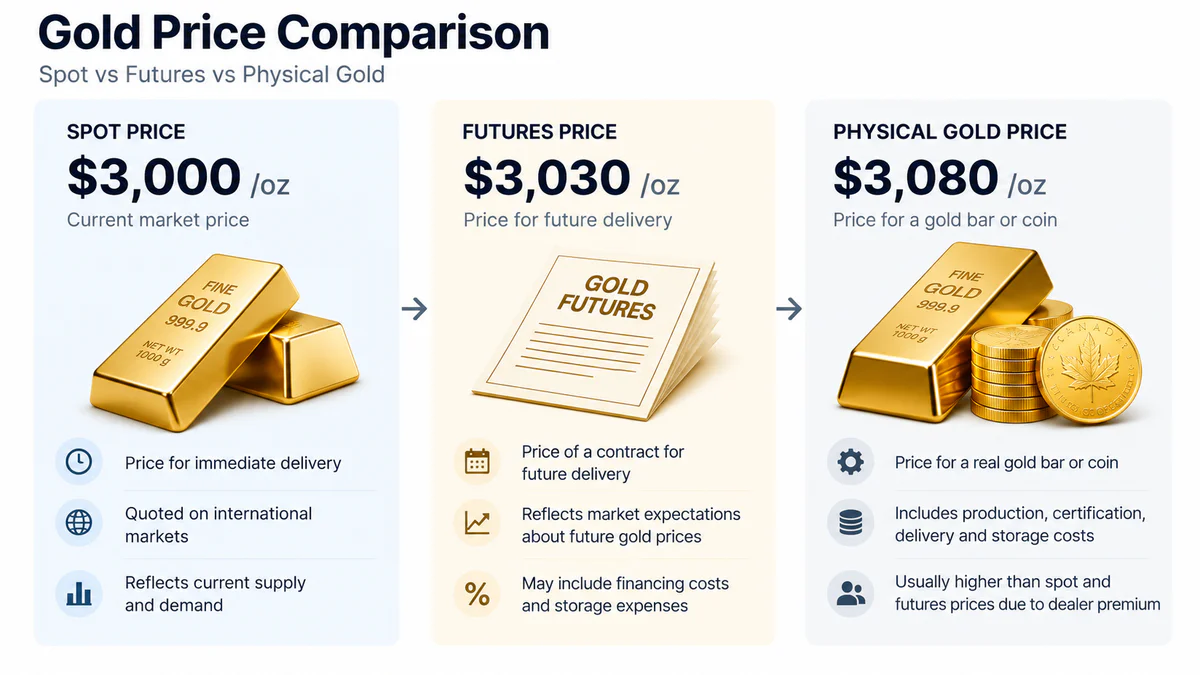
The price of gold is formed on the international market and is usually expressed in US dollars per troy ounce. Quotes are used as a benchmark for banks, funds, traders, and private investors; however, the cost of the physical metal may differ due to production, storage, delivery costs, and trading markups.
As a chemical element, gold is denoted as Au and has an atomic number of 79. It is a soft, dense, and corrosion-resistant metal with high malleability. Due to these properties, gold can be processed into various forms while maintaining physical stability over long periods.
In what units is the price of gold measured
On the global market, gold is usually quoted in US dollars per troy ounce. This unit of measurement is used for most transactions involving precious metals.
One troy ounce is approximately 31.1 grams. If the price is $3,000 per ounce, it means that is the cost of the metal before accounting for additional expenses related to purchasing physical gold. For local markets, the price of gold may be recalculated per gram, per kilogram, in national currency.
At the same time, the final cost depends not only on the global quote but also on the exchange rate. If the price of gold in dollars remains unchanged, but the national currency weakens against the US dollar, the cost of the metal within the country may increase.
Where gold is used
The precious metal is applied in several areas; however, the structure of demand differs significantly from other precious metals.
The main difference with gold lies in the high share of investment interest. A significant portion of the metal is not used for producing new goods but is stored in the form of reserves, bars, and investment instruments.
Investments and financial reserves. Investment demand is one of the main factors in the gold market. The metal is purchased by central banks, investment funds, private investors, and financial companies.
Central banks use gold as part of their international reserves. It is not tied to the obligations of another country or company, making it a tool for diversifying state assets.
Jewelry industry. This sector remains one of the largest consumers of gold. The metal is used for its appearance, durability, and ability to retain properties after processing. Demand from the jewelry sector depends on income levels, cultural traditions, prices, and the economic situation in individual countries.
Technology and industry. Although the industrial use of gold is less than that of silver or copper, the metal is in demand in manufacturing due to its high electrical conductivity and resistance to oxidation. Gold is used in electronic components, connectors, chips, medical equipment, and some specialized technologies.
However, changes in industrial demand usually have less impact on the price of gold than investment flows.
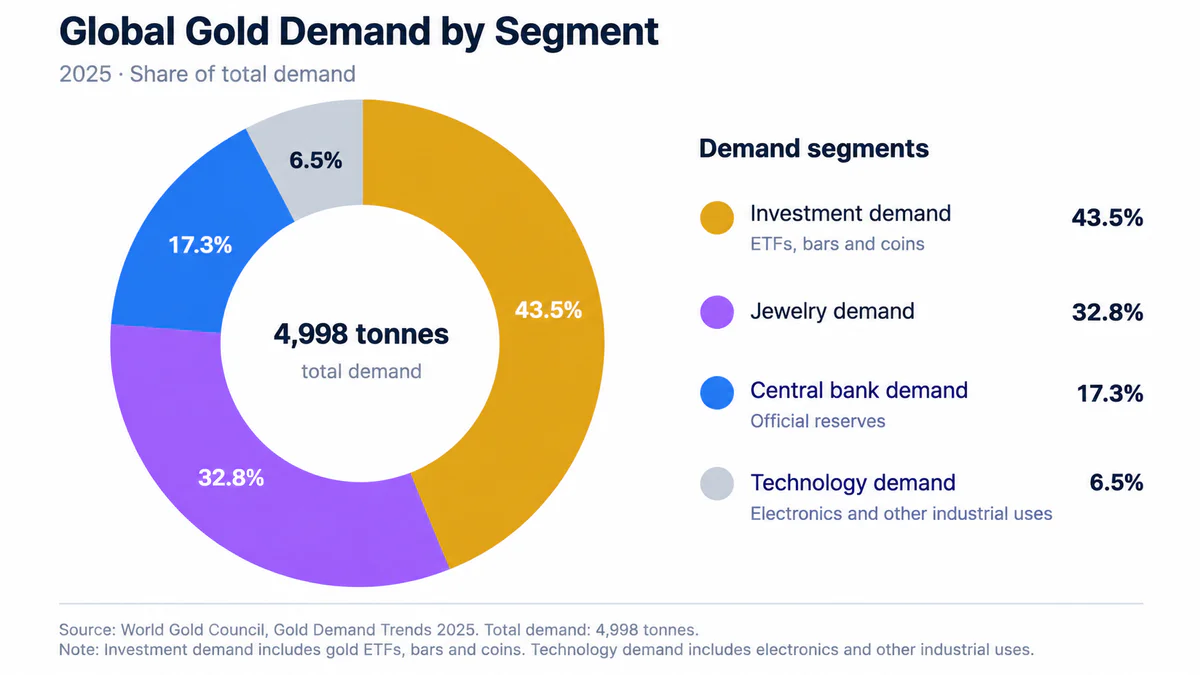
Unlike silver, where the majority of demand is linked to industrial use, gold is primarily a financial asset. About 43% of global demand is for investment, including ETFs, bars, and coins. Another third of consumption is related to the jewelry industry, and significant purchases are also made by central banks.
How the global gold market works
The gold market brings together producers, financial organizations, central banks, investors, and consumers.
Unlike many commodity markets, gold has a large accumulated stock. Most of the metal mined throughout history continues to exist in various forms. This makes the gold market less dependent on short-term changes in production. For example, a temporary decline in production does not necessarily lead to a sharp reduction in supply, as part of the demand can be covered by recycling and sales of previously accumulated metal.
For an investor, it is important to consider not only the volume of production but also the movement of capital between different forms of gold ownership.
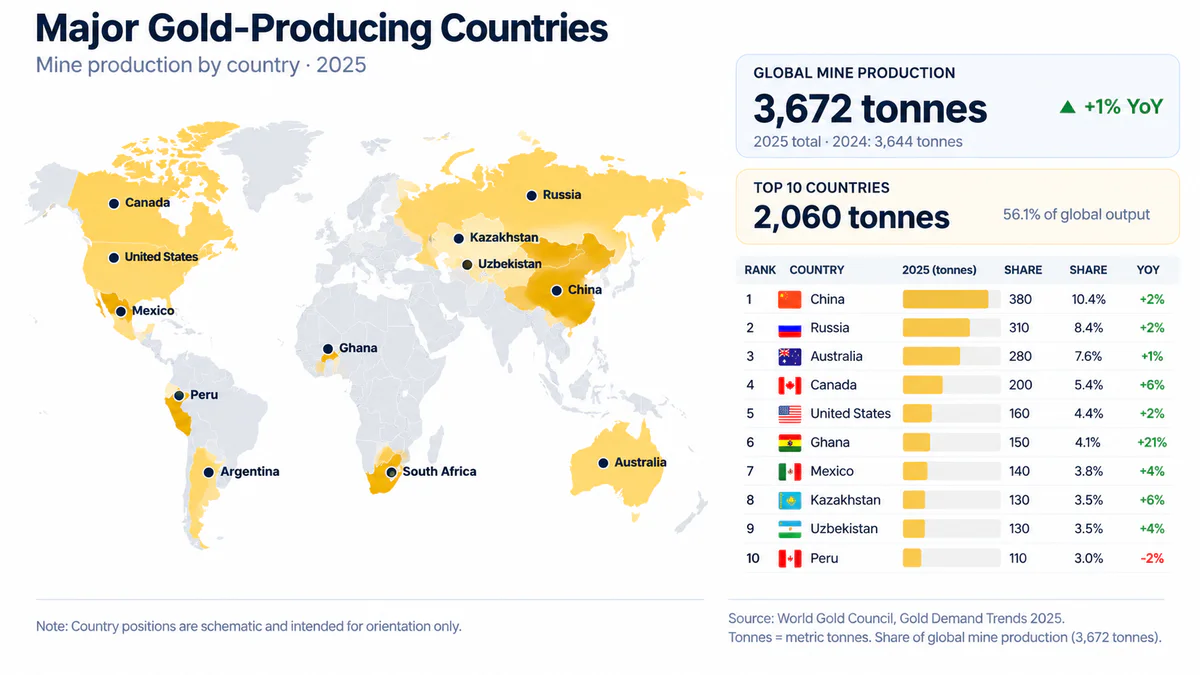
Global gold production is distributed among several regions and is not dependent on a single country. This geographical diversification reduces the market's dependence on one source of supply but simultaneously makes production sensitive to changes in regulation, development costs, and political conditions in individual countries.
How the price of gold is formed
The price of gold is determined on the global market as a result of the interaction between buyers and sellers. It is simultaneously influenced by transactions involving physical metal, exchange trading, investment flows, and market participants' expectations.
Unlike many commodities, the price of gold is less dependent on current industrial consumption. Financial factors have a significant impact: interest rates, the state of the global economy, the dollar exchange rate, and investors' risk appetite.
Several types of prices are used in the market, reflecting different aspects of metal trading:
- spot price;
- futures price;
- physical gold price.
These indicators are related but are not identical. The differences between them help to understand the market's characteristics and the reasons for changes in the price of gold.
Spot price of gold
Indicates the current value of the metal for a quick delivery deal. This indicator is most often used as the primary benchmark when analyzing the market.
The global quote is formed based on transactions by major participants: banks, investment companies, traders, producers, and buyers of physical metal.
The spot price reflects the balance of supply and demand at a specific moment in time. However, it does not include additional costs that arise when purchasing physical gold.
Futures price of gold
Reflects the cost of a contract to buy or sell gold in the future. Such instruments are primarily used by professional market participants for trading and risk management.
The futures price depends not only on the current value of the metal but also on participants' expectations regarding future conditions: interest rates, inflation, the dollar exchange rate, demand for gold, and storage costs.
If the futures price is higher than the spot price, it may reflect a normal situation where participants account for future costs and financing conditions. However, a significant deviation between these indicators may indicate changes in market expectations.
Most futures contracts do not result in the actual delivery of gold. Participants often close positions before the expiration date, locking in financial results from price changes.
What affects the price of gold
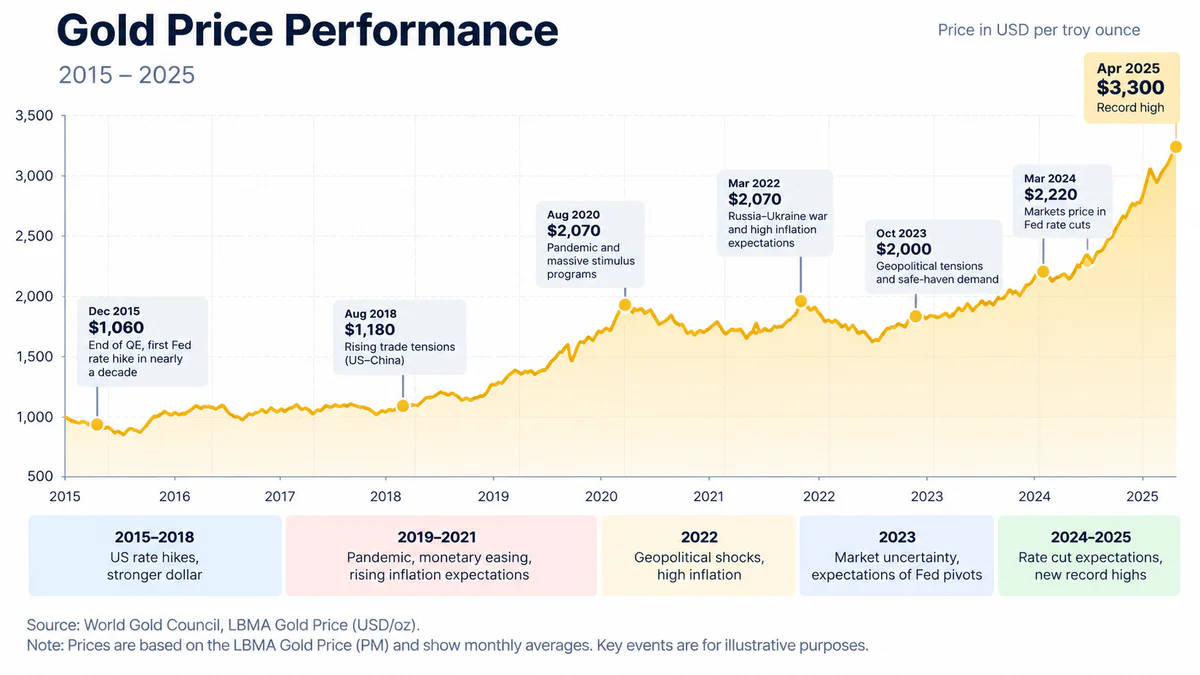
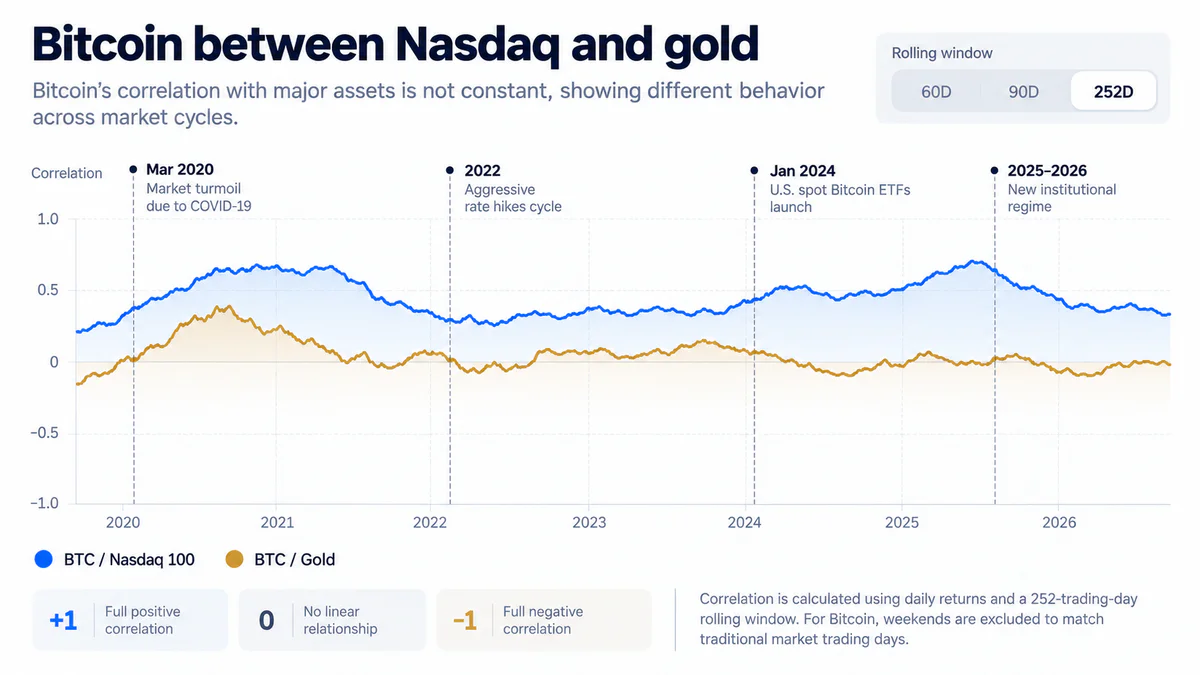
The price of gold is influenced by a combination of factors: macroeconomic conditions, central bank policies, interest rates, the dollar exchange rate, investment flows, and geopolitical events. The significance of individual factors changes depending on the market state: for example, during periods of high uncertainty, investors often focus on preserving capital value, while in times of rising interest rates, they compare gold's attractiveness with income-generating assets.
Interest rates and the Fed's policy. One of the most important factors for the gold market is the decisions of the US Federal Reserve. Gold does not pay interest income, so its attractiveness is often compared to bonds and other interest-bearing instruments.
When rates rise:
- bond yields increase;
- the cost of holding non-yielding assets rises;
- some investors may reduce their positions in gold.
When the market expects rates to decline:
- bond yields may decrease;
- interest in gold may increase.
However, the influence of rates is not automatic. For example, in conditions of strong economic uncertainty, demand for gold may remain even with high bond yields.
Dollar exchange rate. Gold is primarily traded in US dollars, so the currency market has a significant impact on its price. When the dollar strengthens against other currencies, gold becomes more expensive for buyers from other countries. This can limit demand and create pressure on quotes. Conversely, a weaker dollar makes the metal more accessible to international buyers and may support the price.
Inflation and market expectations. Gold is often viewed as a tool for preserving value during periods of high inflation. This is because the supply of the metal is limited, and its quantity cannot be quickly increased.
However, the relationship between inflation and the price of gold is not direct. A rise in consumer prices does not guarantee an increase in gold. Market participants' expectations regarding the future are important:
- will inflation persist;
- will the central bank change monetary policy;
- how real yields will change.
The real yield on bonds is considered particularly important. Its decline often increases interest in assets that do not pay interest income.
Central bank purchases. Central banks are one of the key participants in the gold market. Governments use gold as part of their international reserves due to its characteristics:
- the absence of credit risk from another country;
- high liquidity;
- the ability to preserve value over long periods.
Changes in central bank policies can influence the long-term balance of supply and demand.
An increase in gold purchases by state institutions can support the market; however, the short-term price also depends on investors' actions and the situation in financial markets.
Geopolitical risks. These can influence demand for gold, as during periods of political instability, investors often turn to assets traditionally used for preserving value. Increased uncertainty, reduced trust in certain financial instruments, and the desire to reduce risk can sustain interest in gold. Market sentiment is affected by factors such as international conflicts, trade restrictions, financial crises, and changes in economic policies of major countries.
However, gold does not automatically show growth during every crisis. In conditions of strong liquidity demand, investors may sell the metal along with other assets to cover losses or access cash. Therefore, the impact of geopolitical events on the price of gold depends on the overall situation in financial markets and participants' behavior.
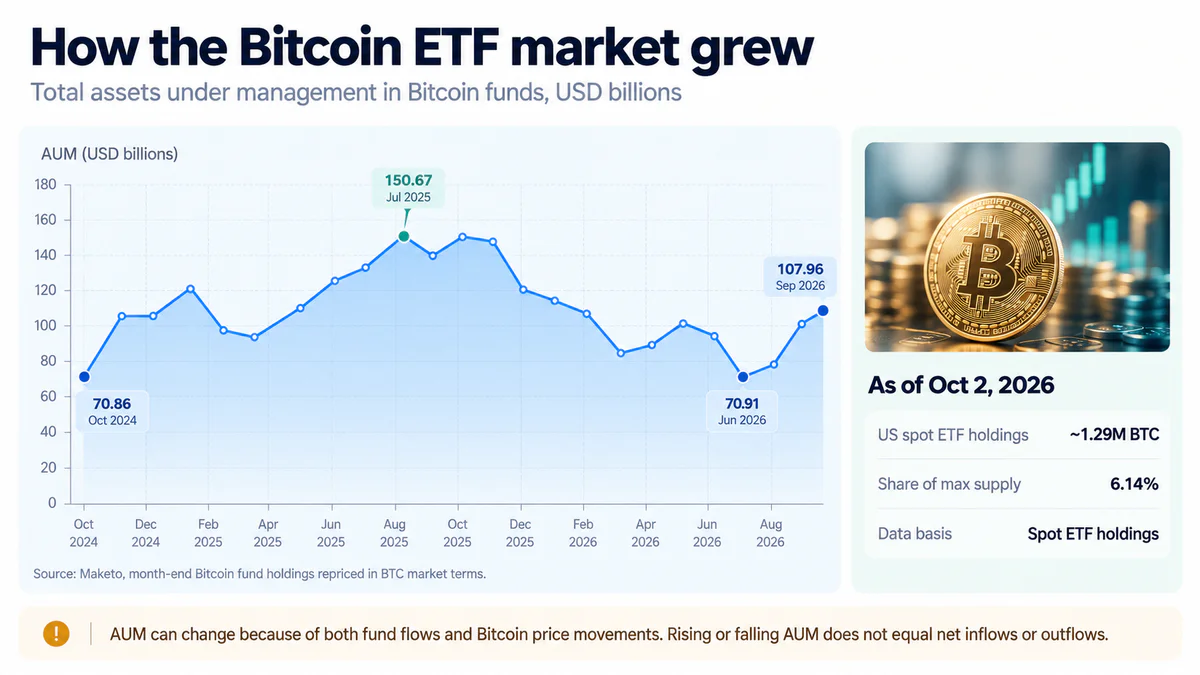
Investment flows. In addition to fundamental factors, capital flows also influence the price of gold. The main sources of investment demand include gold ETFs, futures positions, purchases of physical bars and coins, and actions by institutional investors.
An increase in inflows into gold funds can boost demand for the metal and support quotes. Conversely, a mass exit of investors from funds can create additional pressure on the market.
When analyzing, it is important to consider not just one indicator but a combination of factors: capital movement, rates, the dollar, and the state of the global economy.
How to invest in gold
Investors use several methods to access the gold market. The instruments vary in risk level, costs, and degree of connection to the physical metal.
Main options:
- physical gold;
- gold ETFs;
- futures;
- options;
- CFDs;
- stocks of gold mining companies.
The choice of instrument depends on the investor's goals, investment horizon, and willingness to consider additional risks.
Physical gold
Purchasing physical bars and coins provides direct ownership of the metal. The investor receives an asset that can be stored independently or entrusted to a custodian.
The advantage of physical gold is the lack of dependence on the operations of a financial intermediary. The owner possesses the metal itself, not a financial instrument linked to its value.
However, this method of investing is associated with additional costs for storage, insurance, transportation, and authenticity verification. When buying physical gold, it is important to consider not only the current quote but also the spread—the difference between the purchase price and the potential buyback price.
Gold ETFs
Exchange-traded funds allow investing in gold without the need to store the metal independently.
ETFs may be backed by physical gold or use other mechanisms to track the price. The investor buys shares of the fund, the value of which changes along with the gold market.
Advantages of ETFs:
- access through a brokerage account;
- high liquidity;
- no need to store the metal independently;
- ability to purchase small volumes.
However, these instruments have their peculiarities:
- fund management fees;
- possible deviation from gold dynamics;
- dependence on the structure of the specific product.
Before purchasing, it is important to study how the fund ensures the connection with the price of the metal and what expenses the investor incurs.
Futures, options, and CFDs on gold
Derivatives allow trading price changes of gold without purchasing the physical metal.
A futures contract is an agreement to buy or sell gold in the future. It is used for short-term trading, risk management, and hedging.
Options give the right to buy or sell an asset at a predetermined price. They are used for various trading strategies but require an understanding of the instrument's specifics.
CFDs allow obtaining results from price changes of gold without owning the asset itself.
A feature of such instruments is the possibility of using leverage. This increases the potential result of the transaction but also raises the risk of significant losses.
Stocks of gold mining companies
Another way to invest in the gold market is by purchasing shares of companies engaged in metal mining.
The value of such shares depends not only on the price of gold but also on the company's own business factors:
- production volumes;
- cost of extraction;
- debt load;
- quality of deposits;
- management efficiency;
- political conditions in the countries of operation.
Therefore, a rise in the price of gold does not always lead to a similar change in the value of mining company shares.
The investor effectively gains access not only to the metal but also to the activities of a specific business.
Main risks of investing in gold
Despite its status as a safe-haven asset, gold is not a risk-free instrument. Its price can change significantly under the influence of financial and economic factors.
Market volatility. The price of gold can change due to decisions made by central banks, movements of the dollar, changes in bond yields, and investment sentiments of market participants. Even with a long-term increase in the value of the metal, periods of decline may occur due to changes in economic conditions, investor expectations, and the state of global markets.
Currency risk. Since gold is quoted in US dollars, investors from other countries additionally face the impact of currency fluctuations. If the price of gold in dollars remains stable, but the national currency strengthens against the dollar, the asset's value in local currency may decrease. Therefore, the investor's overall return depends not only on changes in the price of gold but also on the dynamics of the exchange rate.
Costs of physical gold. When purchasing physical bars and coins, it is necessary to consider additional costs that may affect the final result. These include storage, insurance, buying and selling costs, as well as the difference between the purchase price and the buyback price. These costs are especially important in the case of short-term ownership of gold, as they can significantly impact the final return.
ETF risks. Exchange-traded funds provide access to gold dynamics without the need to store the physical metal independently, but such instruments have their own peculiarities. The investor needs to consider management fees, possible deviations in the fund's value from the price of gold, and the specifics of the particular ETF structure. These factors can affect the final investment outcome.
Risks of gold mining company stocks. Shares of companies engaged in gold mining depend not only on changes in the price of the metal but also on the performance of the companies themselves. Factors such as production accidents, rising costs, changes in legislation, issues with mining development, and other operational factors can influence the value of such shares. Therefore, shares of gold mining companies carry additional risks compared to direct ownership of gold.
Risks of derivative instruments. Futures, options, and CFDs on gold allow access to changes in the price of the metal without purchasing the physical asset, but they come with additional risks. The use of leverage can increase both potential profits and losses. Additionally, such instruments require consideration of margin requirements and the possibility of forced position closure in the event of unfavorable market movements.
About commodities
Gold is one of the key assets of the global financial market. We explore how the spot price of XAU/USD is formed, the role of the dollar, interest rates, bond yields, inflation, central bank demand, and geopolitics, as well as the tools used for trading and investing in gold.