

XPT
XPT · Troy ounce
Loading chart…


Platinum (Pt) is a precious metal from the platinum group, used in the automotive industry, chemical production, jewelry, electronics, and investment instruments. Its value on the global market is usually expressed in US dollars per troy ounce, and the designation XPT/USD is used to display the spot price of platinum relative to the US currency.
Unlike gold, whose demand is largely driven by investors, central banks, and the jewelry industry, platinum is significantly more dependent on industrial consumption. It is used in automotive catalysts, high-temperature equipment, and chemical processes, so changes in economic activity can directly affect the demand for the metal.
At the same time, the supply of platinum is geographically concentrated, and expanding production requires significant investments and time. As a result, even relatively small changes in production or consumption can significantly impact the market balance.
On this page, you can track the price of platinum today, study the online XPT/USD chart, and the dynamics of quotes over different periods. For a more comprehensive analysis, it is important to consider not only the current price of the metal but also the volumes of production, processing, automotive and investment demand, stock levels, and the situation in other precious metals markets.
Platinum Price Today
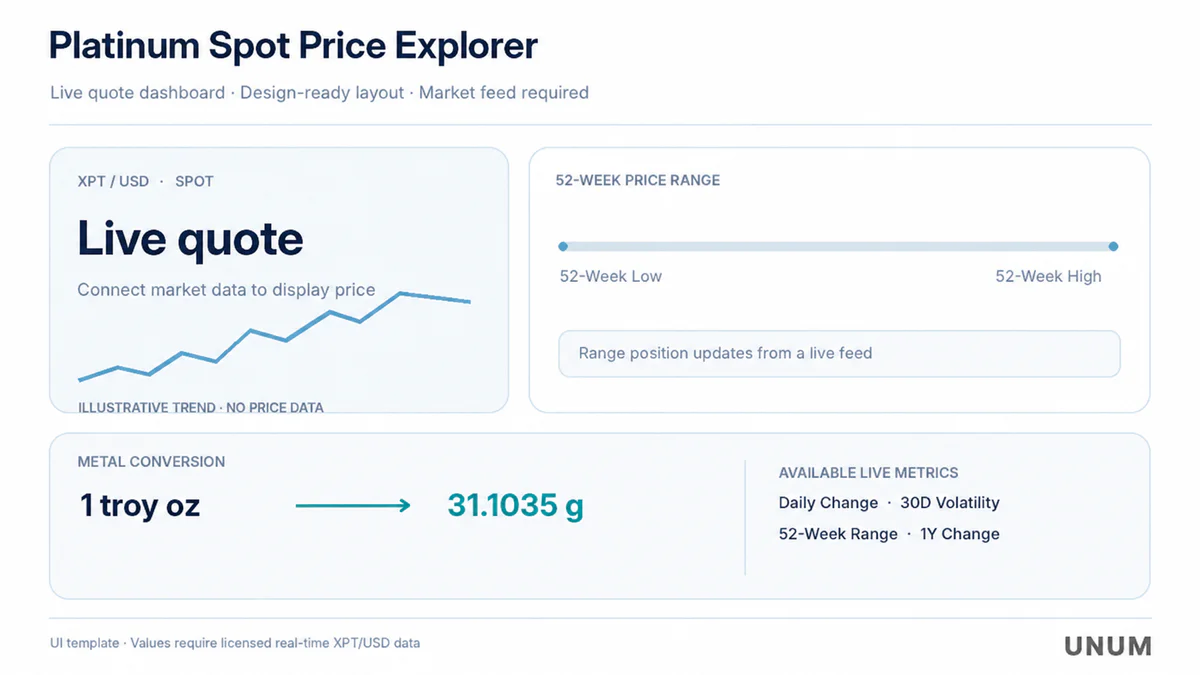
The spot price of platinum shows the current market valuation of one troy ounce of the metal for transactions with the nearest standard settlement dates. International Platinum Spot quotes are usually presented in US dollars per troy ounce — USD/oz.
One troy ounce is approximately equal to 31.1035 grams. Therefore, when platinum is traded, for example, at $1,500 per ounce, the calculated cost of one gram of pure metal is about $48.23.
The cost of platinum per gram is useful when comparing international prices with dealer offers, but it does not show how much a buyer will actually pay for a bar or jewelry item. The final price of physical metal may include the seller's premium, manufacturing and storage costs, taxes, and other expenses.
When analyzing current quotes, it is important to consider several characteristics:
- Spot Price — the spot price of platinum for the nearest settlements.
- Bid — the price at which a market participant is willing to buy the metal.
- Ask — the price at which a participant is willing to sell it.
- Spread — the difference between buying and selling prices.
- Daily Change — absolute and percentage change in the quote for the selected period.
- Day Range — the range of price changes during the trading day.
Data on different financial platforms may slightly differ due to the quote providers used, update times, and pricing features. Additionally, the platinum market includes both over-the-counter transactions and standardized futures contracts, so it's important to understand which specific instrument is displayed on the price widget.
Platinum XPT/USD Chart and Quotes
The platinum chart allows you to track changes in the metal's price over time, compare periods of high and low volatility, and study the market's reaction to economic and industry events.
In the short term, platinum quotes may react to changes in the dollar exchange rate, interest rates, investment flows, and mining news. Over longer horizons, the importance of industrial demand, car production, technological changes, and the balance of global supply increases.
When analyzing the XPT/USD chart, it is useful to consider several time periods. Daily and weekly movements help assess short-term market reactions, while monthly and multi-year charts provide insight into changes in the metal's price at different stages of the industrial cycle.
However, the direction of the price does not always reflect changes in physical demand. For example, platinum may rise in value amid an influx of investment capital even with a weak automotive market. In another situation, a reduction in production may support quotes despite worsening macroeconomic expectations.
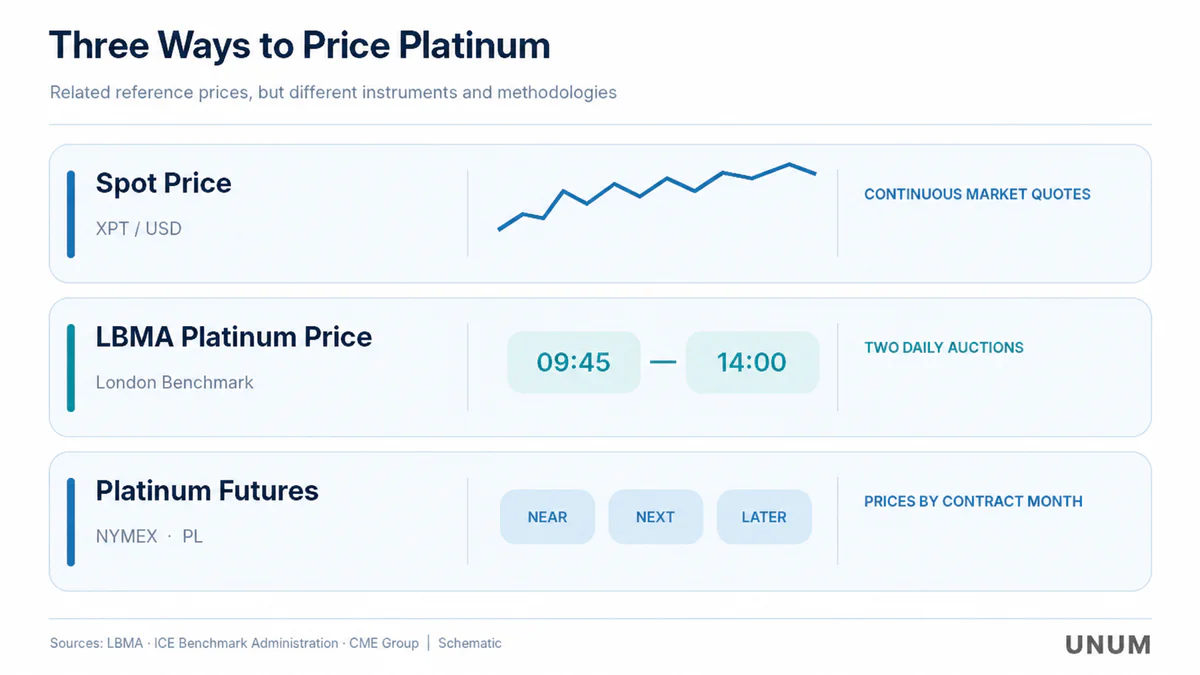
It is also important to distinguish between the Platinum Spot chart and the platinum futures chart. The spot quote reflects the current valuation of the metal, while the future refers to a specific settlement month. The difference between them may be related to financing costs, storage conditions, liquidity, and the availability of physical metal.
What is Platinum
Platinum is a chemical element with atomic number 78 and the symbol Pt. It belongs to the Platinum Group Metals (PGM) along with palladium, rhodium, ruthenium, iridium, and osmium.
The metal is characterized by high resistance to corrosion, a melting point of about 1,768 °C, and pronounced catalytic properties. Due to these characteristics, platinum is used in equipment operating at high temperatures and in processes where accelerating chemical reactions is necessary.
The most important feature of platinum is its ability to act as a catalyst, meaning it accelerates a reaction without being consumed as a starting reagent. This property has made the metal in demand in automotive exhaust gas cleaning systems, the chemical industry, and some hydrogen energy technologies.
According to the Royal Society of Chemistry, platinum combines resistance to environmental influences with chemical properties that are difficult to replace in many specialized applications.
At the same time, platinum significantly differs from gold in terms of demand structure. Although both metals are used in jewelry and investment products, industrial consumption remains one of the main factors shaping the value of platinum.
Therefore, platinum cannot be considered solely as a safe-haven asset or a universal alternative to gold. Its prices simultaneously reflect the state of the precious metals market and expectations regarding industrial production.
Spot Price of Platinum
The spot market for platinum represents the segment of trading in physical metal with the nearest settlement and delivery dates. A significant portion of such transactions is conducted on the over-the-counter market — OTC (Over-the-Counter), where participants make deals directly or through intermediaries.
Unlike a centralized exchange, the OTC market does not form a single universal quote for all transactions. The price depends on participants' offers, metal characteristics, delivery location, settlement terms, and market liquidity.
Producers of platinum, processors, banks, dealers, industrial consumers, and other financial organizations interact in this market. For some participants, the metal is needed as raw material, for others — as an investment asset or a tool for managing price risks.
The spot price is formed under the influence of current supply and demand but also takes into account participants' expectations regarding the future state of the market. Therefore, prices may change even before new production or economic conditions are reflected in the actual volume of metal trading.
LBMA Platinum Price and the London Market
One of the most important international benchmarks for the metal's value is the LBMA Platinum Price. This benchmark is used in pricing and evaluating platinum transactions on the global market.
The administrator of the LBMA Platinum Price is ICE Benchmark Administration (IBA). The benchmark is formed during regular London auctions for unallocated platinum with delivery in London. It differs from the continuous flow of market quotes and is used as a reference in pricing and settlement of transactions.
The continuous XPT/USD quote and the LBMA Platinum Price are closely related but are not identical indicators. The former is updated according to data from a specific market information provider, while the latter is determined through an established auction pricing procedure.
The difference is significant when analyzing historical data, evaluating financial instruments, and comparing quotes from different sources. Details of the methodology are published on the LBMA website.
What Influences the Price of Platinum
The price of platinum is formed under the influence of the physical balance of the metal and the state of financial markets. However, the connection of individual factors with the price is not always straightforward: the same event can cause different reactions depending on stocks, investment expectations, and other circumstances.
The main factors can be grouped into four categories:
Metal Supply. The market receives platinum mined from deposits and metal returned to circulation after recycling. A reduction in production, energy supply disruptions, or a decrease in recycling volumes can limit the available supply.
Industrial Consumption. The main roles are played by automotive catalysts, chemical production, glass manufacturing, and other technological applications. Changes in the production of cars or industrial equipment can directly affect demand.
Investment and Jewelry Demand. Purchases of physical bars, coins, ETF operations, and changes in consumer preferences also affect the market. In certain periods, investment flows can significantly amplify short-term price movements.
Macroeconomic Conditions. The dollar exchange rate, real interest rates, inflation expectations, and industrial production prospects influence the attractiveness of platinum as a financial asset and industrial raw material.
Thus, the question of why platinum rises or falls rarely has a single answer. Price increases may be caused by a reduction in production with stable demand, but a similar movement is possible against the backdrop of investment inflows without significant changes in physical supply.
Platinum Mining Worldwide
Primary platinum supply is formed by mining companies developing platinum group metal deposits. Unlike many mass industrial metals, the geography of this production is highly limited.
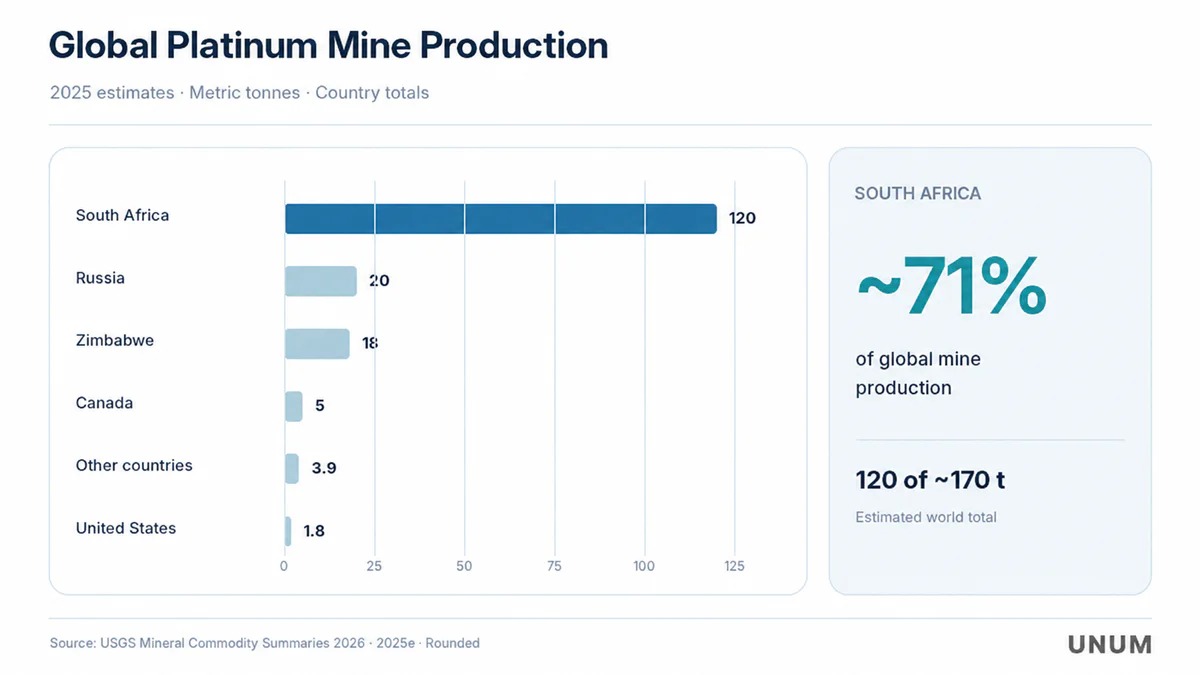
South Africa is the main center of global platinum mining, with significant supply also coming from Russia and Zimbabwe. Canada, the USA, and other countries provide a smaller portion of global output.
Such concentration makes the market sensitive to events in individual mining regions. Infrastructure problems, rising costs, legislative changes, or disruptions at major enterprises can affect global supply.
Global platinum mining changes relatively slowly, as expanding production requires significant investments, deposit development, and infrastructure creation. Therefore, even with rising prices, supply is not always able to quickly respond to increased demand. To assess production scales, it is useful to compare statistics by country over several years rather than drawing conclusions from a single reporting period.
South Africa and the Global Platinum Market
The main center of global mining is located in South Africa, primarily within the Bushveld Complex.
Mining here is often conducted at significant depths, so the economics of production depend on energy supply, labor costs, equipment, and ore processing. Expanding capacity requires long-term investments, and changes in market prices do not immediately lead to increased output.
An important factor remains the exchange rate of the South African rand. A significant portion of producers' revenue is linked to international dollar metal prices, while many operating expenses are expressed in the national currency.
Therefore, changes in USD/ZAR can affect the profitability of mining companies. However, a weakening rand does not automatically mean a decrease in the global platinum price: the impact depends on costs, investment decisions, and the overall market balance.
Russia, Zimbabwe, and Other Producers
Russian platinum is largely associated with the extraction of other metals, including nickel, copper, and palladium. In such conditions, the volume of platinum production may depend not only on its own price but also on the economic attractiveness of the entire production complex.
Zimbabwe also holds an important position among producers of platinum group metals. For this country, the development of mining infrastructure, the availability of electricity, and investments in processing capacities are of significant importance.
Evaluating global supply based on a single country is insufficient. Even if production in South Africa increases, a reduction in output in other regions can limit the overall growth in supply. Therefore, fundamental analysis uses data on global mine supply, not just statistics from the largest enterprises.
Platinum Recycling
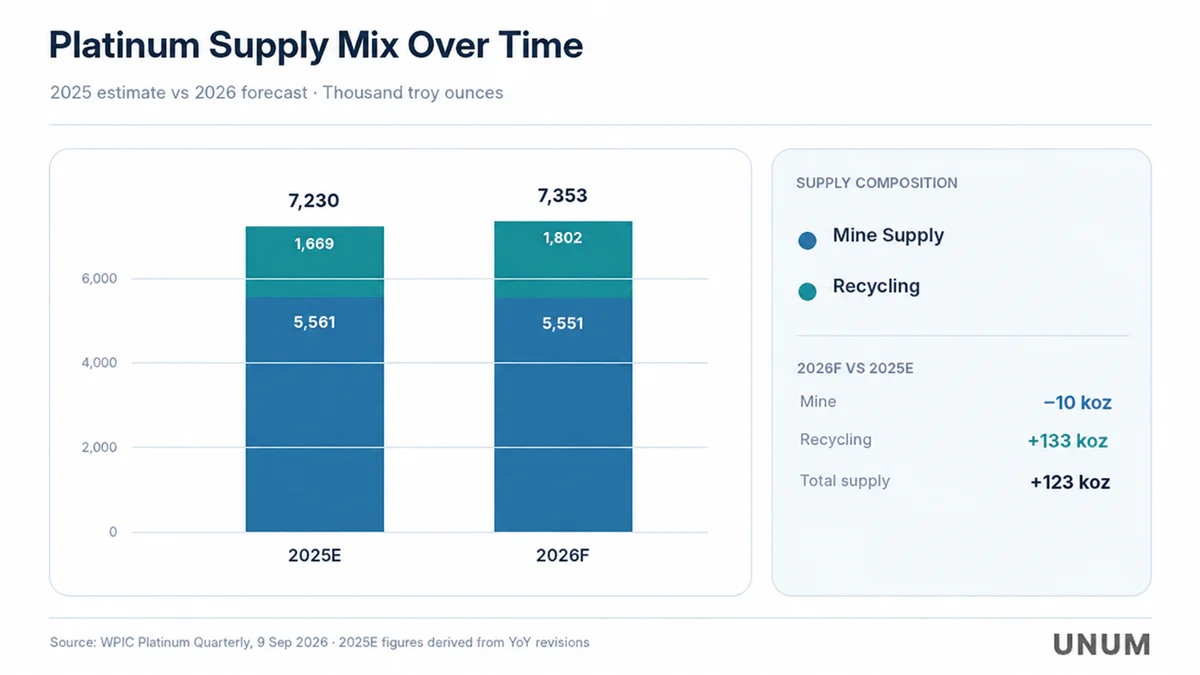
In addition to primary mining, recycling is an important source of platinum supply. The metal is extracted from spent automotive catalysts, jewelry scrap, and industrial equipment. Secondary raw materials provide a significant portion of global platinum supply, although their share changes depending on mining volumes, recycling, and market conditions.
The volume of recycling depends on the availability of raw materials, the cost of precious metals, and the economic attractiveness of their extraction. At low prices, market participants may postpone the sale of accumulated materials, while rising quotes stimulate their return to circulation. However, there is a time lag between the collection of raw materials and the receipt of refined metal, so recycling cannot instantly compensate for a reduction in mining.
Therefore, when analyzing supply, it is necessary to consider data on mining and recycling separately. An increase in secondary production can partially offset a decrease in primary output, but its scale is determined not only by the price of platinum but also by the availability of spent products and the capacity of recycling enterprises.
Industrial Demand for Platinum
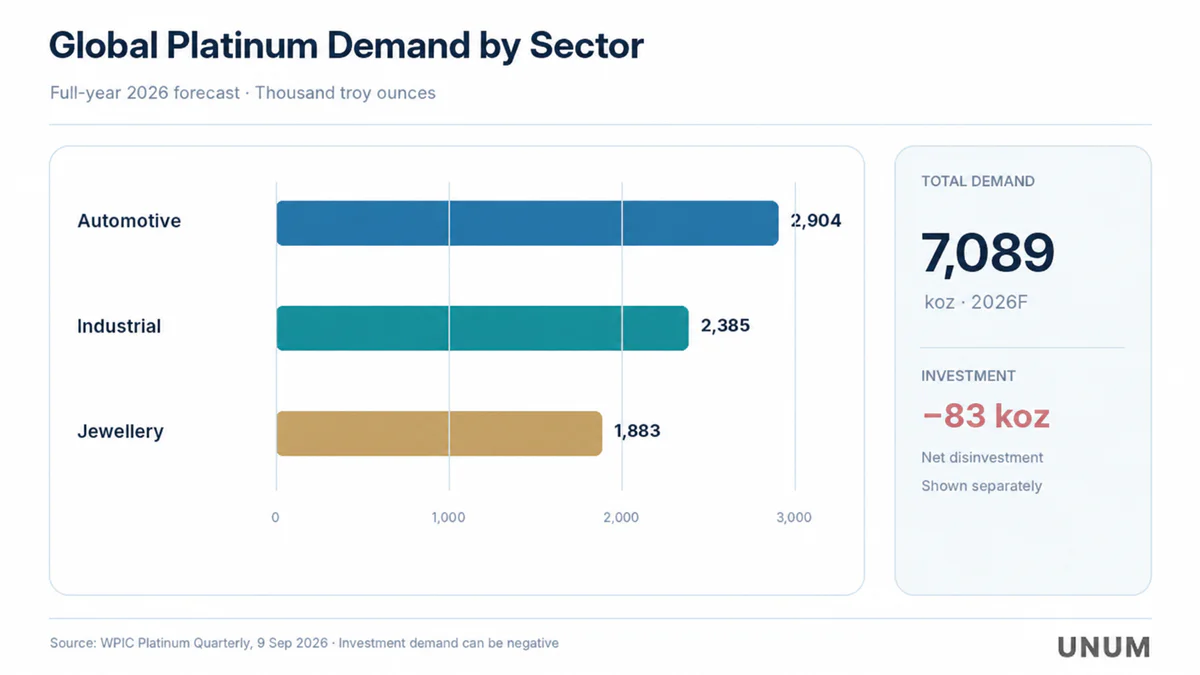
Industry forms a significant part of global platinum demand due to its catalytic properties, chemical resistance, and ability to withstand high temperatures. Major consumption areas include automotive manufacturing, chemical and glass production, electronics, oil refining, and hydrogen technologies.
Automotive Industry
Automotive manufacturing remains the largest single area of platinum consumption. The metal is used in catalytic converters, which reduce harmful emissions from internal combustion engines. Demand depends on the volume of car production, engine type, environmental standards, and the amount of precious metal in the catalysts.
The spread of battery electric vehicles gradually reduces the potential need for such systems, as they do not have internal combustion engines. However, hybrid vehicles continue to use catalysts, and stricter environmental requirements may increase the content of precious metals in certain devices.
Additional influence comes from the technological substitution of platinum and palladium. When the cost difference becomes significant, manufacturers may revise the composition of catalytic systems, although implementing such changes requires testing and time.
Thus, to assess automotive demand, it is not enough to track only global car sales. It is necessary to consider the structure of the vehicle fleet and new sales, the share of hybrids and electric vehicles, emission requirements, and the technical solutions of catalyst manufacturers.
Other Industries
Outside the automotive sector, platinum is used in several technological areas:
- Chemical industry — catalysts for the production of nitric acid, silicones, and other substances.
- Glass production — high-temperature equipment for manufacturing special glass.
- Oil refining — catalysts for obtaining high-octane fuel components.
- Electronics and medicine — specialized components, sensors, medical devices, and some pharmaceuticals.
- Hydrogen energy — catalysts for certain types of fuel cells and electrolyzers.
Hydrogen technologies are considered a potential source of additional demand. Platinum is used in proton exchange membrane fuel cells (PEM Fuel Cells) and on the cathodes of PEM electrolyzers. The impact of these technologies on the market will depend on the pace of commercial implementation, the choice of technological solutions, and the efficiency of precious metal use: an increase in installed capacity does not necessarily lead to a proportional increase in platinum consumption.
Industrial demand develops unevenly: expansion of capacities in some industries can offset a decline in consumption in others. Therefore, to assess the market, it is necessary to analyze not only the overall volume of industrial demand but also its sectoral structure. For example, the construction of new lines for the production of special glass can increase the need for platinum equipment even during periods of weakness in other manufacturing segments.
Jewelry and Investment Demand for Platinum
In addition to industry, platinum is in demand in the jewelry sector and investment instruments. However, the demand factors differ here.
Jewelry consumption depends on the purchasing power of the population, consumer preferences, and the price ratio of platinum to other precious metals, primarily gold. Important markets include China, Japan, India, the USA, and Europe. Lower platinum costs relative to gold can sustain interest in jewelry, but the high absolute price of the metal may limit sales. The assortment of manufacturers, jewelry purchasing traditions, and the state of the consumer market in specific regions are also significant.
Investment demand is formed through the acquisition of bars and coins, ETF operations, changes in metal reserves, and the positioning of financial market participants. These flows can quickly change under the influence of interest rates, the dollar exchange rate, and expectations regarding the future value of platinum.
Inflows and outflows of capital from platinum ETFs can affect the availability of physical metal and market balance. Investment flows can change significantly even within a single year, so they need to be tracked separately from industrial consumption. Moreover, investors purchasing existing metal does not necessarily mean an increase in its final industrial use.
Unlike gold, platinum does not always experience increased demand during periods of economic uncertainty: a deterioration in industrial conditions can simultaneously limit interest in the metal. Therefore, jewelry and investment consumption need to be analyzed separately from industrial demand, but their combined impact on the overall market balance should be considered.
Platinum Supply and Demand Balance
Fundamental analysis of the platinum market is built around comparing global supply and total metal consumption.
Supply includes primary mining and secondary recycling, while demand combines automotive, industrial, jewelry, and investment sectors.
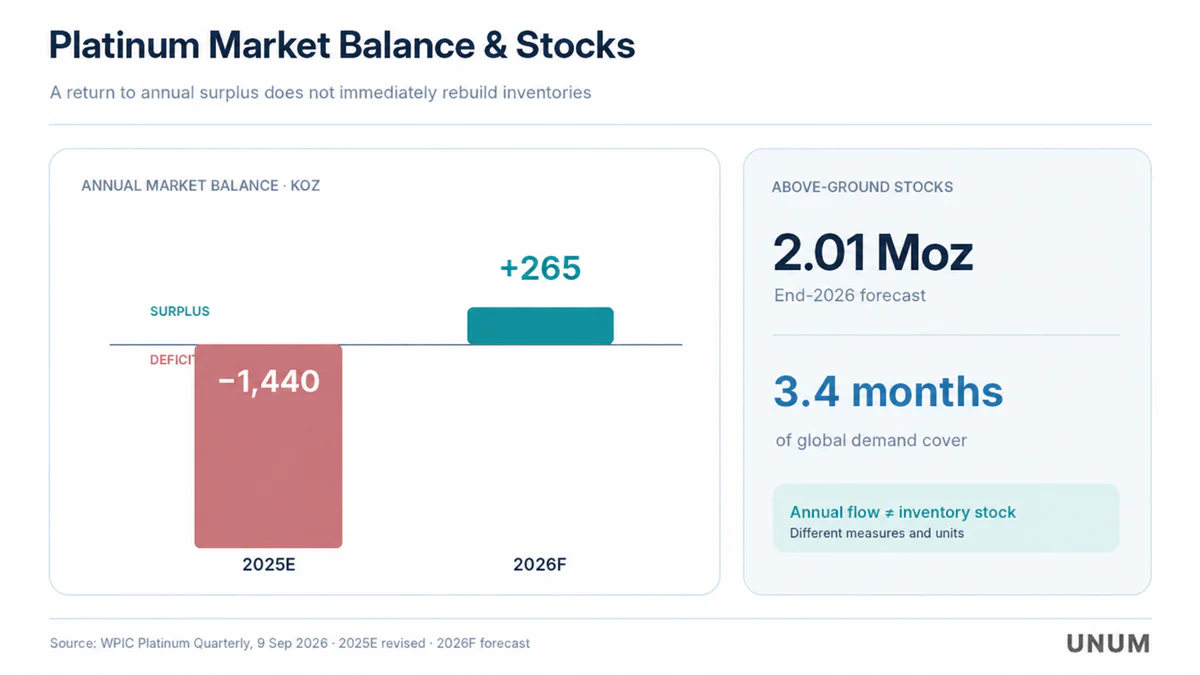
If consumption exceeds supply for a given period, a market deficit occurs. If supply exceeds demand, a surplus forms.
However, the market balance cannot be interpreted separately from previously accumulated reserves. A deficit can be covered by metal available in reserves, and a surplus does not necessarily mean a significant increase in free supply.
Current Platinum Market Balance
To assess the market condition, data on total platinum supply and demand, published in industry reports, are used. These indicators help determine whether a deficit or surplus is forming and how the availability of physical metal is changing. One of the main sources of such assessments is Platinum Quarterly from the World Platinum Investment Council (WPIC).
When studying the current report, it is important to compare primary mining, secondary supply, automotive, industrial, jewelry, and investment consumption. It is crucial to distinguish between actual values, preliminary estimates, and forecasts, as methodology and expectations for individual segments may change as new data becomes available.
Market balance forecasts can be significantly revised, for example, after changes in mining estimates, processing volumes, or investment flows. Therefore, a deficit or surplus cannot be assessed without specifying the period, publication date, and source of calculation. A prolonged deficit may reduce accumulated reserves, and a subsequent annual surplus does not necessarily compensate for previous reserve reductions.
Above-Ground Platinum Stocks
Above-Ground Stocks is an estimate of accumulated platinum reserves available to cover market deficits beyond current supply. They must be distinguished from all physical metal reserves existing worldwide.
A significant portion of platinum is in industrial equipment, automotive catalysts, jewelry, and other forms from which it cannot be quickly returned to the market.
The volume of above-ground stocks is often compared with global consumption, calculating the months of demand cover indicator — the conditional number of months of demand that corresponds to the available metal. The smaller this value, all else being equal, the more sensitive the market may be to unexpected increases in consumption or reductions in supply.
Even a moderate surplus in one reporting period does not necessarily eliminate the risk of a physical metal shortage in the future, especially if previously accumulated reserves remain limited.
When analyzing, it is necessary to consider not only the sign of the annual balance but also the rate of change in reserves, demand structure, and the possibility of increasing supply. It is the combination of these factors that determines how sensitive the market is to new production disruptions or unexpected consumption growth.
US Dollar, Interest Rates, and Platinum Price
Since the international price of platinum is predominantly expressed in US dollars, changes in the US currency exchange rate can affect its cost for buyers from other countries.
When the dollar strengthens, the metal becomes more expensive in national currencies with an unchanged dollar quotation. This can limit some demand and create pressure on the price, although this dependence is not constant.
Monetary policy of the US Federal Reserve plays an important role. Changes in interest rates affect the cost of financing, the attractiveness of financial assets, and investment decisions.
Platinum, like gold, does not yield regular interest income directly from holding physical metal. Therefore, an increase in real interest rates can increase the alternative costs of holding it.
However, the impact of rates on platinum is more complex than on some other precious metals. A decrease in interest rates may support investment demand, but if it occurs against the backdrop of a significant deterioration in economic activity, industrial consumption of the metal may simultaneously weaken.
For macroeconomic analysis, it is useful to consider:
- DXY — US Dollar Index;
- Federal Funds Rate — the key monetary policy benchmark of the Federal Reserve;
- Real Yields — real bond yields;
- Manufacturing PMI — indicators of business activity in the manufacturing sector;
- Industrial Production — dynamics of industrial production;
- USD/ZAR — the exchange rate of the US dollar to the South African rand.
None of these indicators can be used as a standalone forecast for platinum prices. For example, a strengthening dollar may coincide with a reduction in production in South Africa, and the resulting price movement will depend on which factor proves more significant.
Indicators to Monitor When Analyzing Platinum
Fundamental analysis of platinum requires simultaneous examination of several data groups. The current price alone is not enough to understand the market condition and possible reasons for price changes.
| Indicator | What It Shows |
| Platinum Spot Price (XPT/USD) | Current platinum price on the spot market |
| LBMA Platinum Price | International price benchmark |
| Platinum Futures | Prices of contracts with future delivery dates |
| Mine Supply | Volume of primary production |
| Recycling Supply | Secondary metal supply |
| Automotive Demand | Consumption by the automotive industry |
| Industrial Demand | Demand from other industrial sectors |
| Jewellery Demand | Jewelry consumption |
| Investment Demand | Investment purchases and sales |
| Supply–Demand Balance | Market deficit or surplus |
| Above-Ground Stocks | Estimate of available accumulated stocks |
| Platinum ETF Holdings | Volume of metal in relevant exchange-traded products |
| Gold/Platinum Ratio | Relative value of gold and platinum |
| Platinum/Palladium Ratio | Price ratio of the two PGMs |
| DXY and USD/ZAR | Currency factors |
| Manufacturing PMI | State of industrial activity |
When interpreting data, it is important to consider their frequency. Spot quotes can change continuously during a trading session, whereas global supply and demand estimates are usually revised much less frequently.
For example, an increase in platinum prices amid reduced production and declining stocks may indicate a tightening of the physical balance. However, a similar movement is possible with strong investment demand when production indicators remain virtually unchanged.
Another example is an increase in recycling volume amid weak automotive demand. In such a situation, supply may grow while one of the main consumption areas contracts, creating pressure on the metal's price.
For a comprehensive assessment, it is useful to compare current quotes with industry reports, production statistics, ETF data, and macroeconomic indicators.
One of the main sources of information remains Platinum Quarterly, published by WPIC based on Metals Focus research. Additional data on production and mineral resources are presented in the statistics of USGS.
Platinum Futures
Platinum futures are standardized exchange contracts that set the terms for buying or selling a specified quantity of metal in the future.
Unlike the spot market, a futures contract has a specific month of execution and rules that define the position size, metal quality, trading periods, and delivery mechanism.
One of the main exchange instruments is Platinum Futures, traded on NYMEX, part of CME Group.
Futures are used by producers, industrial buyers, and financial participants. A mining company may use them to hedge against the risk of future price declines, while a company needing platinum can use them to manage procurement costs.
Traders use futures to gain exposure to changes in the metal's price without the need to immediately purchase the full physical volume of the contract.
However, margin trading increases the sensitivity of financial results to market fluctuations.
Platinum Futures on NYMEX
A standard platinum futures contract has the exchange code PL. According to the specification of CME Group, its size is 50 troy ounces, and the contract provides for a physical delivery mechanism under the appropriate execution conditions.
The nominal value of a position depends on the metal's quote. If the platinum price is hypothetically $1,500 per ounce, the base volume of one contract is $75,000.
With a price change of $10 per ounce, the nominal value of a standard contract changes by $500.
To open a position, margin collateral is usually required, which is less than the full nominal value of the contract. However, this is why a relatively small change in the metal's price can lead to significant profit or loss relative to the funds deposited.
A trader must also consider expiration, liquidity of a specific contract month, and exchange rules.
Platinum Futures Curve
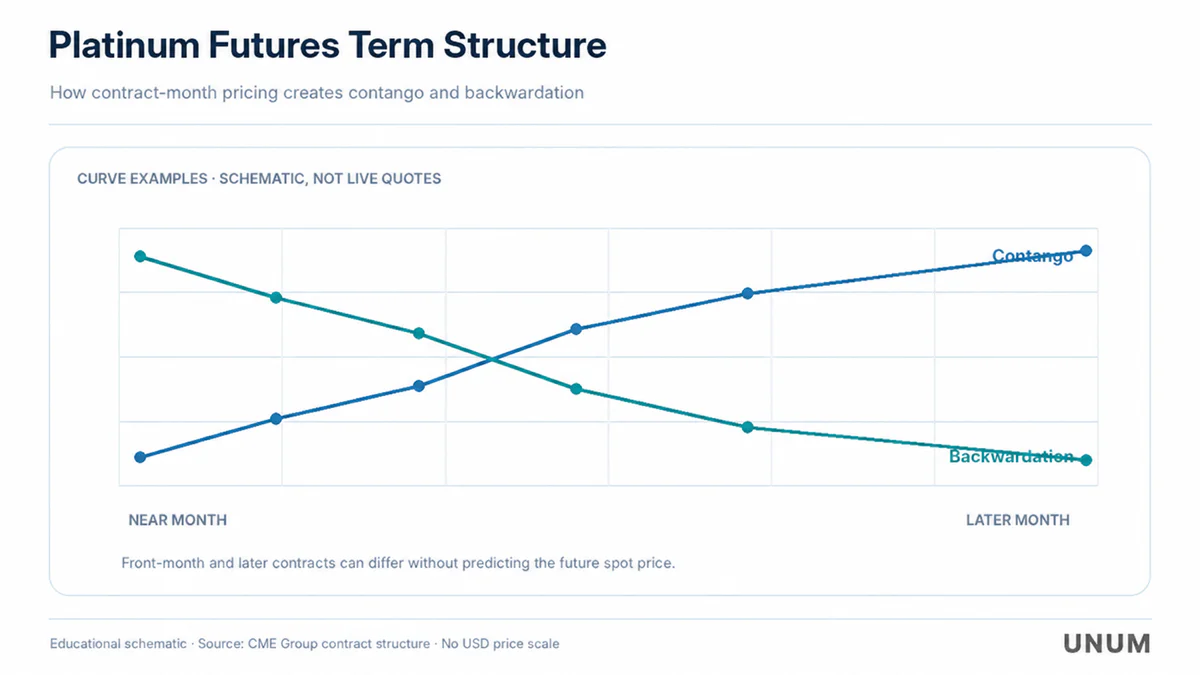
The futures curve is a sequence of platinum contract prices with different expiration dates.
If longer-term futures are more expensive than near-term ones, such a structure is called contango. It can arise, in particular, due to the cost of financing and storing the metal.
The opposite situation, where near-term contracts are more expensive than longer-term ones, is called backwardation. This structure may be associated with increased demand for physical metal in the near term, limited stock availability, and other market conditions.
However, the shape of the curve is not a definitive forecast of future spot prices. Futures quotes also reflect financing features and conditions of metal ownership.
For investors, the structure of the curve is important because the transition between successive contracts can affect the return of a strategy regardless of the overall direction of Platinum Spot.
How to Trade Platinum
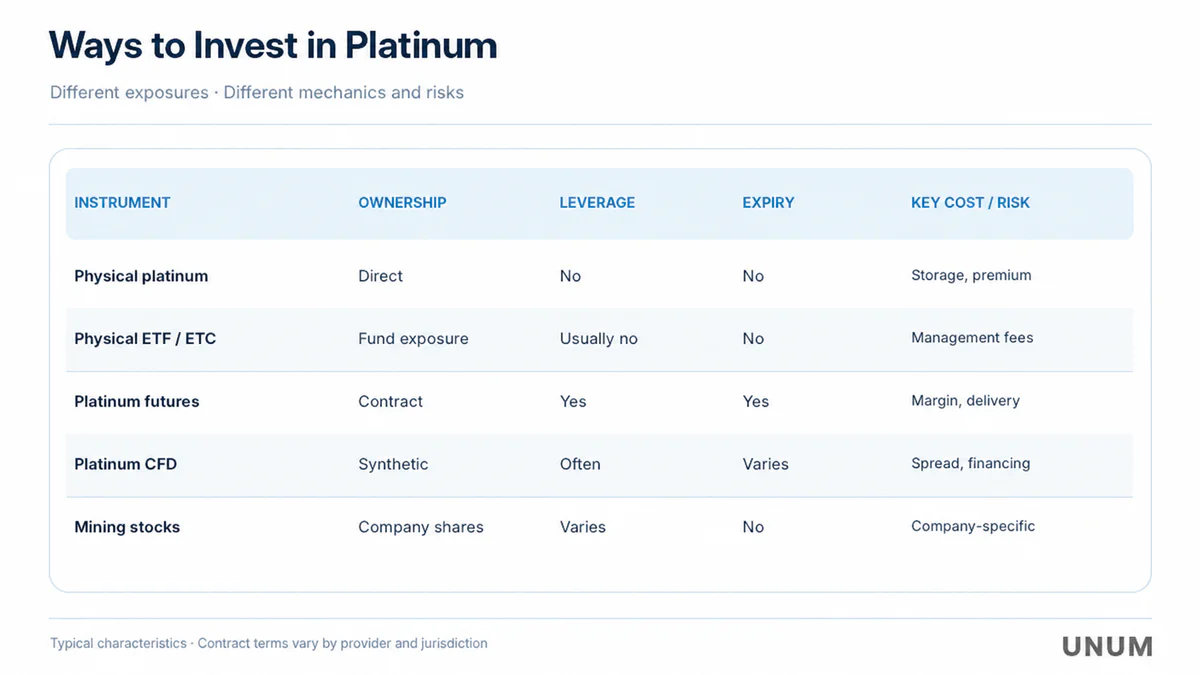
There are several ways to gain financial exposure to changes in the price of platinum. They differ in pricing mechanisms, capital requirements, physical metal availability, and risk levels.
Physical platinum. Investors can purchase platinum bars and coins. This method involves direct ownership of the metal but requires consideration of premiums over the spot price, storage costs, insurance, and resale conditions.
Spot instruments. Some financial intermediaries provide access to operations related to the current price of platinum. However, the actual conditions depend on the specific product: not every position labeled as Platinum Spot or XPT/USD implies ownership of physical metal.
Futures. Exchange contracts allow trading changes in the price of platinum and managing price risks. They require understanding of margin requirements, expiration dates, and delivery mechanisms.
ETFs and other exchange-traded products. Exchange-traded products provide exposure to the price of platinum through the financial market. It is necessary to distinguish between physically backed instruments and products using derivative contracts.
CFD. Contracts for Difference allow opening positions on the price change of the underlying instrument without acquiring physical metal. These products may use leverage, and the result depends on the spread, financing costs, and conditions of the specific intermediary.
Shares of mining companies. Another option is to purchase shares of platinum producers and other PGM companies. However, shares are not a direct analog of the metal: their value is also influenced by production costs, debt load, resource extraction structure, and management decisions.
Therefore, before choosing an instrument, it is necessary to understand what market exposure it provides and how accurately its result is linked to the spot price of platinum.
Platinum ETFs and Yield Characteristics
Exchange-traded products on platinum may have different mechanisms for forming value, so their yield does not always fully match the change in XPT/USD prices.
Physically backed products are usually oriented towards the value of platinum owned by the corresponding structure or designated custodian. Their result depends on the metal price, fees, operational expenses, and the trading characteristics of shares or units on the exchange.
In contrast, products using futures gain exposure through contracts with specific expiration dates. When such a contract approaches expiration, the manager may replace it with the next one.
This process is called rollover.
In contango, the next contract is more expensive than the nearest one. In such a situation, regular contract replacement can worsen the strategy's result compared to a simple spot price change, all else being equal.
In backwardation, the price structure can create the opposite effect.
However, the impact of rollover cannot be mechanically transferred to physically backed ETFs. Their value is determined by a different set of factors, and expenses are primarily related to management, storage, and product structure.
Therefore, when comparing exchange-traded instruments, it is necessary to consider not only historical yield but also the methodology of exposure formation.
Key Risks of Trading and Investing in Platinum
Platinum is an asset whose price can significantly change under the influence of the industrial cycle, metal supply, and financial flows.
Market risks can be divided into several main categories.
- Market volatility. Quotes can quickly react to changes in interest rates, industrial demand expectations, and investment sentiment.
- Supply risk. High concentration of production in certain countries makes the market sensitive to production disruptions, energy issues, and infrastructure constraints.
- Industrial risk. Deterioration in economic activity can reduce demand from the automotive, chemical, and other industries.
- Technological risk. Electrification of transport, changes in catalyst composition, and improvements in production technologies can alter long-term metal demand.
- Currency risk. International quotes are primarily expressed in dollars, so investors from other countries additionally depend on currency exchange rate changes.
- Liquidity risk. Spreads and the ability to execute large trades can vary between markets, contract months, and trading sessions.
- Leverage risk. Futures and CFD positions can lead to losses significantly exceeding the usual percentage change in the base metal price.
- Instrument structure risk. ETF fees, storage costs, CFD financing, and futures rollover can affect the final yield.
The investment horizon has particular significance. Short-term platinum movements may be determined by financial flows and macroeconomic news, while long-term dynamics depend more on changes in production structure and industrial consumption.
Therefore, risk analysis should consider not only the metal itself but also the chosen instrument, holding period, and trading conditions.
About commodities
Current platinum price, spot quotes XPT/USD, and price dynamics of the metal. We explore how the global platinum market operates, the roles of mining, the automotive industry, recycling, and investment demand, as well as the indicators that help assess the balance of supply and consumption.