

Silver
XAG


Silver is a precious and industrial metal used in electronics, solar energy, automotive, and chemical industries. At the same time, it remains an investment asset: it is purchased in the form of bars and coins, and is also used in ETFs, futures, and other exchange-traded instruments.
In the investment context, silver is classified as a commodity asset. Its price is formed in the global market and can change rapidly under the influence of supply, demand, and traders' expectations. It is a chemical element with the symbol Ag. Silver has high electrical conductivity, thermal conductivity, and reflectivity. These properties make the metal in demand both in industry and in jewelry production.
Silver as a raw material is a chemical element with the symbol Ag, which has high electrical conductivity, thermal conductivity, and reflectivity. These properties make the metal in demand both in industry and in jewelry production.
In what units is the price of silver measured
On the international market, silver is quoted in dollars per troy ounce. This is the standard unit of measurement for precious metals, equal to approximately 31.1 grams.
The quote is also converted per gram or kilogram. In local markets, the price may be displayed in euros and other currencies. In this case, the final cost is influenced by the exchange rate.
Where is silver used
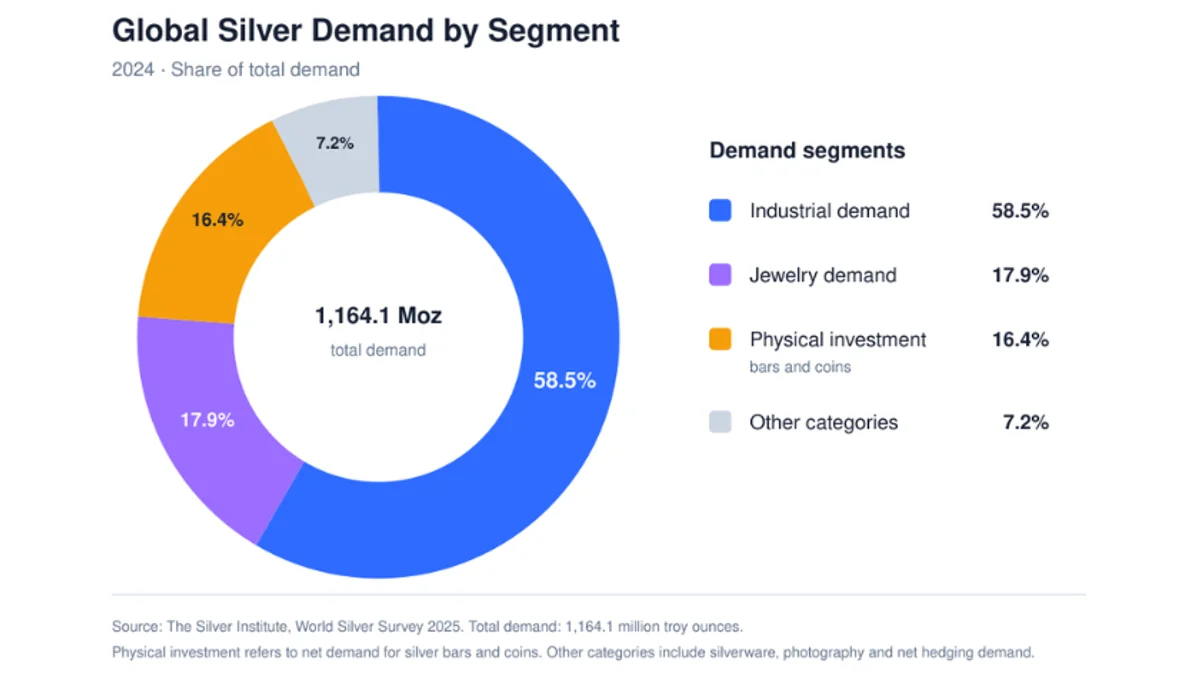
Silver is used in industry, jewelry production, and investment. This demand structure distinguishes it from gold, whose value is more dependent on investment interest and purchases by central banks.
Main areas of application
The metal is in demand in the following areas:
- electronics and electrical engineering;
- solar panel production;
- automotive industry;
- medical devices;
- chemical production;
- mirrors and optical coatings;
- soldering and alloy production;
- jewelry;
- investment bars and coins.
In electronics, silver is used in contacts, conductors, and special pastes. In solar energy, it is part of the conductive elements of photovoltaic cells. Due to its durability and high conductivity, the metal is also used in automotive systems and medical equipment.
How the global silver market works
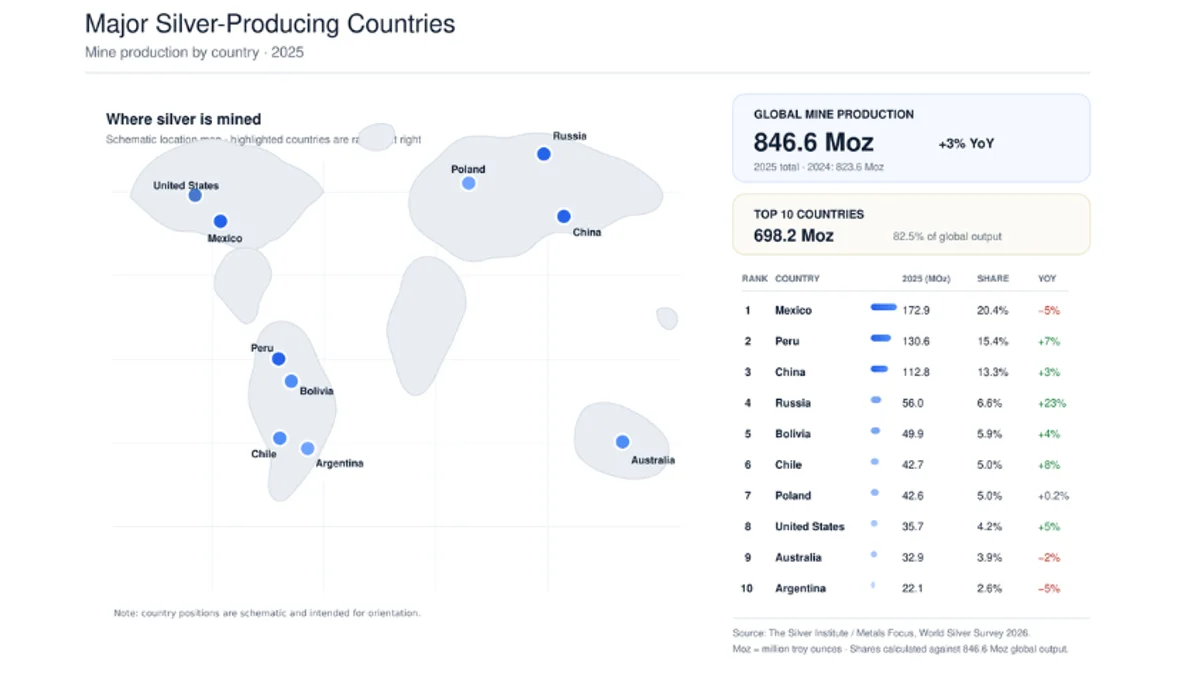
The market includes mining companies, industrial consumers, processors, banks, funds, traders, and private investors. Its structure determines how much metal is available to buyers and how quickly supply can change.
For investors, this information helps assess the long-term prospects of the asset. Traders can use it to analyze the fundamental background and the likely stability of price movements.
Where does silver come from
Supply is formed from:
- primary mining at silver mines;
- by-product production during the extraction of copper, zinc, lead, and gold;
- recycling of industrial and jewelry scrap;
- sales of metal from reserves and storages.
A significant portion of silver is mined as a by-product. Therefore, rising quotes do not always quickly lead to increased output. Decisions to expand production often depend on the economics of the primary metal, and starting a new mine can take years.
Who drives the demand for silver
Consumption is provided by:
- electronics and solar panel manufacturers;
- automotive and chemical industries;
- jewelry companies;
- buyers of bars and coins;
- exchange-traded funds;
- banks, traders, and private investors.
Industrial demand is related to the actual use of the metal. Investment demand reflects expectations about future prices and can change rapidly under the influence of news and market sentiment.
How does silver shortage affect quotes
If consumption exceeds the volume of mining, recycling, and new supplies, a shortage arises. Temporarily, it can be covered by reserves, but a prolonged reduction in available metal can increase premiums and volatility.
A shortage does not guarantee an automatic price increase. The final dynamics also depend on the dollar exchange rate, interest rates, gold movements, and activity in the futures market.
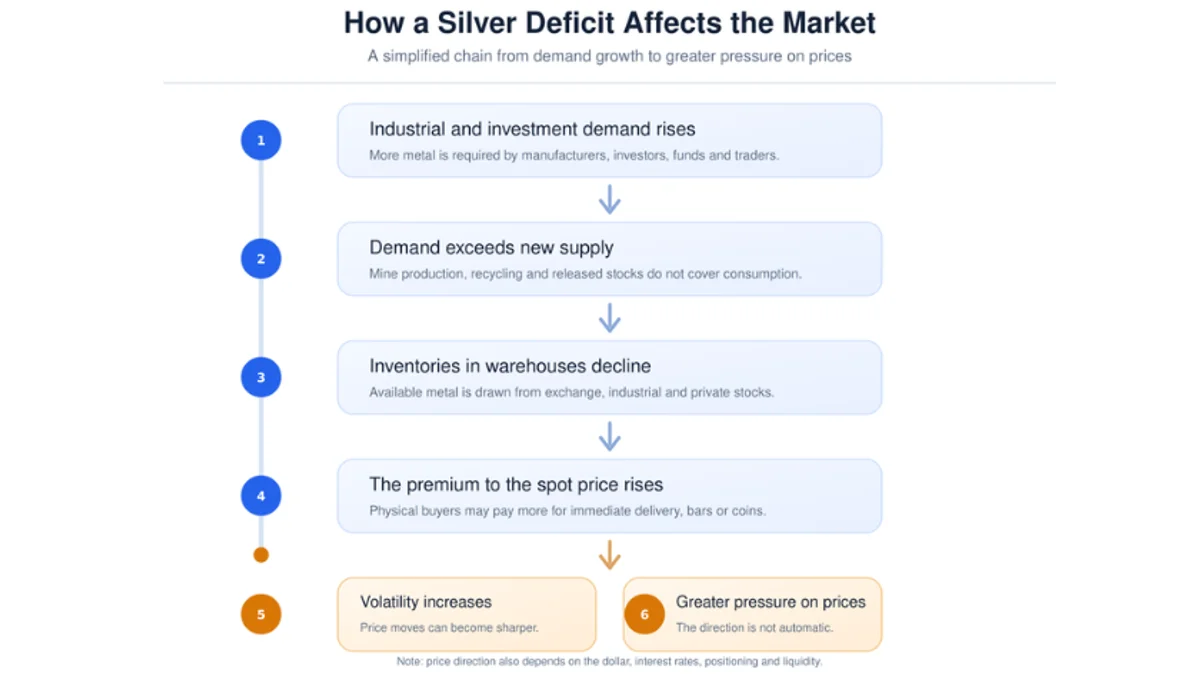
A physical metal shortage can amplify price fluctuations but does not guarantee a constant increase in quotes.
How is the price of silver formed
The price of the metal is influenced by transactions in the spot and futures markets. The quote on the chart, the price of the futures contract, and the cost of physical bars can differ.
Spot price of silver
The spot price reflects the current value of the metal for a quick delivery transaction. It is used as the main market benchmark.
The spot quote does not include costs for production, certification, delivery, insurance, storage, and sale of physical metal. Therefore, a bar or coin usually costs more than the exchange price.
Futures price
The futures price reflects the value of a contract for future delivery or settlement. It is influenced by participants' expectations, interest rates, storage costs, and delivery conditions.
Most futures positions are closed before the expiration date. Therefore, this instrument is primarily used for trading on price changes and managing risks.
| Type of price | What it shows | What it considers | For what it is used |
| Spot price | Current value of the metal for quick delivery | Market balance and quotes from participants | Market benchmark |
| Futures price | Value of the contract for future delivery or settlement | Expectations, rates, storage, and delivery conditions | Trading and hedging |
| Physical metal price | Amount paid by the buyer for a bar or coin | Exchange price, manufacturing, delivery, storage, and markup | Purchase of physical silver |
What affects the price of silver
Price factors can be divided into industrial, macroeconomic, and financial. Their influence changes depending on the current state of the global economy and market participants' expectations.
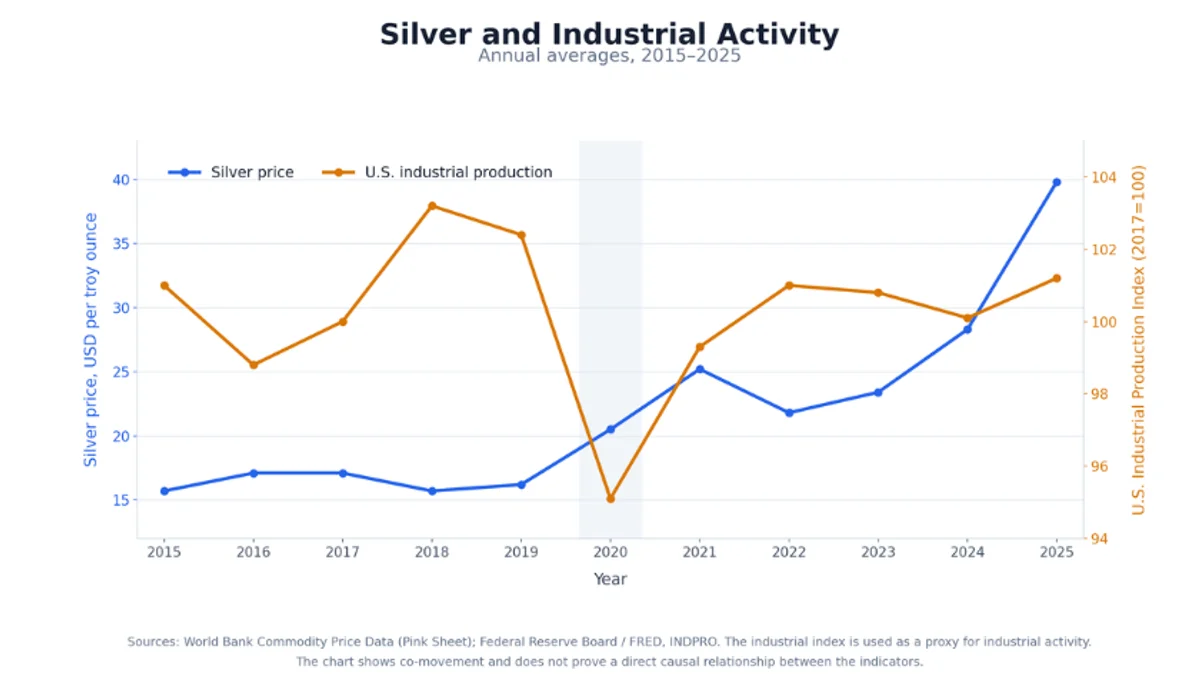
Industrial activity. Growth in electronics, solar panels, and automotive production increases silver consumption. Conversely, a slowdown in industry may lead to reduced orders and pressure on quotes.
Dollar exchange rate. Silver is mainly traded in dollars. A strengthening of the US currency makes the metal more expensive for buyers from other countries and may limit demand.
Interest rates. Silver does not provide fixed interest income. Therefore, rising rates and bond yields can reduce its attractiveness compared to interest-bearing instruments.
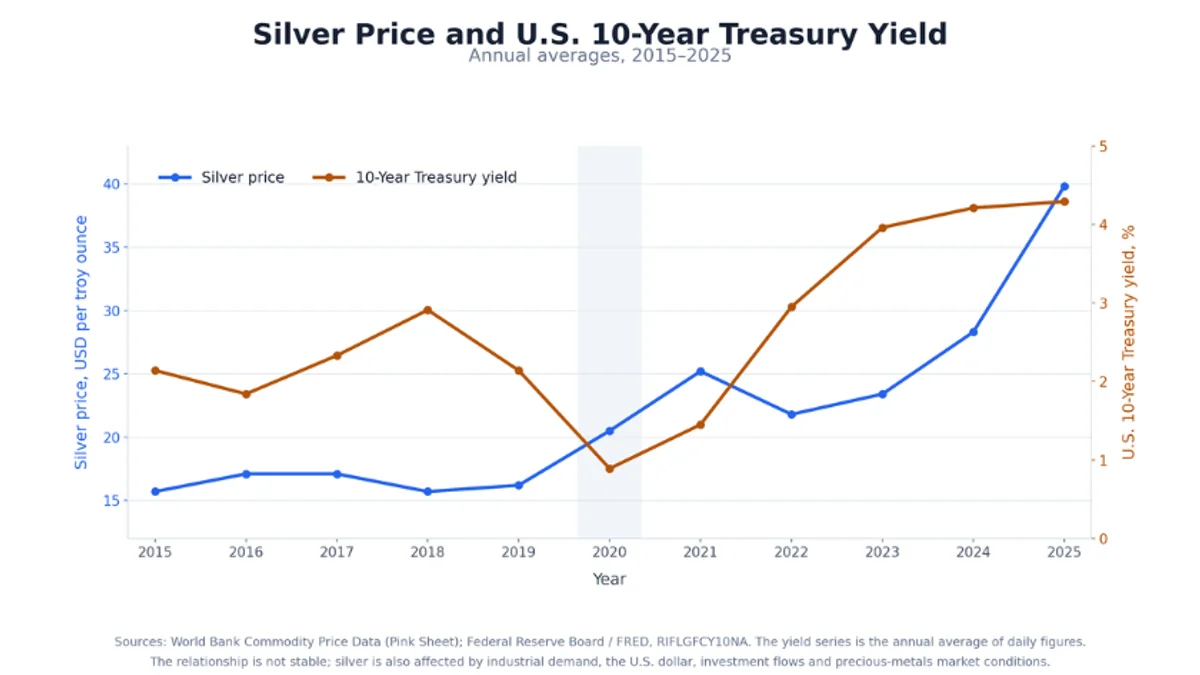
Investment flows. Purchases of ETFs, ETCs, bars, coins, and futures support demand. Outflows from funds and a reduction in long positions can intensify price declines.
Differences between silver and gold
Gold is more associated with investment demand, central bank reserves, and its role as a safe-haven asset. Silver is more dependent on industrial production.
Because of this, silver is usually more volatile. During periods of industrial growth and investor interest, it can rise faster than gold, but in worsening economic conditions, it can decline more significantly.
To compare the two metals, the gold-to-silver ratio is used. It shows how many ounces of silver are needed to buy one ounce of gold. This indicator helps assess relative dynamics but is not a standalone signal for a trade.
How to invest in silver
Instruments vary in risk level, liquidity, costs, and degree of connection to the physical metal.
Physical silver
Bars and investment coins provide direct ownership of the metal. When purchasing, it is necessary to consider the seller's premium, storage, insurance, delivery, and buyback conditions.
ETFs and ETCs
Exchange-traded funds and commodity products allow tracking the price of silver without holding bars independently. Before purchasing, it is important to study fees, collateral structure, and possible tracking errors.
Futures, options, and CFDs
These instruments are used for short-term trading and hedging. They may involve leverage, so a small price change can lead to significant results both positively and negatively.
Shares of mining companies
Such stocks provide indirect access to the silver market. Their value also depends on extraction costs, debts, mine conditions, management quality, and political conditions.
Main risks of investing in silver
The financial result depends not only on the direction of the quote movement but also on the chosen instrument.
Market volatility. Prices can change sharply under the influence of news, industrial demand, dollar exchange rates, interest rates, and movements of other metals.
Decreased consumption. A slowdown in electronics, solar panels, or automotive production can reduce demand for silver.
Currency risk. Changes in the dollar exchange rate affect the metal's value and the investor's final return, who assesses the result in another currency.
Costs of physical metal. When purchasing bars and coins, there are costs for storage, delivery, insurance, and authenticity verification. The buyback price may be lower than the purchase price.
Risks of funds and stocks. ETFs may lag behind the price of silver due to fees and tracking errors. Mining company stocks depend on the operational and financial results of the specific issuer.
Risks of derivative instruments. Futures, options, and CFDs are associated with margin and leverage. In unfavorable movements, the broker may require additional collateral or forcibly close the position.
Rolling risk. When rolling a futures position to the next contract, additional costs arise. As a result, the outcome of a long-term strategy may differ from the dynamics of the spot price.
Manipulation and distortion of quotes. Large banks, funds, market makers, producers, and speculators can significantly influence short-term prices through large orders, changes in futures positions, and options operations. The influence of a large transaction itself is not manipulation. Violations are considered intentional creation of false demand or supply signals, such as spoofing—placing orders without the intention to execute them followed by cancellation, wash trades, spreading false information, or attempts to trigger stop orders. Such cases have already been examined by regulators concerning the precious metals market and silver futures.
It is important to remember that past dynamics do not guarantee future returns. The instrument should be chosen considering the investment horizon, acceptable loss, and investor goals.
Key indicators for analyzing silver trading
To assess the silver market, it is important to compare quotes not with one indicator but with a group of indicators. Each of them has its own influence horizon: some reflect short-term capital movements, while others help assess the fundamental balance of supply and demand.
- Spot and futures price. The spot quote shows the approximate value of silver for quick delivery, while the futures price reflects participants' expectations about future prices. The difference between them, the structure of the futures curve, and changes in the spread help assess the shortage of physical metal, financing costs, and speculator activity.
- Dollar exchange rate and DXY index. Silver is usually quoted in dollars, so a strengthening of the US currency can put pressure on its price, especially for buyers from other countries. However, the reverse dependence is not constant: it can be offset by industrial demand, inflation expectations, and capital inflows into precious metals.
- Federal Reserve decisions. Changes in the key rate and comments from the Fed affect borrowing costs, liquidity, the dollar exchange rate, and the attractiveness of non-interest-bearing assets. For trading, it is important to consider not only the decision itself but also how much it differs from market expectations: unexpectedly hawkish rhetoric can increase pressure on silver, while a more dovish stance can support quotes.
- Bond yields. Particularly important is the yield on 10-year US Treasury bonds and real yields adjusted for inflation. Rising yields increase the opportunity cost of holding silver, while falling yields often support interest in the metal, although during inflationary rate increases, silver may behave differently.
- Industrial production. Silver is used in electronics, solar energy, automotive, and chemical industries, so a slowdown in production can worsen demand prospects. Comparing the price with industrial indices and output volumes helps understand whether the movement is supported by physical consumption or primarily by financial flows.
- Economic statistics from China. The country is a major industrial consumer of silver, so data on production, business activity, exports, infrastructure investments, and the state of the construction sector are important. Weak statistics may increase expectations of declining demand, while stimulus measures and accelerated production can support quotes.
- Mining and processing volumes. Data on mining show how quickly the market can increase supply in response to rising prices. A significant portion of silver is produced as a by-product of mining other metals, so the supply response usually lags. Additionally, it is necessary to consider scrap recycling, production costs, accidents, and changes in company forecasts.
- Exchange inventories. The amount of silver in exchange warehouses helps assess its availability for delivery. A reduction in inventories along with rising premiums and demand for delivery metal may indicate physical market tension, while an increase in inventories may indicate a weakening shortage. It is also important to distinguish between categories of warehouse inventories and consider changes in accounting methodology.
- Inflows and outflows of funds from ETFs. Capital inflows into silver-backed funds usually accompany an increase in investment demand and can amplify short-term price movements. Outflows can create additional pressure, but they should be assessed together with changes in fund inventories, futures positions, and overall market dynamics.
- Positions of large traders. CFTC reports on the positions of futures market participants allow seeing the ratio of long and short positions of commercial, non-commercial, and other categories of traders. A sharp accumulation of positions in one direction may indicate an overcrowded trade and increase the risk of correction, but such data is published with a delay and does not provide an exact moment for entry.
- Gold dynamics. Gold influences the overall sentiment in the precious metals sector, and silver often reacts to its strong movements. However, silver is more sensitive to the industrial cycle, so a leading rise in gold and a weak reaction from silver may indicate a defensive rather than industrial character of demand.
- Gold-to-silver ratio. The indicator is calculated as the price of gold divided by the price of silver. A rising ratio means that silver is lagging behind gold, while a decrease indicates that it is showing higher dynamics. The indicator is used to assess the relative strength of the metals and market expectations but not as a standalone buy or sell signal.
Such comparisons help distinguish between short-term speculative impulses and sustainable changes in demand, supply, and investment flows. When analyzing, it is advisable to use the same time intervals, fix the date of statistical publication, and consider that some indicators react to the market with a delay.
Frequently asked questions about Silver (XAG)
Its price is influenced simultaneously by investment interest and the industrial cycle. Therefore, changes in production can amplify movements that started in the financial market.
Yes. This can be done using ETFs, ETCs, futures, options, CFDs, and shares of mining companies. Each instrument has its own fees and risks.
Silver can be used for portfolio diversification, but it is not considered a risk-free asset. Its industrial component can lead to price declines even during periods of high economic uncertainty.