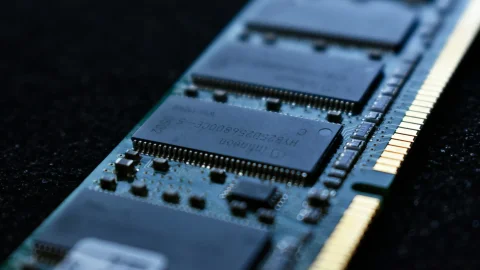
SpaceX CEO Elon Musk stated that Micron is maintaining reasonable memory prices while its competitors set exorbitant prices. This statement was made after Micron's shares closed lower for four consecutive sessions. Musk responded to an analyst's post on X, which summarized an optimistic JPMorgan report on the memory chip manufacturer. However, strong contract numbers failed to stop the sell-off this Tuesday. Micron's shares closed at $953.19 on Tuesday, down 3.62% compared to the previous day. Over five sessions, they lost 11.54%. Despite this, Micron's shares are still up approximately 223% in 2026.
The main pressure on the shares came from China. ChangXin Memory Technologies (CXMT), a leading memory manufacturer in the country, reported progress in developing denser DRAM designs. As a result, investors are concerned that the new supply could end the current shortage. Nonetheless, JPMorgan analysts see stable demand. They counted 26 long-term deals with clients that cover more than 35% of Micron's revenue through 2030. Additionally, the bank estimates the order portfolio at $150 billion, of which $32 billion has already been paid by clients as deposits. According to analysts, buyers have also reserved more than 75% of next year's production.
Musk highlighted Micron's price restraint as a step towards customer loyalty, which could benefit the company in the future. In his opinion, customers will remember which suppliers raised prices during the shortage. Musk indirectly buys Micron memory, as his AI data centers near Memphis use Nvidia chips built with it. In April, he also mentioned Micron among existing suppliers while discussing his Terafab project. However, neither party has announced a direct deal. Meanwhile, Micron, Samsung, and SK Hynix have redirected capacities to high-bandwidth memory (HBM) used in AI accelerators. This shift reduced the supply of regular DRAM and increased prices, contributing to Samsung's record quarterly profit. JPMorgan expects the shortage to last until 2028. If confirmed, Micron's price discipline will be crucial later when buyers can choose again. Until then, Micron's shares trade between Wall Street target prices of around $1,500 and concerns about a wave of Chinese supply.
This material is prepared solely for informational purposes and does not constitute financial advice or a recommendation.
Related articles