Robinhood Does Not Oppose Tokenization of Shares on OKXICE, but 90% of Companies Are Against It

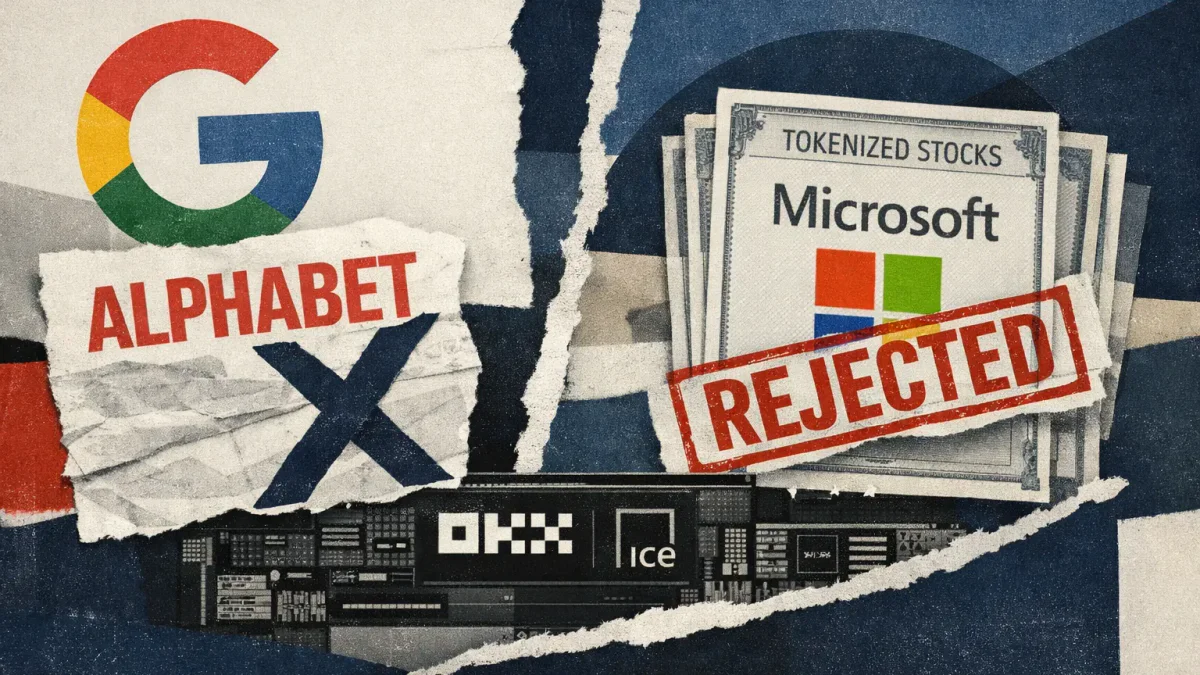
Brokerage company Robinhood (NASDAQ: HOOD) has confirmed that it does not object to the trading of tokenized versions of its shares on the OKXICE platform, which is being developed by the cryptocurrency exchange OKX and Intercontinental Exchange (ICE), owner of the New York Stock Exchange. A Robinhood representative reported this to CoinDesk on November 9, 2026. The company views tokenization as a promising direction for the development of financial markets and intends to participate in the formation of new infrastructure.
Robinhood's decision stands out against the backdrop of widespread objections from other issuers. According to CoinDesk's analysis based on OKXICE's notification from November 5, 56 out of 62 companies from the initial list opposed the tokenization of their shares on this platform. Among them are Apple, Meta, Alphabet, Nvidia, Goldman Sachs, and JPMorgan Chase.
Which companies did not object to tokenization
From the initial OKXICE list, six companies remained without published objections: Robinhood, Securitize, BitGo, Circle, Coinbase and Strategy. All of them are connected to the cryptocurrency market, digital assets, or blockchain infrastructure. However, their positions differ: Robinhood, Securitize, and BitGo have explicitly confirmed that they do not intend to hinder the initiative, whereas Circle, Coinbase, and Strategy have not announced a similar decision.
The total number of issuers who filed objections against the OKXICE project reached 67. This figure exceeds the number of companies in the initial sample because some objections came from organizations not included in the list published on October 4. Therefore, the numbers 67 and 56 out of 62 describe different groups and do not contradict each other.
The absence of a public objection does not imply a partnership agreement or guaranteed admission of shares to trading. According to SEC rules, companies have 30 calendar days after notification to oppose the issuance of tokenized versions of their shares by an independent party. The platform may publish received objections with a delay of up to five business days, so the composition of available instruments may still change.
How the OKXICE platform will work
OKXICE plans to offer round-the-clock trading of tokenized versions of American stocks using blockchain. Instead of the traditional order matching system, the platform proposes operations through automated market makers (AMM) and liquidity pools. Settlements are planned to be conducted using stablecoins.
The project intends to operate under the Innovation Exemption regime introduced by the U.S. Securities and Exchange Commission on September 17, 2026. This experimental mechanism is designed for five years and allows platforms meeting established requirements to conduct operations with tokenized stocks without applying some of the rules that apply to traditional stock exchanges. However, there are restrictions on the number of instruments and trading volume, and smart contracts must be public and available for audit.
One of the important conditions of the SEC concerns investor rights. Tokenized stocks traded under this regime must provide owners with rights equivalent to those of holders of the corresponding traditional securities. This includes participation in voting and receiving dividends if such rights are provided for the underlying stocks.
The OKXICE notification of intent to use the special regime is registered with the SEC, but this does not mean that the regulator has separately approved the platform's launch. As of the publication date, the start date for trading has not been announced, and the final list of available assets remains unknown.
How OKXICE tokenized stocks differ from Robinhood products
Robinhood's position aligns with the views of its co-founder and CEO Vlad Tenev, who has previously advocated for the expanded use of blockchain in the stock market. In September, he stated that issuers should not have the unconditional right to block any financial instruments related to the value of their shares. In his opinion, the need for company consent depends on the legal structure of the product and the rights granted to the investor.
Meanwhile, Robinhood's own Stock Tokens differ from the securities that OKXICE plans to offer. Robinhood's products are issued through an overseas structure and represent derivative instruments that provide economic exposure to the value of the corresponding stocks. Their holders do not become shareholders of the underlying companies and do not receive associated corporate rights, including voting.
For tokenized stocks admitted to trading under the SEC's experimental regime, different requirements are provided: the rights of owners must correspond to the rights of holders of traditional stocks. Thus, despite the general use of blockchain, these financial instruments differ in legal nature and investor capabilities.
The widespread objections from issuers demonstrate the cautious attitude of American companies towards the new securities trading infrastructure. However, they do not imply a rejection of tokenization in general, as the restrictions relate to the specific method of issuing and circulating tokens on OKXICE.
This material is prepared solely for informational purposes and does not constitute financial advice or a recommendation.
Related articles