Bitcoin Has Not Topped Grayscale's Quarterly Rankings Since 2025
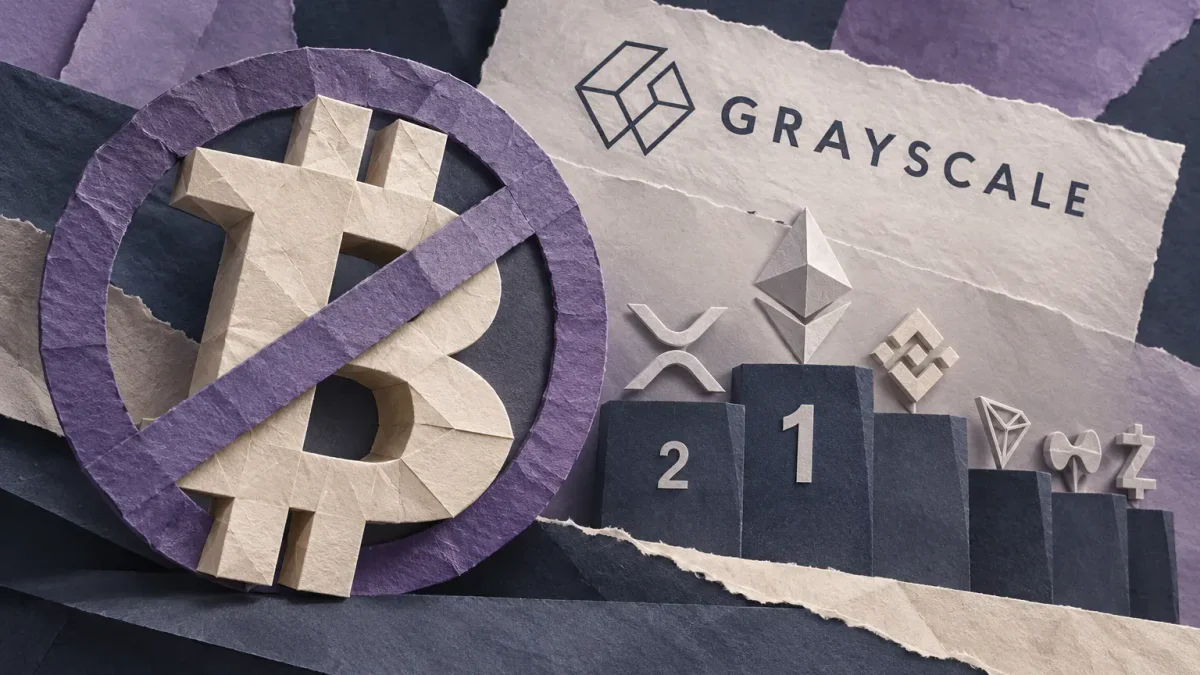
Bitcoin (BTC) has not held the top spot for quarterly returns among the ten largest cryptocurrencies excluding stablecoins since early 2025. This conclusion was reached by analysts from the investment company Grayscale in a study published on November 12, 2026. According to the report, six different digital assets took the lead during the period under review, with Zcash (ZEC) showing the highest quarterly return, rising by 260% in the third quarter of 2026.
Which Cryptocurrencies Outperformed Bitcoin
In the first quarter of 2025, the leader of the ranking was XRP, which gained 1%. In the following two quarters, the top spot was held by Ethereum (ETH), whose value increased by 36% in the second quarter and 67% in the third.
In the fourth quarter of 2025, the most resilient among the assets considered was BNB, which lost 14%. Despite the negative return, it topped the ranking because all ten cryptocurrencies ended the period with declines.
In the first quarter of 2026, the leader was TRON (TRX) with a growth of 10%. In the second quarter, the top spot was taken by Hyperliquid (HYPE), which rose by 78%, and in the third quarter, Zcash showed the most notable dynamics with a 260% increase.
Bitcoin achieved its best result in the second quarter of 2025, when it ranked second with a return of 30%. In four other quarters, BTC was in third place, and in the third quarter of 2025, it was last among the assets considered, despite a 6% price increase.
How Dependent is the Cryptocurrency Market on Bitcoin
The Grayscale study also showed that the price dynamics of individual segments of the cryptocurrency market are not entirely determined by BTC movements. Over the past three years, changes in Bitcoin's price explained about half of the return variations in sectors included in the FTSE Grayscale Crypto Sectors indices.
The most notable differences were found by analysts in the segment of cryptocurrencies related to artificial intelligence. According to the company's calculations, the contribution of factors specific to this sector to annual volatility was 50 percentage points, while Bitcoin's influence was estimated at 35 points.
In the payment cryptocurrency sector, the situation was different: the contribution of BTC-related factors reached 43 percentage points versus 7 points attributed to the characteristics of the segment itself.
Meanwhile, Bitcoin's own realized volatility decreased to approximately 43% on an annual basis. According to Grayscale, this figure is within the volatility range of individual stocks in the S&P 500 index, although it remains higher than most of them. Analysts emphasize that the reduction in volatility does not make cryptocurrencies low-risk assets.
What the Fourth Quarter of 2026 Showed
As of November 4, all ten cryptocurrencies in the Grayscale ranking showed negative returns since the beginning of the fourth quarter. The smallest decline was recorded for TRX at 5%. Bitcoin ranked third with a 7% loss, while Zcash fell to seventh place after leading in the previous quarter, dropping by 15%.
The difference between BTC and TRX returns was only two percentage points. However, these figures reflect the situation as of November 4 and do not account for subsequent price changes.
Grayscale analysts note that the alternation of leaders and the decrease in correlation between cryptocurrency sectors indicate differences in the factors affecting the value of digital assets. However, the company warns that such diversification does not eliminate the risks of significant price fluctuations.
This material is prepared solely for informational purposes and does not constitute financial advice or a recommendation.
Related articles