Samsung Expects Memory Crisis to Intensify in 2027
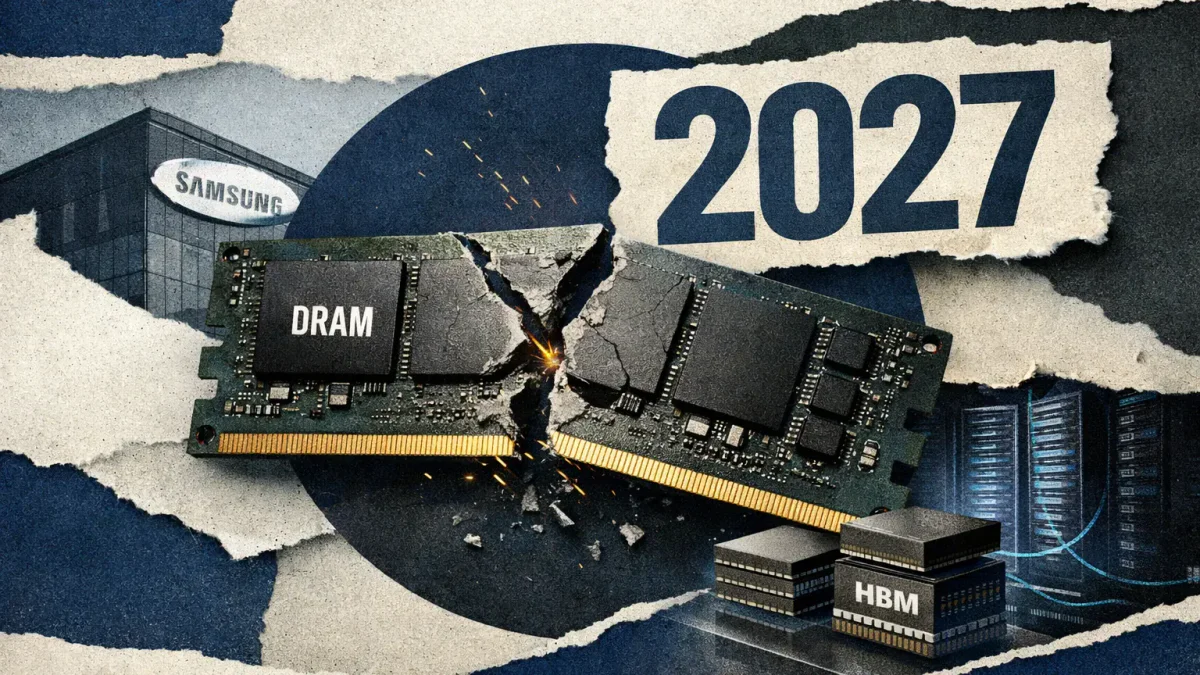
The entire year of 2026 was marked by a shortage of RAM, which led to price increases for various gadgets—from PS5 to Valve's Steam Machine. According to Samsung's latest financial report, relief is not expected anytime soon: the South Korean manufacturer explicitly stated that the memory market situation will become even more tense in 2027.
By the end of the third quarter of 2026, Samsung's semiconductor division, which includes the memory production business, generated 147.1 trillion Korean won in revenue, with 106.5 trillion attributed to profit. This segment accounted for 72% of Samsung's total revenue for the quarter. The company attributes these figures to its focus on producing HBM4: this high-bandwidth memory consists of vertically stacked DRAM chips and is used in AI accelerators for data centers. HBM chips are significantly more expensive than regular memory and yield much higher margins, as there is currently strong demand for them.
In the forecast for the next year, Samsung describes the prospects as follows: "The rapidly growing demand from AI is likely to further exacerbate the supply shortage compared to the 2026 calendar year." Consumer DDR5 memory, which is used in home PCs and laptops, is not mentioned in the report at all—Samsung is focused on large corporate clients and formulates its priority as: "Establishing a stable sales base through long-term contracts and ensuring timely readiness of new products adapted to the requirements of AI applications."
The report was released just a couple of months after a publication by Digitimes, which stated that all production capacities for memory in 2027 are already sold out. Samsung's data essentially confirms this information: the manufacturer is expanding its capacities, but additional volumes will primarily go to AI data centers. Currently, there are only three major memory manufacturers in the world—Samsung, SK hynix, and Micron—and all of them have shifted their focus to high-capacity server modules for AI at the expense of memory for gaming PCs. Back in December 2025, Micron closed Crucial, its consumer brand of RAM and storage.
This material is prepared solely for informational purposes and does not constitute financial advice or a recommendation.
Related articles