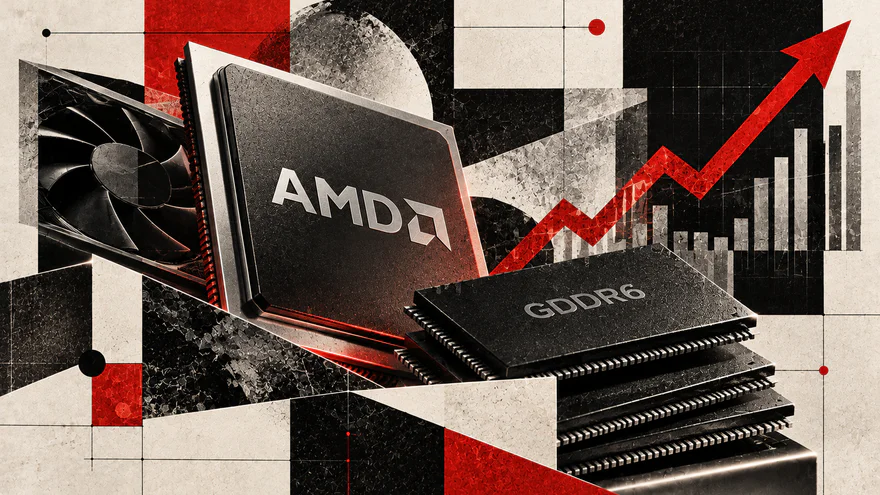
The memory shortage continues to impact the graphics card market. According to the Chinese forum Boardchannels, AMD has increased prices for GDDR6 memory, which is supplied with its graphics processors. The price increase took effect on October 1.
The price hike affected AIB partners, meaning manufacturers who produce graphics cards on AMD chips under their own brands. If they have to pay more, the rise in procurement costs is likely to reflect in retail prices for Radeon graphics cards.
This is not the first such case for the market. In July, Nvidia changed the prices for GDDR6 and GDDR7 memory for its graphics cards. Rumors then emerged that the cost of Nvidia accelerators could rise by up to 30%.
The issue is not limited to memory prices: supply is also shrinking. It is particularly difficult to find the GeForce RTX 5090 in American online stores. This week, as the four-year anniversary of the RTX 4090 was marked, rumors surfaced that Nvidia had halted production of the GeForce RTX 5090 and redirected capacities to AI accelerators for data centers. The AI industry boom has long been considered one of the factors in the memory shortage.
The rise in prices is also linked to other reasons. Certain components, particularly printed circuit boards (PCBs), are becoming more expensive. Geopolitical conditions are also cited as a factor.
This material is prepared solely for informational purposes and does not constitute financial advice or a recommendation.
Related articles